Showing posts with label Spiritual Activist. Show all posts

2012-03-25

Spiritual Activists: Thich Nhat Hanh

This story is about another monk – not a Catholic monk, but a Buddhist monk, born in Vietnam. His name is Thich Nhat Hanh – he’s also called Thay. He’s 85-years-old now and lives in France.

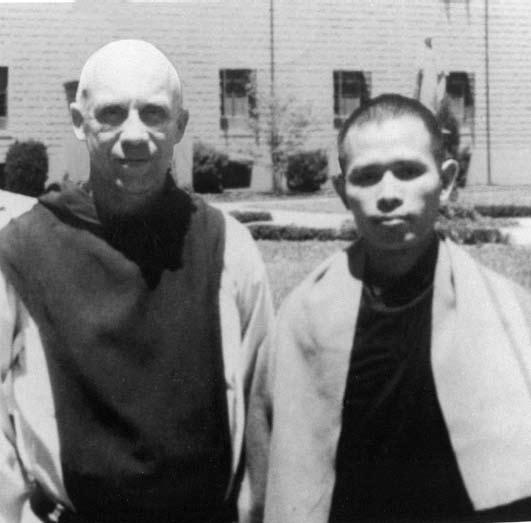
Thay and Thomas Merton met each other once – 45 years ago when Thay was visiting in Kentucky. They discovered kindred spirits in each other.

It helps to have a tradition of practices and writing to help the heart open up to the true self. It can be a Buddhist tradition, or a Catholic tradition, or some other one.

Thay became a Zen Buddhist monk when he was only 16. When there was a war in his country, Thay tried bravely to stop the fighting. Instead the government made him leave the country, the homeland he loved.

He and his friends bought an old farm in France, which they named Plum Village. They fixed up the buildings and planted gardens and plum trees. Many people – from Vietnam and elsewhere came to Plum Village to live and work – or to visit for awhile -- and practice and learn to be mindful – to love each other and not be violent.

At Plum Village, they spend a lot of time praying, meditating, and practicing mindfulness -- which means being aware of what we are doing and concentrate on enjoying it before we do something else. Pay attention to what is around you without worrying about the past or the future.

When you take a little time to sit quietly – maybe sit outside and just watch the grass and the clouds and the birds – it can make you feel calmer and nicer. And we can use that feeling to make the world a better place to live. When we are mindful, we are peaceful, and when we are peaceful, it helps other people be peaceful, too.
Breathing in, you feel calm.
You are fresh as a flower.
Breathing out, you are not going to get angry.
You are solid as a mountain.
Thay says, “Make good use of the flower and the mountain in you and you will not be affected by what other people say and what they do to you. You will be able to help so many people.”

Thay was just a boy when he first began his training to understand how what we might think we want isn’t always what our heart really wants. When we don’t get what we think we want, we might fight or act mean. For Thay, though, you don’t have to have one big heart-opening experience like Thomas Merton had at Fourth and Walnut. You just have to water the seeds of joy and wanting to help others – and not water the seeds of anger and selfishness.

Keep watering the seeds of kindness and sharing, and let the seeds slowly grow – and this helps water those seeds in our friends, too. Thay often speaks to children. He says:
Walk and touch peace every moment.
Walk and touch happiness every moment.
Each step brings a fresh breeze.
Each step makes a flower bloom.
Kiss the Earth with your feet.
Bring the Earth your love and happiness.
The Earth will be safe when we feel safe ourselves.

* * * * *
Part 5 of "The Spiritual Activist:
Previous: Part 4: "Thomas Merton"
Beginning: Part 1: "Satyana's Principles of Spiritual Activism"

2012-03-23

Spiritual Activists: Thomas Merton

In 1958 – a year before I was born -- a 43-year-old monk from a monastery in Kentucky was visiting Louisville. He was standing on a street corner: the intersection of 4th street and Walnut Ave. His name was Thomas Merton, and he had been a Catholic Trappist monk for 15 years.

The corner of 4th and Walnut is now famous because of what happened to Thomas on that day. Something very profound happened to him – and yet nothing at all happened to him. All around him people and cars were going about their usual business as he stood there. What happened was this: his heart opened up.

This is how he wrote about it:
“In Louisville, at the corner of Fourth and Walnut, in the center of the shopping district, I was suddenly overwhelmed with the realization that I loved all those people, that they were mine and I theirs, that we could not be alien to one another even though we were total strangers. It was like waking from a dream of separateness, of spurious self-isolation in a special world, the world of renunciation and supposed holiness. The whole illusion of a separate holy existence is a dream.…This sense of liberation from an illusory difference was such a relief and such a joy to me that I almost laughed out loud. And I suppose my happiness could have taken form in the words: ‘Thank God, thank God that I am like other men, that I am only a man among others.’ It is a glorious destiny to be a member of the human race, though it is a race dedicated to many absurdities and one which makes many terrible mistakes: …A member of the human race! To think that such a commonplace realization should suddenly seem like news that one holds the winning ticket in a cosmic sweepstake. And if only everybody could realize this! But it cannot be explained. There is no way of telling people that they are all walking around shining like the sun. They are not ‘they’ but my own self. There are no strangers! Then it was as if I suddenly saw the secret beauty of their hearts, the depths of their hearts where neither sin nor desire nor self-knowledge can reach, the core of their reality. If only they could all see themselves as they really are. If only we could see each other that way all the time. There would be no more war, no more hatred, no more cruelty, no more greed…I suppose the big problem would be that we would fall down and worship each other.”
This week, Lake Chalice is asking: What do you want? Really want? And do you know? Wednesday’s post looked at Mohandas Gandhi; yesterday’s at Dorothy Day. Maybe seeing what they wanted will help us see what we want. Today we ask, what did Thomas Merton want?

When, at age 28, in 1943, Thomas entered the monastery and become a monk, what he wanted was to be alone, to withdraw from the world. There is so much that is sad, and unfair, and just ridiculous about the way people treat each other, and the way most people live their lives. Thomas just wanted to get away from all that.

What he found out after spending a lot of time being alone was that he wasn’t separate from the world at all, but right at the very center of it all the time. Thomas began to understand very deeply that most of our lives, we have an idea of ourselves: the “me” that works in the world, thinks about itself, tries to get things for itself. But this “me” is not the true “me.” The true “me” knows what Thomas knew as he stood at the corner of 4th and Walnut.

Maybe I want a house, or a bicycle, or some tasty, rich food. But what my true self wants is to know the truth of love, to know that you are me, and I am you, and to live a life constantly based on that knowledge.

The whole point of being alone, Thomas realized, is not to withdraw from the world but to teach ourselves the truth of love for the world. In loving the world, we want most to end war and poverty: for people to enjoy each other’s love, respect, and fair treatment.

Thomas was a social activist – not by establishing organizations or leading demonstrations, but by writing. He wrote powerful essays that helped people see how bad and unnecessary were war, and racism, and nuclear weapons.

When someone sees that his true self is also the true self of everyone, and wants to spread that joy, then he sees that when we’re mean to each other, it hides our true self, and hides the other person’s true self.

* * * * *
Part 4 of "The Spiritual Activist"
Next: Part 5: "Thich Nhat Hanh"
Previous: Part 3: "Dorothy Day"
Beginning: Part 1: "Satyana's Principles of Spiritual Activism"

2012-03-22

Spiritual Activists: Dorothy Day

Our next story is about Dorothy Day, born in 1897. She was a girl living in the San Francisco Bay area when the big earthquake of 1906 hit. Hundreds of people lost their homes, and the people came together to find shelter and food for the homeless families. Seeing the way that people can help each other in need made a strong impression on Dorothy.

As a young woman, she lived back in New York again – in Greenwich Village, where she was part of groups called “anarchists” or “socialists.” She marched in demonstrations for women’s suffrage and participated in protests against the fighting of World War I. “No more war! No more war!” said Dorothy Day.

What did she want? She wanted a world in which all people were peaceful and fair with each other. Her heart and her mind were very clear about that from her childhood.

Dorothy was 30-years-old when she became a Catholic and joined the Catholic church. Soon after, she was in Washington DC participating and writing about a march against hunger. While that seemed important, a feeling came over her that it wasn’t what her heart really wanted to be doing. She wrote:
“I offered up a special prayer which came with tears and anguish, that some way would open up for me to use what talents I possessed for my fellow workers, for the poor.”
She prayed for a way to help the poor.

She returned to New York, and the next day met Peter Maurin. The two of them started the Catholic Worker movement. They put out a newspaper, then began to build houses of hospitality – homes for the poor, where poor men and women and families could get food and a place to sleep.

Dorothy lived as a poor person herself: in the houses of hospitality, with and among the poor. Voluntary poverty meant an insecure life – and this very insecurity was a part of Dorothy’s life of faith – she had to trust in things beyond her control, had to open her heart to the unknown. She wrote:
“Our poverty is not a stark and dreary poverty, because we have the security which living together brings. But it is that living together that is often hard. Beds crowded together, much coming and going, people sleeping on the floor, no bathing facilities, only cold water. Poverty means…bedbugs, cockroaches and rats and the constant war against these. Poverty means body lice.”
Prayer gave Dorothy strength and courage to live the vision of the Catholic Worker movement: voluntary poverty, community life, and nonviolent pacifism.

At age 46, Dorothy left the Worker movement for six months for spiritual deepening. She took a room at a convent, and spent most of her days in prayer and meditation and in studying books about spirituality. The time for spiritual renewal was very important for maintaining her joy in the work for peace and justice. Throughout her life, Dorothy Day went on retreats where she would spend a week in silence and prayer deepening her awareness, her appreciation of beauty all around, and her joy.

What did Dorothy want? She knew that what the heart really wants isn’t things that money can buy. The heart wants to connect with others and serve. The heart wants fair and decent treatment for everybody. The heart wants to remember joy, and not waste its life away in forgetfulness of the joy that is all around us.

When a reporter asked Dorothy what the Catholic Worker movement was trying to do, Dorothy said,
“We are trying to make people happy.” 
It’s not that she thought other people’s happiness was more important than her own. It’s that the life of prayer and study had helped her live a life in which she always remembered that other people’s happiness and her own are the same thing.

We all want the same thing – but we don’t all know what we really want, or we give up on what we really want and settle for pouring our energy into what we think we want that isn’t what our hearts really want.

* * * * *
Part 3 of "The Spiritual Activist"
Next: Part 4: "Thomas Merton"
Previous: Part 2: "Mohandas Gandhi"
Beginnining: Part 1: "Satyana's Principles of Spiritual Activism"

2012-03-21

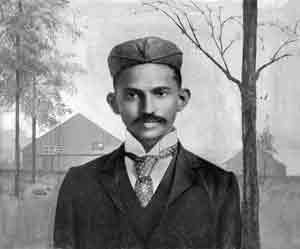
Spiritual Activists: Mohandas Gandhi

(A children’s story, sort of.)

In the Sunday school classes at many Unitarian Universalist congregations, our children learn to say: "We are Unitarian Universalists. We are a people of faith who have open minds, loving hearts, and helping hands." We also teach them that Unitarian Universalists aren’t the only wise people, nor the only open-minded or compassionate people. Hindus and Christians and Moslems and Buddhists can show us some ways to be better Unitarian Universalists. One of those people of deep faith who have much to teach us to deepen our faith was Mohandas K. Gandhi.

Let me first ask: What do you want? Did you ever think you wanted something, and then found out that it wasn’t what you really wanted? What we think we want isn't always what we really want -- and we often don't know what we really want.

I think that happened to Gandhi. Gandhi was born in India in 1869. He became a lawyer. At first, he couldn’t make a living as a lawyer because he was too shy to speak up in court.

What did Gandhi want? One thing it seems he wanted was for other people not to think badly of him. That made him shy about speaking up. But what did he really want? He didn’t know yet.

He moved to South Africa to do lawyering paperwork for a company there. Gandhi was in South Africa for 21 years. He gradually came to see that what he really wanted – what his heart wanted – was peace and fairness for all people. His heart knew that the suffering of others was his own suffering. Knowing this helped him be less shy.

Once, he was thrown off a train because he was in First Class, and the train official said his skin wasn’t pale enough for him to ride in First Class. On a stagecoach, he was beaten by the driver for refusing to make room for a European passenger.

What did Gandhi want? He wanted to be treated fairly. As he thought about his own desire to be treated fairly, he began to see that there was something bigger that he really wanted: fair treatment for all people.

Gandhi began organizing protest against a law that said Indians in South Africa could not vote. He was attacked by a mob and barely escaped with his life. Later, he could have asked the police to arrest the people that attacked him, but he wouldn’t do that. He said he wouldn’t use the law to fight back against personal wrongs.

What did he want? He wanted laws changed to be more fair. More than that, he wanted hearts changed. He wanted to see meanness learn how to turn into love. He knew putting people in jail wouldn’t help them learn how to be kind.

When he finally returned to India, it was ruled over by the English, and the English didn’t treat the Indians very well. Gandhi organized India – millions of people – to protest to let India be governed by a government elected by all of India – instead of being governed by another country.

Gandhi knew what the Indians wanted – and he knew what the British wanted, too – what they really wanted in their hearts, even if their thinking heads hadn’t figured out yet what the hearts really wanted.

So Gandhi always led protests that were nonviolent. People can’t open up to what their hearts are telling them if someone is hitting them. Through Gandhi’s nonviolent leadership, the British as well as the Indians were shone the way to greater flourishing and happiness.

* * * * *
Part 2 of "The Spiritual Activist"
Next: Part 3: "Dorothy Day"
Previous: Part 1: "Satyana's Principles of Spiritual Activism"

2012-03-20

Satyana's Principles of Spiritual Activism

Social justice requires spirituality. We cannot be effective at transforming the world if we are not transforming ourselves. We cannot do the work of bringing peace and justice to the world if we are not doing the work of bringing peace and justice to our hearts. We absolutely, simply cannot. The heroes of social justice activism -- people like Mohandas Gandhi, Martin Luther King, Aung San Su Kyi, Dorothy Day, Thich Nhat Hanh, and Thomas Merton – weren’t just effective political organizers who happened to also have a strong faith. Their work for justice depended upon, was empowered by, and became effective through their spirituality.

Gandhi embodied what his Hindu faith teaches of ahimsa: the principle that all living things are connected and form a unity requiring respect and kindness. Martin Luther King, Dorothy Day, and Thomas Merton embodied what their Christian faith teaches of love – often referenced as the Latin caritas, or the Greek agape: a spiritual love. Agape, as one theologian puts it, is “an intentional response to promote well-being when responding to that which has generated ill-being.” They took to heart Jesus’ words, “love your enemy,” and their faith tradition taught them to answer hatred with love. Aung San Suu Kyi, Thich Nhat Hanh, and the Dalai Lama continue to embody what their Buddhist faith teaches of karuna (compassion), and anatta (no self). There is no self separate from others; each of us is all of us; we cannot truly want to hurt them. Without a committed spiritual discipline, justice work is not compelling, is ineffective, succumbs to angers and fears, and ends in burn-out.

The Satyana Institute (click here) has worked with social change leaders since 1996. They have developed these thirteen "key learnings and guidelines" for effective spirituality that makes effective social justice work possible:

1. Transformation of motivation from anger/fear/despair to compassion/love/purpose. This is a vital challenge for today's social change movement. This is not to deny the noble emotion of appropriate anger or outrage in the face of social injustice. Rather, this entails a crucial shift from fighting against evil to working for love, and the long-term results are very different, even if the outer activities appear virtually identical. Action follows Being, as the Sufi saying goes. Thus "a positive future cannot emerge from the mind of anger and despair" (Dalai Lama).

2. Non-attachment to outcome. This is difficult to put into practice, yet to the extent that we are attached to the results of our work, we rise and fall with our successes and failures -- a sure path to burnout. Hold a clear intention, and let go of the outcome -- recognizing that a larger wisdom is always operating. As Gandhi said, "the victory is in the doing," not the results. Also, remain flexible in the face of changing circumstances: "Planning is invaluable, but plans are useless." (Churchill)

3. Integrity is your protection. If your work has integrity, this will tend to protect you from negative energy and circumstances. You can often sidestep negative energy from others by becoming "transparent" to it, allowing it to pass through you with no adverse effect upon you. This is a consciousness practice that might be called "psychic aikido."

4. Integrity in means and ends. Integrity in means cultivates integrity in the fruit of one's work. A noble goal cannot be achieved utilizing ignoble means.

5. Don't demonize your adversaries. It makes them more defensive and less receptive to your views. People respond to arrogance with their own arrogance, creating rigid polarization. Be a perpetual learner, and constantly challenge your own views.

6. You are unique. Find and fulfill your true calling. "It is better to tread your own path, however humbly, than that of another, however successfully." (Bhagavad Gita)

7. Love thy enemy. Or at least, have compassion for them. This is a vital challenge for our times. This does not mean indulging falsehood or corruption. It means moving from "us/them" thinking to "we" consciousness, from separation to cooperation, recognizing that we human beings are ultimately far more alike than we are different. This is challenging in situations with people whose views are radically opposed to yours. Be hard on the issues, soft on the people.

8. Your work is for the world, not for you. In doing service work, you are working for others. The full harvest of your work may not take place in your lifetime, yet your efforts now are making possible a better life for future generations. Let your fulfillment come in gratitude for being called to do this work, and from doing it with as much compassion, authenticity, fortitude, and forgiveness as you can muster.

9. Selfless service is a myth. In serving others, we serve our true selves. "It is in giving that we receive." We are sustained by those we serve, just as we are blessed when we forgive others. As Gandhi says, the practice of satyagraha ("clinging to truth") confers a "matchless and universal power" upon those who practice it. Service work is enlightened self-interest, because it cultivates an expanded sense of self that includes all others.

10. Do not insulate yourself from the pain of the world. Shielding yourself from heartbreak prevents transformation. Let your heart break open, and learn to move in the world with a broken heart. As Gibran says, "Your pain is the medicine by which the physician within heals thyself." When we open ourselves to the pain of the world, we become the medicine that heals the world. This is what Gandhi understood so deeply in his principles of ahimsa and satyagraha. A broken heart becomes an open heart, and genuine transformation begins.

11. What you attend to, you become. Your essence is pliable, and ultimately you become that which you most deeply focus your attention upon. You reap what you sow, so choose your actions carefully. If you constantly engage in battles, you become embattled yourself. If you constantly give love, you become love itself.

12. Rely on faith, and let go of having to figure it all out. There are larger 'divine' forces at work that we can trust completely without knowing their precise workings or agendas. Faith means trusting the unknown, and offering yourself as a vehicle for the intrinsic benevolence of the cosmos. "The first step to wisdom is silence. The second is listening." If you genuinely ask inwardly and listen for guidance, and then follow it carefully you are working in accord with these larger forces, and you become the instrument for their music.

13. Love creates the form. Not the other way around. The heart crosses the abyss that the mind creates, and operates at depths unknown to the mind. Don't get trapped by "pessimism concerning human nature that is not balanced by an optimism concerning divine nature, or you will overlook the cure of grace." (Martin Luther King) Let your heart's love infuse your work and you cannot fail, though your dreams may manifest in ways different from what you imagine.

* * * * *
This is part 1 of "The Spiritual Activist"
Next: Part 2: "Spiritual Activists: Mohandas Gandhi"