Showing posts with label Earth Justice People Justice. Show all posts

2012-04-19

Justice in the Anthropocene

Conservation groups have begun to pay more attention to the needs of indigenous peoples. Today, most conservation groups have policies of best practice intended to protect the rights of local communities, and conservation, and conservationists are increasingly hiring social scientists and anthropologists who incorporate indigenous people into their conservation strategies. That’s a good move, but it’s just a beginning. Conservation will be controversial as long as it remains so narrowly focused on the creation of parks and protected areas, and insists, often unfairly, that local people cannot be trusted to care for their land. People will not protect the Earth if they are not protected themselves.
"Consider the decline of the orangutan, which has been largely attributed to the logging of their forest habitats. Recent field studies suggest that humans are killing the orangutans for bush meat and bounty at rates far greater than anyone suspected, and it is this practice, not deforestation, that places orangutans at the greatest peril. In order to save the orangutan, conservationists will also have to address the problem of food and income deprivation in Indonesia. That means conservationists will have to embrace human development and the 'exploitation of nature' for human uses, like agriculture, even while they seek to 'protect' nature inside of parks." (Peter Kareiva, Robert Lalasz, Michelle Marvier, "Conservation in the Anthropocene," Breakthrough Journal, Fall 2011. Click here.)
As a recent article in Breakthrough Journal argues:
“In the developing world, efforts to constrain growth and protect forests from agriculture are unfair, if not unethical, when directed at the 2.5 billion people who live on less than two dollars a day and the one billion who are chronically hungry.” (Kareiva, Lalasz, Marvier, "Conservation in the Anthropocene.")
Conservation has had a hard row to hoe when it has battled the interests of the wealthy. Better to make common cause than to fight, for many of those wealthy love trees and parks, and generously fund conservation efforts. If conservation is doing battle with two or three billion people who need to feed and house themselves, it doesn’t stand a chance. Conservation cannot win against numbers that large. Better to make common cause than to fight.
“By pitting people against nature, conservationists actually create an atmosphere in which people see nature as the enemy.” (Kareiva, Lalasz, Marvier, "Conservation in the Anthropocene.")
When we ignore people justice in the name of Earth justice, we court retaliation from the people. For example, the Ugandan government created Lake Mburo National Park in 1982.
“In the name of preserving the wildlife, the government violently expelled thousands of men, women, and children from the surrounding region, without compensation. . . . In 1986, a new government encouraged these conservation refugees to resettle their former homelands, where they promptly slaughtered wildlife and vandalized the park facilities in retribution.” (Kareiva, Lalasz, Marvier, "Conservation in the Anthropocene")
I love our Unitarian Universalist seventh principle – “respect for the interdependent web of all existence of which we are a part.” And I love our sixth source – “Spiritual teachings of Earth-centered traditions which celebrate the sacred circle of life and instruct us to live in harmony with the rhythms of nature.” Many non-UUs also love those ideals. We love them so much that sometimes we forget that our fifth principle says we covenant to affirm and promote “ . . . the use of the democratic process . . . in society at large.”

People justice means the people get a vote, and the people vote with their feet and their hands and their lives. They vote for food, shelter, clean water, arable land. If these things are ensured – and if education is provided and women are empowered – they will also vote to have fewer children.

“Economic development” rings like a bad word – but that’s because it has for far too long meant more wealth for the wealthy. Much more equitable distribution of resources is what we need: economic development for those who have hardly had any. The Breakthrough Journal article concludes:
“The conservation we will get by embracing human well-being will almost certainly not be the conservation that was imagined in its early days. But it will be more effective and far more broadly supported.” (Kareiva, Lalasz, Marvier, "Conservation in the Anthropocene")
I have evolved. Since LoraKim and I, strolling along a trail at “The Mountain” in 1999, had an argument about a rock, my spiritual understanding of trees, rivers, oceans, mountains, prairies, deserts, soil – and rocks – has deepened and widened. Rocks may not have a central nervous system, but they have a place in a vast and fluid harmony. The call to “protect the lives of minerals” draws from me a gentler motion of my life. It teaches me to walk with a lighter step, and in greater harmony. That spiritual growth would not have been possible if I had faced hunger every day.

Justice for the earth will require justice for her people.

* * *
Part 5 of 5 of "Earth Justice, People Justice"
Previous: Part 4: "The Beauty and the Tragedy"
Beginning: Part 1: "The Rock and the Mountain"

2012-04-18

The Beauty and the Tragedy

How can a rock have rights? How can a rock have interests? How can it be harmed or benefitted? But remember: think bigger. Think of ecosystems without reducing them down to a small part. When our legal system thinks of corporations as having rights, it doesn’t reduce them down to copy machines and paper clips. It regards the whole system of the corporation.

A few years ago, Ecuador was in the process of recreating its constitution. Ecuador was facing a number of environmental challenges. Texaco, for example, had dumped more than 18 billion gallons of toxic waste water into Ecuadorian rainforest. The president of the constitutional assembly, Alberto Acosta, was the former minister of energy and mines: a position that would seemingly support corporate interests. Yet Acosta proclaimed that to his mind, the law treats nature as a slave with no rights of its own.

The new constitution changed that. In 2008, Ecuador become the first country with a constitution that recognizes that nature has rights. The Ecuador constitution says that ecosystems have the right
“to exist, persist, maintain and regenerate its vital cycles, structure, functions and its processes in evolution.”
People seeking to defend ecosystems now have standing in Ecuador’s courts. That’s one piece of good news, I think, for Earth justice and also for people justice.

We need to understand that there are further complexities. We need to acknowledge that in the history of conservation, efforts have often come from wealthy who were perfectly willing to displace people for the sake preserving the pristine beauty of their recreation sites. When a move toward Earth justice leaves out people justice, it will fail both people and the Earth.

Even as we shift away from just human interests to recognize interests in nature itself, there is another necessary shift also beginning – back toward human interests whose needs must be taken account of if conservation is to stand a chance. In other words, we have seen a battle playing out between “nature as wealth resource” and “nature as spiritual grounding.” Since the early 19th century, more and more people have shifted to seeing nature is as a source of solitary spiritual renewal, as a place to escape modern life, enjoy solitude, and experience God.

Ralph Waldo Emerson’s famous essay, “Nature,” declared:
"To go into solitude, a man needs to retire as much from his chamber as from society.”
Our Unitarian forebears, the Transcendentalists, waxed rhapsodic about the spiritual qualities of the undeveloped woods and countryside. Nature was an idyllic, transcendence-enabling place – mostly for urban intellectuals.

I am a Transcendentalist, an Emerson fan, and, I guess you could say, an urban intellectual. And I do love those parks and wilderness areas. The best times LoraKim and I have ever had have been hiking about in public lands – parks and preserves. We have indeed found them to be transcendence-enabling places that both lift us up and ground us, that heal the fragmentation of modern life and make us whole.

There is tragedy that goes with that beauty, however.

The set-aside of wilderness areas has often involved resettling large numbers of people, too often without fair compensation for their lost homes, hunting grounds, and agricultural lands. According to the 2009 book, Conservation Refugees, by Mark Dowie, an investigative journalist now professor of journalism at the University of California, Berkeley:
"About half the land selected for protection by the global conservation establishment over the past century was either occupied or regularly used by indigenous peoples. In the Americas that number is over 80 percent." (Conservation Refugees: The Hundred-Year Conflict between Global Conservation and Native Peoples, 2009, p. 12.)
Estimates of the number of people displaced over the last century by conservation, Dowie reports, vary from five million to tens of millions. One Cornell University professor estimates that in Africa alone 14 million individuals have been displaced by conservation.

In 2004, the 200 delegates at the International Forum on Indigenous Mapping unanimously endorsed a declaration that:
"activities of conservation organizations now represent the single biggest threat to the integrity of indigenous lands." (qtd in Mark Dowie, Orion Magazine, 2005. Click here.)

* * *
Part 4 of 5 of "Earth Justice, People Justice"
Next: Part 5: "Justice in the Anthropocene"
Previous: Part 3: "When Does a Tree Stand Without Standing?"
Beginning: Part 1: "The Rock and The Mountain"

2012-04-17

When Does a Tree Stand Without Standing?

Environmental protection based on the environment as property and commerce has lead to some weird results -- or at least some not-altogether-good-natured satirizing. For example, in applying these laws, the government developed a regulation called the “reasonable bird test" -- called, that is, not by the government, but by facetious commentators. The Clean Water Act of 1972 aims to protect waterways. The courts and regulatory agencies have had to wrestle with criteria for determining when a body of water is a “waterway” subject to protection under the Clean Water Act. The Army Corps of Engineers (ACE) articulated the Migratory Bird Rule (dubbed pejoratively the “reasonable bird test”): that protected waters include those:
"a. Which are or would be used as habitat by birds protected by Migratory Bird Treaties; or b. Which are or would be used as habitat by other migratory birds which cross state lines." (51 Fed. Reg. at 41217. [1986])
Crossing state lines brought migration under "interstate commerce." The conditional verb "would be used" apparently prompted critics to pretend that the condition to be satisfied was the birds' reasonableness, and that the government was essentially saying that if a reasonable bird flying between two states would likely land on the body of water, then that water was subject to protection. The ACE and the EPA used the rule for a number of years in determining which waterways to protect -- until the Supreme Court (Solid Waste Agency of Northern Cook County v. ACE [2001]), struck down the "reasonable bird test" (as critics called it), to the dismay of the environmentalist community.

A pair of perfectly reasonable sandhill cranes
As long as environmental protection is based on commerce, on seeing the environment as property, then we aren’t really protecting nature – we’re just coordinating its exploitation.

The Lorax says that he speaks for the trees, who have no tongues. If the Lorax, or you, or anyone, were to show up in court to speak for the trees, or the rivers, or the mountains, the first question is legal “standing.” Do you have standing to pursue the legal action? The court is prepared to consider damage to you – damage to your financial prospects, or to your health – from, say, pollution of a river. The court can see you and your interests, but doesn’t see the river itself. In a previous era, courts didn’t see slaves, or women.

Even if you manage to win, and damages are awarded, the damages will be awarded to you. The damages do not go to the river, because the river is not seen. The river is merely property. Just as damages to a woman used to go to the husband – to compensate him for the loss in value of his property -- or damages to a slave were compensated to the owner.

As long as environmental law regards nature as property and commerce, as long as such law merely coordinates the exploitation, then the justice system will not do justice to the Earth. People justice and Earth justice will be divorced and separated.

Take the case of Nottingham, New Hampshire. The people of that town wanted to protect their water. They wanted to prevent their water from being privatized – taken over as property for commerce and profit. They
“fought for seven years to stop USA Springs from coming in and privatizing their water. They appealed permits to the state department of environmental services, they circulated petitions, they lobbied their state legislature, the held protests, and they filed lawsuits. They did everything right -- through conventional environmental organizing -- but somehow they still weren’t winning." (Mari Margill, "Bioneers" radio podcast, "Earth Justice")
The state environmental agency is more interested in granting permits to companies than in protecting a public good. And that’s because the underlying basis of environmental protection isn’t the environment, it’s commerce. Conventional environmental organizing works within this assumption that nature is property and commerce, and thereby ultimately strengthens that assumption itself.

We need a new assumption. And it is beginning. A dozen municipalities now have passed local laws declared that ecosystems have rights in themselves – anyone can bring suit on behalf of the ecosystem, and the damages have to go back to restoring the ecosystem itself. That’s not radical – it’s an extension of basic concepts of representation – but it does take an explicit law to say that the interests of an ecosystem have standing in court.

That’s a shift that can seem rather jarring. Christopher Stone, back in 1972, published an article in the Southern California Law Review that became famous: “Should Trees have Standing? Toward Legal Rights for Natural Objects.” He wrote:
“The fact is that each time there is a movement to confer rights onto some new 'entity,' the proposal is bound to sound odd, or frightening, or laughable. This is partly because, until the rightless thing receives its rights, we cannot see it as anything but a thing for the use of “us” – those who are holding rights at the time. Such is the way the slave South looked upon the Black. There is something of a seamless web involved: there will be resistance to giving the thing 'rights' until it can be seen and valued for itself; yet it is hard to see it and value it for itself until we can bring ourselves to give it 'rights' -- which is almost inevitably going to sound inconceivable to a large group of people.”
Forty years after Christopher Stone wrote that article, legal rights for natural objects still sounds inconceivable to a large group of people -- but not quite as large as it was.

* * *
Part 3 of 5 of "Earth Justice, People Justice"
Next: Part 4: "The Beauty and the Tragedy"
Previous: Part 2: "Protecting the Life of Commerce"
Beginning: Part 1: "The Rock and the Mountain"

2012-04-16

Protecting the Life of Commerce

A couple years after LoraKim and I had "the rock argument," I encountered Thich Nhat Hanh’s five mindfulness trainings. These are elaborations of the basic five precepts of Buddhism: (1) don’t kill; (2) don’t steal; (3) don’t have sex outside a committed relationship; (4) don’t lie; and, (5) don’t drink. Pretty generic commandments. Thich Nhat Hanh elaborates these five precepts into what he calls five mindfulness trainings. The first one, “do not kill," he expands into this:
“Aware of the suffering caused by the destruction of life, I am committed to cultivating compassion and learning ways to protect the lives of people, animals, plants, and minerals. I am determined not to kill, not to let others kill, and not to support any act of killing in the world, in my thinking, or in my way of life. Seeing that harmful actions arise from anger, fear, greed, and intolerance, which in turn come from dualistic and discriminative thinking, I will cultivate openness, non-discrimination, and non-attachment to views in order to transform violence, fanaticism, and dogmatism in myself and in the world.”
Nice. I like the extension of “do not kill” to not letting others kill, and I like the attention to the roots from which the impulse to kill would come. I like that it goes beyond “do not kill,” to a positive requirement actively to protect life, and to learn how to do so effectively. And I understand protecting the lives of people, other animals, plants. But how does one protect the lives of minerals? What does that mean? "Protect the lives of minerals"?

I imagine that for some of this blog's readers, it is obvious how to protect the lives of minerals. For other readers, I would guess it is equally obvious that “protecting the lives of minerals” is a meaningless, self-contradictory concept.

Bear with me. Let’s approach this by thinking bigger than an individual rock. Let’s think of an overall ecosystem. An ecosystem has trees and animals, and also has dirt, rocks, rivers, clouds and rainfall – all interacting, and all necessary parts of a whole. If our legal system says that corporations are people (and it does); and if corporations have no flesh, no blood, no feelings, no heart, no relatives, and no conscience (and they don't); then is it such a stretch to say that ecosystems have rights? If human moral imagination can extend to corporations, then it can also extend to protection of the lives of ecosystems. Such protection includes ensuring that minerals -- soil and rocks and water and air -- are sufficiently plentiful, balanced, nutritive, unpolluted, and within the right temperature range to engender the ecosystem's health. The "life" of a mineral is the role it plays in the life of a vibrant ecosystem, so "protect the lives of minerals," means "preserve them in playing their vital function for ecosystems." Preserve their place in the order of things.

This way of thinking about ecosystems has not, however, been the basis of environmental protection efforts. Historically, we have thought of the environment as property. The history of environmental protection in this country is based on the idea that lakes, rivers, soil, mountains, oceans, and beaches are property, commodities, items of commerce. Congress’ authority to protect the environment and wildlife has its legal grounding in the interstate commerce clause of the constitution. That’s the basis of the Environmental Protection Agency when it was formed in 1970.

The standard dualism around conservation and environmental stewardship is that there are "the protectors" and "the exploiters." "The protectors" are represented by the Lorax, Captain Planet, Rachel Carson, the World Wildlife Fund, and the Environmental Protection Agency. "The exploiters" are the heads of business who turn resources into the wealth that I enjoy. Like many of us, I say "boo, hiss" to "the exploiters," but I go right on enjoying the cheap products they produce.

It turns out it's "the protectors" who have been basing environmental protection on the commerce clause. Waters and parks are worth protecting as property, as commerce – not intrinsically for their own sake. And that’s “the protectors”!

* * *
Part 2 of 5 of "Earth Justice, People Justice"
Next: Part 3: "When Does a Tree Stand Without Standing?"
Previous: Part 1: "The Rock and The Mountain"

2012-04-15

The Rock and The Mountain

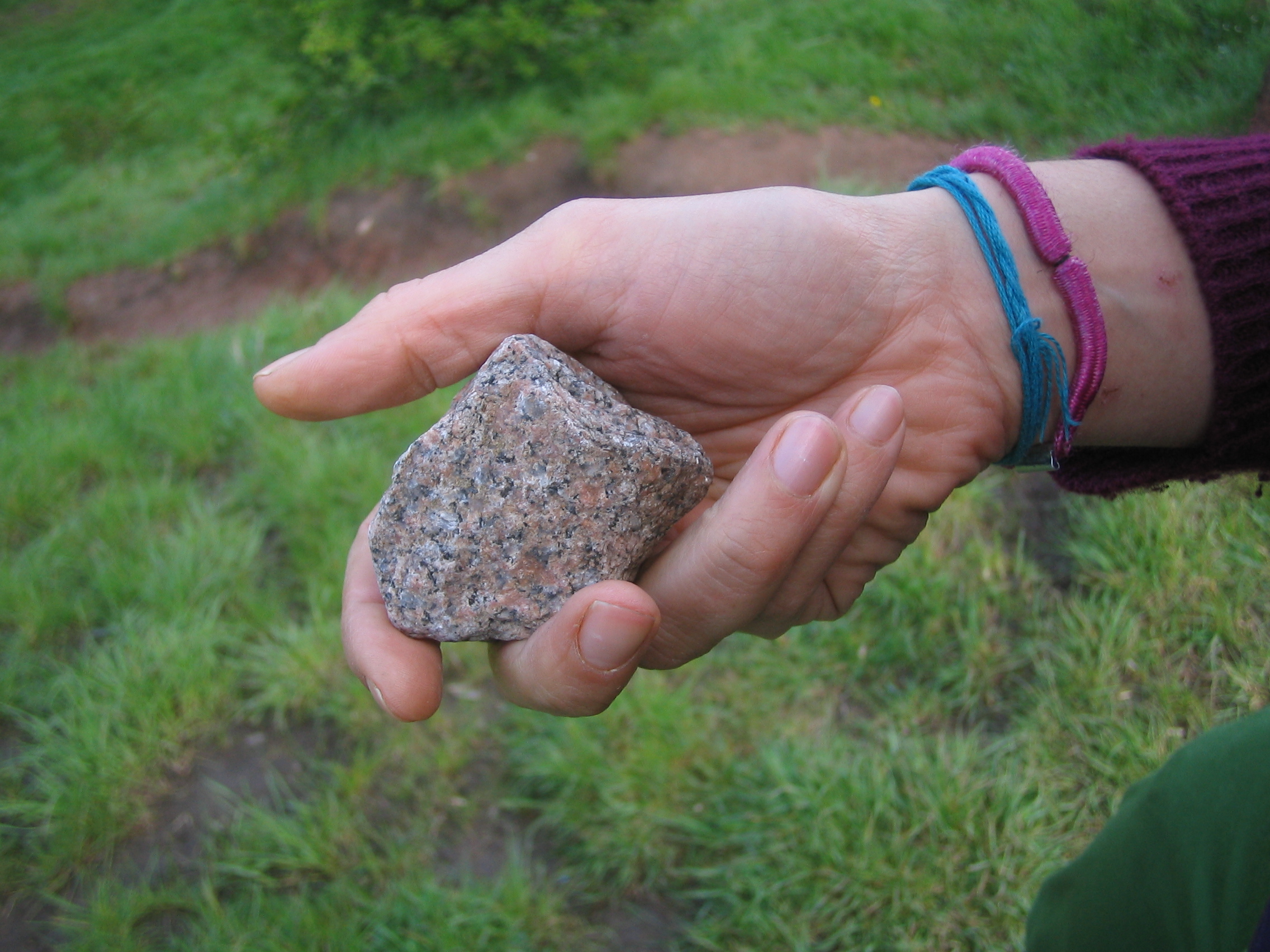
A rock – about like the one in the picture – features in one of the beloved stories of Universalist lore. It seems that back in the late-1700s, the great Universalist preacher John Murray was preaching the good news that a loving God would not condemn creatures of his own making to eternal damnation.
This was a controversial thing to say, and Rev. Murray aroused resistance and hostility.

One Sunday morning he was preaching when a stone came crashing through the window and landed at John Murray’s feet. He picked it up and said,
“This argument is solid and it is weighty. But it is not convincing, and it will not deter us from the truth.”
LoraKim and I once had a rock argument ourselves. In the summer of 1999, about 13 years ago, LoraKim and I were dating. This was almost a year before we got married. She was between her second and third year of divinity school, and I hadn’t started divinity school yet. I was a lay leader in our Nashville, Tennessee congregation as well as the regular preacher at a little Fellowship up the road in Clarksville, Tennessee.

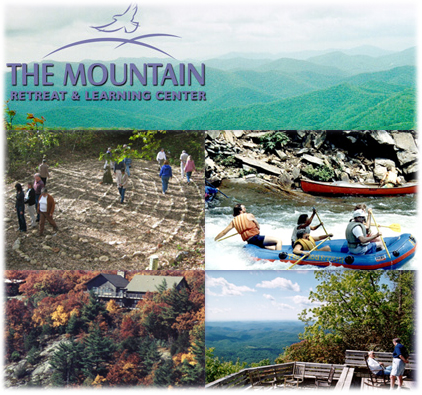
That summer of ’99, I attended the week-long Leadership School at The Mountain. “The Mountain” (their website: click here), is a Unitarian Universalist retreat and learning center in the Appalachian Mountains in western North Carolina, about a 5 or 6 hour drive from Nashville. I was learning about Unitarian Universalist history, and worship, and how not to panic if you were to wake up one morning and discover that you were on a church governing board.

The Mountain was a beautiful setting, out there, surrounded by the mountains and trees. Toward the end of the week, LoraKim dropped by The Mountain to visit for an afternoon on her way to visit her Mom in eastern North Carolina. I had some break time, so LoraKim and I went hiking about along the trails through the woods.

We got to talking in that earnest and deep way that graduate students in humanities fields are prone to do. We had a philosophical disagreement that day that came close to being a fight. We had what may have been our first fight, and we had it about a rock just like the one in the picture.

LoraKim was saying that legitimate care and concern extends to all things.

"Well, not all things. Not this rock," I said, picking up one about the size that might have crashed through the window of John Murray’s church. "It doesn’t have a central nervous system; it doesn’t feel."

Violence against a stuffed animal, she pointed out, enacts violence, cultivates violence in our hearts, and it does harm to us. We agreed about that. There’s harm to us, I agreed, one, from development of tendencies and habits which might then carry over to living creatures, and, two, there’s harm to ourselves and others from the loss of the value the stuffed animals has. But the stuffed animal in itself doesn’t feel harm. It might look like and remind us of something that can feel, but in itself, it’s like this rock.

"We have no way to assess the question of whether a rock is benefited or harmed by being cracked in two," I said.

"What we we have no way to assess," LoraKim said – snapped, almost -- "is how to draw a line where respect and caring stops."

To which I offered this carefully reasoned reply: “Harrumph.”

* * *
Part 1 of 5 of "Earth Justice, People Justice"
Next: Part 2: "Protecting the Life of Commerce"