Showing posts with label Rededicating the Temple. Show all posts

2012-12-28

Light Keeps Shining

What we are invited to remember on Hanukkah is this story of conflict. When we hear a story of conflict, our hearts, or our guts, want to know for whom to cheer. Who were the good guys here?

But in the civil war between Jews more than 2160 years ago, there weren’t good guys and bad guys. There were just people trying to make their way as best they could, and sometimes not doing it very skillfully.

On the one hand, Lake Chalice identifies with a rebel faction fighting against an empire that had slaughtered so many of its people. We have seen “Star Wars” and cheered for the rebels: country bumpkins who hold to an older and mystical religion. Yay for them.

On the other hand, Lake Chalice also identifies with open-ness to new ideas, to learning, to urban and urbane adaptability. If we were to sum up the Lake Chalice philosophy of religion in six words, they might be:
“It’s a metaphor. Go with it.”
Lake Chalice identifies with people who like to read Plato, and who are inspired by Greek ideas of democracy as opposed to patriarchal and priestly rule. (Not that the Seleucid Empire was at all democratic, but they brought Greek thought that planted seeds of democratic hope – and the Jewish rebels had, if anything, even less interest in democracy.)

On the one hand, we identify with oppressed people sticking up for their way of life, refusing to be assimilated.

On the other hand, we also identify with sophisticates frustrated at the traditionalism of the less educated.

The Hanukkah story shows us a conflict in which both sides represent important values. Also: both sides negated some other important values. Perhaps you have experienced conflicts that are like that.

“Hanukkah” derives from the Hebrew verb, “to dedicate.” It’s about rededicating the temple, cleansing the temple from what has profaned it. In the original Hanukkah story, forces of the Seleucid empire had compelled Jews to violate their own laws -- eat pork and bow to a statue -- within temple premises. So the temple required ritual cleansing.

What, then, could Hanukkah, rededicating the temple, mean for liberal religion today? What profanes our temple and calls for recommitment?

Our temples are simultaneously for conserving tradition and transforming tradition: they keep alive our history so that we can build upon it something new. Our temples are temples of both memory and of hope; temples for radical reconstruction to become just what we always truly have been. Our temples mean to be temples of growth, of change, of open-ness to new ideas and new learning – while also being temples rooted in the wisdom of the ages. We who find refuge in a temple of liberal faith sing a living tradition.

Ours are temples where Athens and Jerusalem meet, where the progressives progress toward what is truly worthy, and the conservatives conserve what is truly worthy. If that sounds like a recipe for conflict in the temple, it is. Is it then conflict which profanes our temple and from which at Hanukkah we might turn to rituals of cleansing? No. What profanes our temple are not the conflicts. What profanes our temple is letting the conflicts overshadow love. What profanes our temple is judgmentalism, for the God of our temple is radical hospitality.

Re-dedicating our temple is not an eight-day process. It is a continual process that we engage in every week. Every Sunday is our re-dedication. Re-dedicating the temple, re-committing to open-ness to one another, to staying in the conversation, to striving for understanding, to presence to our own and each others’ confusion and grief, to readiness to learn and be changed – this is our ongoing work. It’s not done in eight days, for, after all, the point is for the light to shine continuously.

It’s just that sometimes it seems like we just don’t have enough oil to last us until that new oil will get here. But the light somehow keeps shining. Even when we’re sure there’s not enough oil for it, the light keeps shining. Even in the midst of all our profanings, the cleansing light of re-dedication keeps shining.

* * *
This is part 4 of 4 of "Rededicating the Temple"
Previous: Part 3: "Free the Hanukkah Eight"
Beginning: Part 1: "The Empire Strikes Back...with Plato and Euclid"

2012-12-27

Free the Hanukkah Eight

As the books of Maccabees tell it, the Seleucids had been ruling over the Jews in Jerusalem for about 30 years when, in 168 BCE, the Emperor Antiochus IV was rumored dead. Jason, who had been the high priest of the temple in Jerusalem, until outmaneuvered by Menelaus, believed the rumor to be true. Jason took advantage of the perceived interregnum to mount a little army of about 1,000 – tiny, but not bad for a priest. Menelaus fled. Emperor Antiochus, rumors of whose death were highly exaggerated, was just coming off a bit of a humiliation in Egypt. Finding that his appointed high priest, Menelaus, had been run out, Antiochus took out his frustrations on Jerusalem. He attacked the town, restored Menelaus as high priest of the temple, massacred a few thousand Jews, outlawed Jewish rites and traditions, and ordered that Zeus be worshipped as the Supreme God. Antiochus then went on his way, leaving behind a governor in Jerusalem, Philip, to enforce Hellenic religion.

Had the people of Jerusalem been (post)modern Unitarian Universalists, they might have adapted to the new worship requirements. "No big deal," they might have said. "Zeus is simply a metaphor for Yahweh. Just go with it."

The people of the second century before the Common Era were not prepared to think that way. The word “Zeus”, and performing the particular rituals of Greek worship, like bowing to a statue of Zeus, meant “us” if you were Antiochus, and meant “them” if you were Jewish. Tribal identity was at stake. There’s no metaphoring around when tribal identity is at stake, when “us” is fighting for its continued existence as a distinct identity against "them.”

The more Hellenized Jews, however, didn’t see it that way. They actually were saying, essentially, “This is no big deal. Just go with it.”

First Maccabees relates how Greek soldiers forcibly gathered the Jewish villages and told them to bow down to a Greek idol, then eat some pork – both practices that are forbidden to Jews. A Greek officer ordered Mattathias, a High Priest, to do these things. Mattathias refused. When another villager stepped forward and offered to cooperate on Mattathias' behalf, Mattathias drew his sword and killed the villager, then turned on the Greek officer and killed him too. That he struck out first against a fellow Jew indicates the simmering civil conflict between the Jewish factions.

Mattathias’ five sons and the other villagers then attacked the remaining soldiers, killing all of them. Mattathias and his family went into hiding in the mountains, where other Jews wishing to fight against the Greeks joined them. Led most prominently by Mattathias son, Judas Maccabee, the rebels retook their land from the Greek Seleucids. The Maccabean revolt succeeded.

Once the Maccabees had regained control, they returned to the Temple in Jerusalem. By this time it had been spiritually defiled by being used for the worship of foreign gods and for sacrificing animals the Jews regarded as unclean. Judas Maccabee restores and rededicates the Temple. That’s the Hanukkah story from First Maccabees, redacted in the late second century, relating the events of 350 years before. See 1 Maccabees 4: 36-59. (Click here).

If you followed the link and read the passage, you might have noticed that there’s nothing about a one-day supply of oil lasting for eight days. You would simply have read the decree that
“every year at that season the days of dedication of the altar should be observed with joy and gladness for eight days”
But why eight days? That bit isn’t explained until a portion of the Talmud written about 600 years after the Maccabean Revolt. That’s where we get the story of the Maccabees discovering that almost all of the ritual olive oil had been profaned. They found only a single container that was still sealed by the High Priest, and thus had not been profaned. That container had only enough oil to keep the menorah in the Temple lit for a single day. They used this, yet it burned for eight days.

Why is eight significant? You might assume that that’s how many days it took to get the temple all cleaned up and re-consecrated. Actually, eight days is simply how long it takes to have new oil pressed and made ready so that the Temple menorah can burn continuously -- a sacred symbol and sign of Jewish freedom.

* * *
This is part 3 of 4 of "Rededication the Temple"
Next: Part 4: "Light Keeps Shining"
Previous: Part 2: "Jew v. Jew; Bible v. Bible"
Beginning: Part 1: "The Empire Strikes Back...with Plato and Euclid"

2012-12-24

Jew v. Jew; Bible v. Bible

After the Greeks came marching into Judea (first Alexander the Great; later the Seleucid Empire), the Jewish urban intellectuals of Jerusalem found Greek thought very attractive and were, more and more, assimilating into the high secular Hellenic culture, abandoning Jewish tradition.

Meanwhile, the traditionalists in the countryside – the country hicks from the small villages around Jerusalem – were having none of it. They didn’t buy that city-slicker sophistication. They had work to do, farms to run, no time for reading Plato or attending Greek drama, and no use for that new Greek gymnasium that had gone up. They had their own literary tradtions and didn’t want them cast aside or overshadowed. When the Hellenizers began to get their people appointed into positions as high priests over the Temple, the traditionalists fought back.

Seleucid Emperor Antiochus IV, wanting to end the civil war, took the side of the Hellenizers. In doing so, he abandoned the usual Seleucid practice of not interfering with the local religions. The standard approach of the Seleucid empire, over its vast range encompassing a great diversity of local customs and rites, like many empires, was: we’re going to take our tribute of taxes, we’re going to conscript some of your young men for the Imperial army, but you can keep your religion and your culture.

In Judea, however, Antiochus faced a situation in which his subjugated people were fighting against each other. To bring peace to the region, he entered the conflict, put the Imperial might behind the Hellenizers – the natural choice for a Hellenic overlord – and sought to quash the Hebrew traditionalists. To do this, he banned the traditional practices of Judaism, persecuted any Jew who maintained the observances, and required the people to follow Greek religious practices, including worshiping Zeus, which meant bowing to a statue.

The Hanukkah story comes to us through the Books of First Maccabees and Second Maccabees. These books say Antiochus was simply wicked. They don’t mention that persecuting the local religions was a total departure from the Seleucid practice in all other places, and they downplay the civil conflict between Jews.

You may be asking: are the books of First and Second Maccabees in the Bible? If you’re Catholic or Eastern Orthodox, the answer is yes. If you’re Jewish or Protestant, the answer is no.

First and Second Maccabees are included in the Catholic Bible (in the Catholic "Old Testament"), and likewise in the Eastern Orthodox "Old Testament." Since the Maccabees books were not written until the first or second century of the Common Era, that means some parts of the "Old Testament" are newer than the "New Testament" (though they describe events that occurred before the Common Era.) While most of the books that Christians call the “Old Testament” come from the Hebrew Bible (the Tanakh), the books of Maccabees do not. For that reason, Martin Luther removed the books of Maccabees and a handful of other material, and created a Protestant "Old Testament" that includes only the books that are in the Tanakh.

This may seem curious to nonJews: First and Second Maccabees are not part of the Hebrew Bible. In fact, there is no reference to, or basis for, Hanukkah in the Hebrew Scripture at all. It’s not in the Torah or any other part of the Tanakh. The whole story that Hanukkah is based on comes entirely from this extra-scriptural “people’s history,” the books of Maccabees.

* * *
This is part 2 of 4 of "Rededicating the Temple"
Next: Part 3: "Free the Hanukkah Eight"
Beginning: Part 1: "The Empire Strikes Back...with Plato and Euclid"

2012-12-21

The Empire Strikes Back...with Plato and Euclid.

Hanukkah, the eight-day festival of lights, began at sundown on December 8 this year and ended at sundown last Sunday, December 16. In the Jewish tradition, Hanukkah is a relatively minor holiday, but it does fall in December, usually, so it has become a sort of Jewish Christmas, even though it would not otherwise be a terribly significant celebration.

Yet the story has power to touch us. It’s a story that comes out of the Maccabean Revolt in the 160s before the Common Era. The First and Second Book of Maccabees painted the Maccabean Revolt as a nationalist uprising of the Jews against the political and cultural oppression of Emperor Antiochus IV of the Seleucid Empire. To some extent, it was. But historians now understand that the root of the conflict was a civil war between orthodox, traditionalist Jews and secularizing, assimilating, Greek-influenced Jews. Antiochus got involved in an attempt to quell the civil disturbance. He took the side of the Hellenizer Jews – and unfortunately escalated the conflict.

We can see ourselves in both the traditionalists fighting against assimilation and in the more educated and secular Jews advocating openness to new ideas. They both represented good. Moreover, the basic conflict between people seeking to retain a way of life and the values of learning and adapting continues to play out today.

To understand the Hanukkah story, we will need some background. Alexander the Great's Greek-Macedonian forces conquered Israel in 333 BCE. Ten years later, in 323 BCE, Alexander the Great died. On his death bed, Alexander carved up his empire and bequeathed various parts of it to his generals.

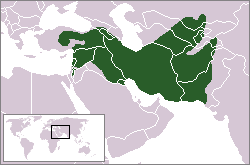
Within another twenty years, the general that got Judea had lost it to Egypt. Another of Alexander’s generals, Seleucus, was more successful. Seleucus expanded on the holdings Alexander left to him, and established his own empire. The Seleucid Empire lasted 250 years, and, at its height, encompassed an area that included:
  • about half of what is now Turkey,
  • all of Syria,
  • all of Lebanon,
  • most of Israel,
  • a sliver of Jordan,
  • most of Iraq,
  • all of Azerbajian,
  • all of Iran,
  • about half of Turkmenistan,
  • half of Uzbekistan,
  • small chunks of Kazakhstan, Kyrgystan, and Tajikistan,
  • almost the entirety of Afghanistan, and
  • about half of Pakistan.
Big empire!

The ruling class of the Seleucid Empire were basically Greek-Macedonian, like Alexander. In 198 BCE, the Seleucids took control of Judea, ending a century of Egyptian control, and returning the region to Hellenic (i.e., Greek-based culture) rule.

The conquest by Alexander, followed up by the Hellenic re-conquest by the Seleucid Empire, introduced challenges and enticements to the Hebrew people: Greek sports, Greek art and architecture, Greek philosophy. The Hebrew people had been beat up on for centuries by Assyrians, by Babylonians, by Egyptians, but these Greeks were something else. They had not only a powerful army, but had more sophisticated thought. The Greeks could subjugate you by force, and then examine your concepts with Plato and Aristotle, win your heart with the tragedies of Sophocles and the comedies of Aristophanes, and top it off by dazzling you with some Euclidean geometry. When I read the Apology of Socrates in high school, it won my heart – I went on to be a philosophy major in college. So I guess you could say I can relate. I'm a "Hellenizer" myself.

* * *
This is part 1 of 4 of "Rededicating the Temple"
Next: Part 2: "Jew v. Jew; Bible v. Bible"