Showing posts with label Mindful Nation. Show all posts

2012-12-11

A Mindful Congregation

Congressman Tim Ryan wrote about “A Mindful Nation.” How about a mindful congregation? What would happen in a congregation committed to cultivating mindfulness?

A mindful congregation would, first, foremost, and always, be accepting, welcoming, and radically hospitable. If certain of the members aren’t ready to do the work, that’s OK. It’s OK for anyone to be exactly where they are in their spirit journey, even if you or I might think they are “stuck.” We have no way of knowing what seeds may be germinating below the surface of another person. By offering the water of unconditional acceptance, we do all that can be done to support the eventual sprouting of those seeds. In a mindful congregation, everyone who just needs a comforting presence for an hour, or a month, or 10 years, could find it, and no one would be castigated for not working hard enough.

At the same time, most of the members of a mindful congregation would be prepared to explicitly embrace the intentional work of emotional and spiritual growth and deepening. Most of the members most of the time would be able to carry through on a resolve to set aside time each day to journal, to study the texts that feel to them to be wise and instructive, to sit in quiet, still mindfulness 20 minutes – and would be able to cultivate the habit of returning throughout their day to attention to immediate experience.

The first source of the living tradition Unitarian Universalists share is:
“direct experience of transcending mystery and wonder affirmed in all cultures that moves us to a renewal of the spirit and an openness to the forces that create and uphold life.”
A mindful congregation would be attuned to “transcending mystery and wonder,” yet, even more, would see “direct experience” as fundamental and would work at paying attention to direct experience.

Most of the members of a mindful congregation would be present on Sunday morning, because that’s part of the work, and most of them would also attend a smaller spiritual practice group once or twice a month because that’s also part of this joy-making work.

A mindful congregation would have an expectational mission: a statement that very briefly indicates the work each member is expected to engage insofar as they are able. There’s a Seattle congregation that has this mission:
"We covenant to awaken spirit, nurture hope, and inspire action."
There’s a New York congregation that has this mission:
“Healing spiritual disconnection by helping each other listen to our deepest selves, open to life’s gifts, and serve needs greater than our own.”
These missions limn the work the members come together to do. By themselves, these statements are unimpressive. Brief and general as they are, however, they are specific enough to guide congregational leaders in developing programs to flesh out the mission’s meaning. For the Seattle congregation, these would be programs focused on learning how to awaken spirit, how to nurture hope, how to inspire and be inspired to action. For the New York example, the programs explicitly explore ways to listen to one’s deepest self, to recognize and receive life’s gifts, and to serve greater needs. A mindful congregation would have an expectational mission, programs designed to specify how to embody that mission, and the members would show up in significant numbers at those programs.

The creation of mindful congregations is my, and our, work.

* * *
This is part 4 of 4 of "Mindful Nation"
Previous: Part 3: "There's Our Work"
Beginning: Part 1: "A Midwestern Congressman Named Ryan"

2012-12-10

There's Our Work

Reactivity in our schools produces increased stress from the negative judgmentalism of peers, which, at the extreme, includes bullying -- and a corresponding inability of bully victims to get unstuck from the role of victim.

Reactivity in our military and police leads to a mentality that, in the extreme, is expressed as “shoot ‘em all and let God sort it out.” Traumatic stress levels can lead to PTSD for the rest of their lives. Some frustration and anger is inherent in the work they do. Absence of skills to manage those feelings is not.

Reactivity shows up in disease rates, and pain, and pain medication, and self-medication with alcohol or drugs, licit or illicit.

Reactivity shows up in gang loyalty to one’s insiders and gang violence toward those seen as rivals.

Reactivity shows up in, “I just don’t understand those people.”

Well, there you go. There’s our work: to understand them. Which includes also understanding ourselves.

There is a way to learn how to manage our reactivity. We don’t suppress it. We don’t judge ourselves, or others, wrong for having a reaction. We don’t indulge the reaction either. We notice it, and are able to make a conscious decision about what to do with that reactive energy.

There is no easy way to health, no magic bullet. It’s not easy to get out and exercise everyday. That’s a hard discipline. But the heart attack you could have prevented hurts a lot more.

It is almost useless to say to someone else – or to ourselves – "Don’t be so reactive." If we haven’t been training ourselves in nonjudgmental awareness, in identifying our feelings, in empathizing with ourselves and with others, then when the reactivity comes – and it does come from time to time for everyone – we have no resources for managing it.

Mindfulness is a crucial resource, if we commit to learn to use it. If a politician can learn it, then we can, too, can't we? Nonviolent communication is another potent resource. By "nonviolent communication," I mean both speaking and listening in ways that at no level treat any being like an object and that at every level affirm every being’s sense of value and security. Acquiring these skills takes work.

Even if we were all really well-trained and practiced at both mindfulness and nonviolent communication, we'd still have problems. Problems, there will always be.
“We will still misplace our keys. We will still forget people’s names. We will still say and do things that may hurt others, including those we love. We will say the exact wrong thing at exactly the wrong time. But in each of these instances, with mindfulness we may do it just a bit less. We may see the humor in our mistakes and be able to laugh at ourselves more. We may be just a little less critical of others, and of ourselves. Or we may deal with our mistakes more quickly and with a more sincere and kind heart. We may more easily forgive the people who have hurt us. We may sit down and have civil political conversations with those who strongly disagree with us.” (Ryan, A Mindful Nation)

* * *
This is part 3 of 4 of "Mindful Nation"
Next: Part 4: "A Mindful Congregation"
Previous: Part 2: "Mindfulness and Reactivity"
Beginning: Part 1: "A Midwestern Congressman Named Ryan"

2012-12-07

Mindfulness and Reactivity

Congressman Tim Ryan read the copy of Jon Kabbat-Zinn's book that Kabat-Zinn's publishers mailed him: Coming to Our Senses: Healing Ourselves and the World through Mindfulness. A couple years later, Ryan went on a 5-day mindfulness meditation retreat led by Jon Kabat-Zinn. Five days of mostly silence, with instructional talks and guidance sprinkled in. Five days of practicing bringing attention to immediate experience -- the mind wandering off, and being brought back. Since then, Congressman Ryan has had a daily mindfulness practice.
“It quiets the mind. It helps you harness more of your energy. It increases your focus and allows you to relax and pay better attention to what you’re doing and to those around you. My football coaches would have loved it. It’s the kind of performance enhancer any athlete would be eager to have. . . . I wrote A Mindful Nation to promote the values of slowing down, taking care of ourselves, being kind, and helping each other.” (Tim Ryan)
With that as prelude, let us look at congregational life. The work of a congregation, at its best, changes its members, transforms them, so that all through their lives, not just on Sunday morning, every waking hour of every day, members display a growing and deepening spiritual maturity. In addition to the transformations of each individual member, this work leads to beloved community.

Beloved community doesn’t just happen because a group of people say they would like it. It takes work. We are, each of us, I believe, called to the ongoing, never-ending work it takes to grow in wisdom, in emotional intelligence, in the three R’s of resilience, reflection, and relationship.

It turns out that "Mindfulness" is a handy way to sum up what is at the core of this work – in our nation and in our congregations.

Congressman Tim Ryan of
Ohio's 13th District
Tim Ryan’s book surveys the scientific studies about how mindfulness practice strengthens our capacity for attention, for nonjudgmental sympathetic understanding. He goes on to devote chapters to mindfulness in our schools: how it can increase our children’s attention and kindness. Mindfulness in our hospitals and doctors offices: how it can improve our health and our healthcare system. Mindfulness in our military, police, and firefighters: how it can improve performance and build resiliency for the military and first responders – and how, later on, mindfulness is the path for coming to terms with PTSD. Mindfulness in the workplace: how it can help us rediscover our values and reshape our economy.

Ryan highlights some examples:
  • Alan Marlatt uses mindfulness to address our national substance abuse problems. Marlatt is the founder of Mindfulness-Based Relapse Prevention.
  • Thousands of mental health counselors and therapists are teaching clients mindfulness to help with depression, with social anxiety, with obsessive-compulsive disorder, and other mental health issues.
  • Midwife Nancy Bardacke, the founder of the Mindfulness-Based Childbirth and Parenting Program has found that expectant parents who learn mindfulness “develop skills for working with the stresses of pregnancy and everyday life.” (163).
  • Others have adapted MBSR (mindfulness-based stress reduction) specifically for teens to equip teens during that very stressful time of life with “the skills they need to keep themselves balanced in a world that can be difficult and complicated for young people.” It trains the brain for resilience and cheerfulness.
  • Oakland’s “Mind Body Awareness Project” is bringing mindfulness training to gang members. Mindfulness enables 12- and 13-year-old boys “see for the first time that it’s OK to be who they are and that they don’t have to belong to a gang to attain self-fulfillment.” (164).
Mindfulness has the power to liberate us from the manacles of our own reactivity. It is reactivity that produces the polarization that we see in our nation and sometimes, in microcosm, in our congregations. Something occurs; we don’t like it; the limbic system is triggered, and we just react. Stress levels go up; the capacity to empathize goes down.

* * *
This is part 2 of 4 of "Mindful Nation"
Next: Part 3: "There's Our Work"
Previous: Part 1: "A Midwestern Congressman Named Ryan"

2012-12-06

A Midwestern Congressman Named Ryan

It’s been one month, now, since the election. To judge from where most of the attention was focused, you might have thought that the election was only in Ohio. It was, it turned out, a national election, and down here in Florida, in fact, we breathed a sigh of relief that this time it didn’t come down to us.

We elected a a president, vice-president, and a slew of senators, governors, and representatives. We elected politicians, and we generally don’t have a very high opinion of politicians. Politicians are generally not well liked.

There’s one congressman, though, that captured my attention: a Midwestern congressman named Ryan. I don’t mean Congressman Paul Ryan from Wisconsin’s 1st congressional district. I mean Congressman Tim Ryan from Ohio’s 13th congressional district. First elected in 2002 at age 29, he was re-elected a month ago to his 6th term.

Last March, Tim Ryan came out with a book: A Mindful Nation. Wow. "A Mindful Nation." Not what I would expect from a sitting congressman. Full title: A Mindful Nation: How a Simple Practice Can Help Us Reduce Stress, Improve Performance, and Recapture the American Spirit. It seems that sitting still and being quiet for a while each day – and trying to be mindful throughout the day – is not only a spiritual discipline but a patriotic duty.

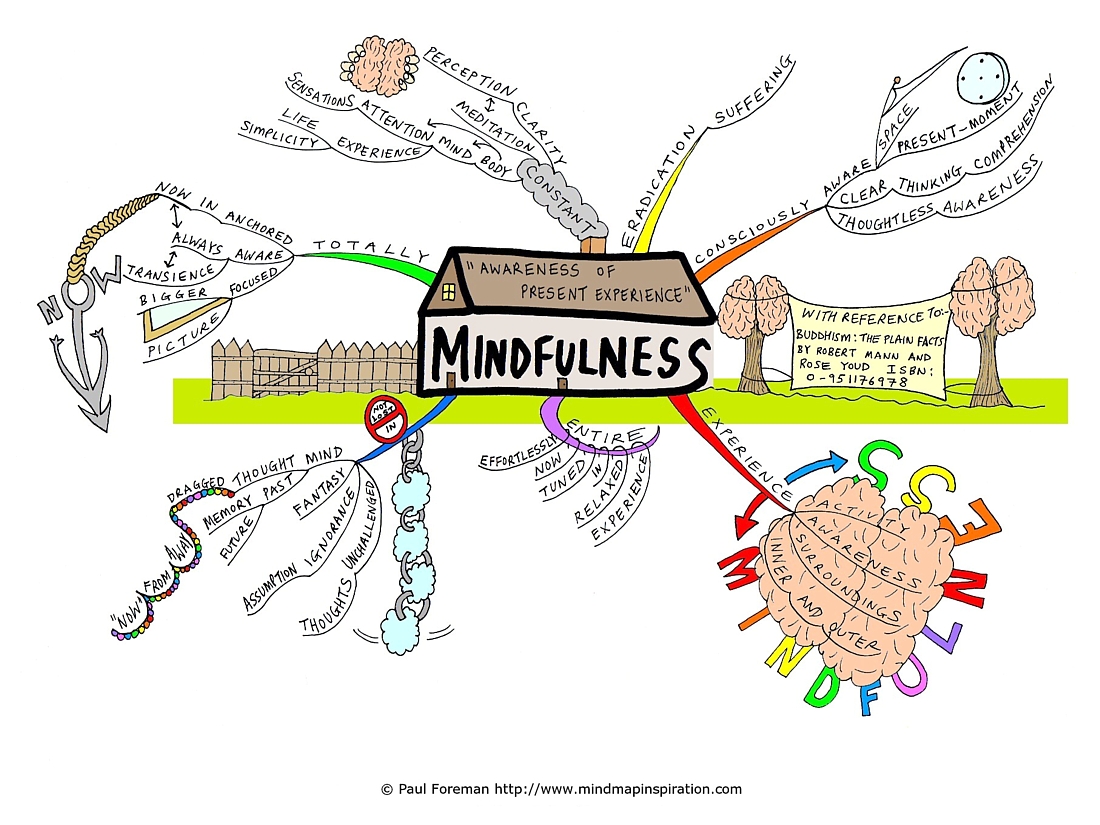
Mindfulness is now a key concept in psychology, referring to a psychological quality that involves:
  • “paying attention in a particular way: on purpose, in the present moment, and nonjudgmentally;”
  • “a kind of nonelaborative, nonjudgmental, present-centered awareness in which each thought, feeling, or sensation that arises in the attentional field is acknowledged and accepted as it is.”
Mindfulness is paying attention to present moment experiences with openness, curiosity, and a willingness to be with what is. So it has two aspects:
  • bringing attention to immediate experience – particularly, noting mental events as they happen.
  • being open, curious, and accepting of whatever it is that you’re noticing.
From a calm awareness of bodily functions, of sensations, of emotions, of thoughts as these things arise, wisdom emerges.

That's easy to say. It takes a lot of practice to develop the habit of doing it.
Congressman Tim Ryan, bringing
mindfulness into schools

Tim Ryan’s journey to mindfulness began with Jon Kabat-Zinn. Jon Kabat-Zinn is himself an interesting guy. Born Jon Kabat in 1944, he hyphenated his last name to Kabat-Zinn when he married Myla Zinn, the daughter of Howard Zinn (1922-2010), the great historian/social activist. Jon, as his father-in-law was, is a man committed to transformation.

A professor of medicine and a long-time student of the Korean Zen master, Seung Sahn, in 1979, Jon Kabat-Zinn integrated medicine and Zen and created MBSR – Mindfulness-Based Stress Reduction – and began teaching it at his Stress Reduction Clinic. Today, over 200 medical centers and clinics in the US and elsewhere use the MBSR model.

Jon Kabat-Zinn is the author of, Full Catastrophe Living:How to Cope with Stress, Pain and Illness using Mindfulness Meditation; and Wherever You Go, There You Are: Mindfulness Meditation in Everyday Life. Then, in 2005, Jon Kabat-Zinn came out with another book: Coming to Our Senses:Healing Ourselves and the World Through Mindfulness. There was a 100-page section on mindfulness and politics, so Kabat-Zinn’s publisher mailed a copy to each of the 535 members of Congress. Casting bread upon the waters. You never know. Maybe one of them will read more than a page.

And one of them did. . . .

* * *
This is part 1 of 4 of "Mindful Nation."
Next: Part 2: "Mindfulness and Reactivity"