Showing posts with label Myths of Scarcity. Show all posts

2012-12-04

The Abundance of Neighborliness

What happened with Jesus and those five loaves and two fish and the thousands of people to be fed? Neighborliness happened. The "kin-dom" of god – a.k.a. public life reorganized toward neighborliness – happened.

A crowd of people had gathered to hear Jesus teach. They had secreted away for their own use food for themselves. Under the influence of this remarkable teacher, they began to open up, began to sense the intrinsic abundance of the life they breathed, and the universe in which they swam. From that sense of boundless provision welled up an urge to share of this manifest plenty. From the bottoms of bags and folds of clothes came forth food to share. From the divinity within them, the divinity that is always there, lying too-often unnoticed, came forth this food. It came from God, which we call by many names, one of them being neighborliness.
“The disciples, asked to feed the crowd, are sure that food is scarce; Jesus performs a ‘miracle’ to reveal how abundant food is even when there is none in sight. In this story, as throughout his active life, Jesus wanted to help people penetrate the illusion of scarcity and act out of the reality of abundance.” (Parker Palmer, The Active Life, 123)
Parker Palmer was once a passenger on a plane that pulled away from the gate, taxied to a corner of the tarmac, and stopped.

The pilot came on the intercom: “I have some bad news and some worse news. The bad news is there’s a storm front in the west. Denver is socked in and shut down. So we’ll be staying here for a few hours. That’s the bad news. The worse news is that we have no food, and it’s lunch time.”

Everybody groaned. Some passengers started to complain. Some became angry. But then, Palmer said, one of the flight attendants did something amazing. She stood up and took the intercom mike and said, “We’re really sorry folks. We didn’t plan it this way and we really can’t do much about it. And I know for some of you this is a big deal. Some of you are really hungry and were looking forward to a nice lunch. Some of you may have a medical condition and really need lunch. Some of you may not care one way or the other, and some of you were planning to skip lunch anyway. So I’ll tell you what we’re going to do. I have a couple of breadbaskets up here and we’re going to pass them around and I’m asking everybody to put something in the basket. Some of you brought a little snack along—something to tide you over—just in case something like this happened, some peanut butter crackers, candy bars. And some of you have a few LifeSavers or chewing gum or Rolaids. And if you don’t have anything edible, you have a picture of your children or spouse or girlfriend/boyfriend or a bookmark or a business card. Everybody put something in, and then we’ll reverse the process. We’ll pass the baskets around again and everybody can take out what he/she needs.”

Palmer writes:
“What happened next was amazing. The griping stopped. People started to root around in pockets and handbags, some got up and opened their suitcases stored in the overhead luggage racks and got out boxes of candy, a salami, a bottle of wine. People were laughing and talking. She had transformed a group of people who were focused on need and deprivation into a community of sharing and celebration. She had transformed scarcity into a kind of abundance.”
After the flight, which eventually did proceed, Parker Palmer stopped on his way off the plane and said to her: “Do you know there’s a story in the Bible about what you did back there? It’s about Jesus feeding a lot of people with very little food.”

“Yes,” she said. “I know that story. That’s why I did what I did.”

Unitarian Universalists know that story too. We Unitarian Universalists have fashioned a wiser understanding of the miraculous. The uninterrupted causal nexus of history and nature is replete with the miracle of community – the miracle of abundance.
* * *
This is part 5 of 5 of "Myths of Scarcity"
Previous: Part 4: "Fabricating Scarcity"
Beginning: Part 1: "Miracles"

2012-12-03

Fabricating Scarcity

What would it look like to live the truth of abundance instead of the myth of scarcity? Here’s a parable from an unknown author that shows what it might look like:
An American businessman was at the pier of a small, coastal Mexican village when a small boat with just one fisherman docked. Inside the small boat were several large yellowfin tuna. The American complimented the Mexican on the quality of his fish and asked how long it took to catch them.

The Mexican replied, “Only a little while.”

The American then asked, “Why don’t you stay out longer and catch more fish?”

The Mexican said he had enough to support his family’s immediate needs. The American then asked, “But what do you do with the rest of your time?”

The Mexican fisherman said, “I sleep late, fish a little, play with my children, take siesta with my wife, Maria, stroll into the village each evening where I sip wine and play guitar with my amigos. I have a full and busy life, senor.”

The American scoffed, “I am a Harvard MBA and could help you. You should spend more time fishing and with the proceeds buy a bigger boat. With the proceeds from the bigger boat you could buy several boats. Eventually you would have a fleet of fishing boats. Instead of selling your catch to a middleman, you would sell directly to the processor, eventually opening your own cannery. You would control the product, processing, and distribution. You could leave this small coastal fishing village and move to Mexico City, then LA, and eventually New York City where you would run your expanding enterprise.”

The Mexican fisherman asked, “But senor, how long will this all take.”

“15-20 years.”

“But what then, senor?”

The American laughed and said, “That’s the best part. When the time is right you would announce an IPO and sell your company stock to the public and become very rich.
You would make millions.”

“Millions, senor? Then what?”

Triumphantly, the American replied, “Then you would retire! You’d move to a small coastal fishing village where you would sleep late, fish a little, play with your grand-kids, take siesta with your wife, and stroll to the village in the evenings where you could sip wine and play your guitar with your amigos.”
The United States certainly does not have a monopoly on scarcity thinking. According to “Bread for the World,” 925 million people in the world are hungry: more than the combined populations of the US, Canada, and all of Europe. Over 27,000 people each day die of hunger or malnourishment-related disease -- most of them children under five. Yet we have enough food.
“In 2008, globally, we grew . . . 4,000 calories per day per person—roughly twice what people need to eat.” (foodfirst.org/en/node/2761, posted 2010 Jan 21)
In fact, 78% of all malnourished children under five in the developing world live in countries with food surpluses: that’s the finding of a study by the American Association for the Advancement of Science.

As Parker Palmer said,
“We create scarcity by fearfully accepting it as law, and by competing with others for resources as if we were stranded on the Sahara at the last oasis.”
That’s what’s happening in the starving parts of the world.

Starvation – spiritual starvation and physical starvation – results from the fearful acceptance of scarcity as law. For
“the true law of life is that we generate more of whatever seems scarce by trusting its supply and passing it around.”
As the Parker Palmer also told us,
“Abundance is a communal act...Community not only creates abundance – community is abundance.”
Walter Brueggemann explains:
“Jesus talks a great deal about the kingdom of God -- and what he means by that is a public life reorganized toward neighborliness.”
If we learn that what we have is enough, it helps others have enough.

* * *
This is part 4 of 5 of "Myths of Scarcity"
Next: Part 5: "The Abundance of Neighborliness"
Previous: Part 3: "What 'Spiritual' Means"
Beginning: Part 1: "Miracles"

2012-11-30

What "Spiritual" Means

Some Unitarian Universalists hit a little mental snag on the word “spiritual.” I grew up with that snag. "Spiritual? What does that mean?"

Let me try this. Spiritual means being aware of abundance. Spiritual means knowing – with an abiding clarity -- that what you have, what you are, where you are, is enough.

It’s one thing to know this in your head. “Right, right, I’m enough. Gotcha. Heard it before. I know that.”

It’s one thing to have that cognitive knowledge. It’s another thing to live that truth with every breath and every step. That’s hard to do. It does not come naturally to us who are acculturated to modern society, and it involves more than cognition. "Spirituality" is quite a handy word for this capacity for not-merely-cognitive perception of abundance.

The abundance is there. We have but to expand the circle of our consciousness to take it in. All the world’s religions teach this.

In the Jewish tradition, the scriptures say it over and over: God is good, God provides, God is faithful. In Genesis, God lovingly brings the entire world into being, and provides human beings with everything they need. "Be fruitful and multiply," God says, and the fruitfulness overflows. The Book of Psalms sings again and again about all the gifts God gives us. Psalm 104 says, all the creatures of the earth
"look to you to give them their food at the proper time. When you give it to them, they gather it up; when you open your hand, they are satisfied with good things." 
Predominant is the picture of God, the generous provider, the faithful parent -- always giving, supplying our needs. The Jewish tradition is emphatic in saying God loves us extravagantly and wants to provide for us, richly and abundantly. That’s the Jewish way of saying that life is inherently abundant.

The Buddhist tradition teaches letting go of desires. Why? Because we have all we need, abundantly. Wanting things to be different obscures from us awareness of the ample riches that are present to us right here, inalienable from us, we have but to notice them.

Taoism’s emphasis is on the Tao, which is usually translated as “the way.” The Japanese word for Tao is “michi”, which means “abounding.” It is abundant everywhere.

Despite the teachings of the dominant religion in our culture, and despite the teachings of every other major world religious tradition, we have a hard time accepting it.

Walter Brueggemann (b. 1933)
We spend much of our lives in the grip of a delusion: the delusion of scarcity. Christian theologian and Hebrew Scripture scholar Walter Breuggemann has written elogquently on "the myth of scarcity."
“The majority of the world's resources pour into the United States. And as we Americans grow more and more wealthy, money is becoming a kind of narcotic for us. We hardly notice our own prosperity or the poverty of so many others. The great contradiction is that we have more and more money and less and less generosity....Though many of us are well intentioned, we have invested our lives in consumerism. We have a love affair with ‘more’ -- and we will never have enough. Consumerism is not simply a marketing strategy. It has become a demonic spiritual force among us.” (“The Liturgy of Abundance, The Myth of Scarcity,” Christian Century, 1999 March 24)
Brueggemann notes that the US has cornered more than three-quarters of the world's resources, but we want more, always more. And the more we have, the less satisfied and the less secure we feel. That's how powerful the myth of scarcity can be: it can take the wealthiest people on earth and make them greedy and mean, unable and unwilling to share.
“The ideology devoted to encouraging consumption wants to shrivel our imaginations so that we cannot conceive of living in any way that would be less profitable for the dominant corporate structures.”
The ideology of consumption requires us to buy the myth scarcity – for if we buy that, then we’ll want to buy lots of other stuff.

If "spirituality" means "awareness of abundance," then it also includes a political capacity to resist corporate structures demanding consumption.

* * *
This is part 3 of 5 of "Myths of Scarcity."
Next: Part 4: "Fabricating Scarcity"
Previous: Part 2: "Interruptions"
Beginning: Part 1: "Miracles"
2012-11-29

Interruptions

The previous Lake Chalice mentioned the “miracle story” of the loaves and fishes – the only miracle story or parable that appears in all four gospels. Here’s the version from the oldest of the four, the Gospel of Mark:
‘The apostles gathered around Jesus, and told him all that they had done and taught. He said to them, “Come away to a deserted place all by yourselves and rest a while.” For many were coming and going, and they had no leisure even to eat. And they went away in the boat to a deserted place by themselves. Now many saw them going and recognized them, and they hurried there on foot from all the towns and arrived ahead of them. As he went ashore, he saw a great crowd; and he had compassion for them, because they were like sheep without a shepherd; and he began to teach them many things. When it grew late, his disciples came to him and said, “This is a deserted place, and the hour is now very late; send them away so that they may go into the surrounding country and villages and buy something for themselves to eat.”
But he answered them, “You give them something to eat.” They said to him, “Are we to go and buy two hundred denarii worth of bread, and give it to them to eat?” And he said to them, “How many loaves have you? Go and see.” When they had found out, they said, “Five, and two fish.” Then [Jesus] ordered them to get all the people to sit down in groups on the green grass. So they sat down in groups of hundreds and of fifties. Taking the five loaves and the two fish, he looked up to heaven, and blessed and broke the loaves, and gave them to his disciples to set before the people; and he divided the two fish among them all. And all ate and were filled. And they took up twelve baskets full of broken pieces and of the fish. Those who had eaten the loaves numbered five thousand…’ (Mark 6:30-42)
Five loaves and two fish. Five thousand were fed. What happened? The story may, of course, have been fabricated from whole cloth, but that hardly matters. What is it a story of? What does it teach us? What is its poetic, rather than "literal-factual," meaning?

The great Unitarian Rev. Theodore Parker notwithstanding, I want to say there was a miracle there – even if there wasn’t . . . what? It gets difficult to say what it wasn’t. Some folks like to say it wasn’t “supernatural,” but that word has so many conflicting meanings, connotations, and associations that I think it is useless. Theologian Daphne Hampson has a phrase that may be helpful here:
“an interruption of the causal nexus of history and nature.” (Hampson, After Christianity, 1996, 12)
Daphne Hampson (b. 1944)
OK. That’s what there wasn’t. Whatever it was that happened that gets represented to us as five thousand being fed from five loaves and two fish, it wasn't “an interruption of the causal nexus of history and nature.” It was a miracle. It was a miracle of and within – not a miracle that interrupted -- the causal nexus of history and nature.

The miracle did interrupt something, though. It interrupted the mind’s chatter about its needs and fears. It interrupted obliviousness and allowed people to notice wonder, beauty, and the abundance that life presents in each moment. It’s a story that still has the power to interrupt the ego’s defense mechanisms and call us to neighborliness – call us to expand our circle.

* * *
This is part 2 of 5 of "Myths of Scarcity."
Next: Part 3: "What 'Spiritual' Means"
Previous: Part 1: "Miracles"

2012-11-27

Miracles

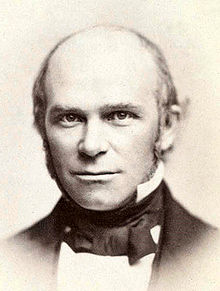
Theodore Parker (1810-1860)
Unitarians and Universalists have had an evolving understanding of miracles. The issue of miracles was, in fact, a defining point in our history. Prior to the Civil War, in the 1840s, Unitarian minister Theodore Parker created a stir by saying Jesus did not perform the miracles that most Westerners at that time interpreted the gospels as saying Jesus did perform.

Theodore Parker’s preaching career spoke to many topics, most of which were lost on his critics who only heard one thing: Rev. Parker denies the miracles. This is the tradition we inherit. It is the ground from which we grow. It doesn't have to be the mud in which we are stuck, for the tradition we inherit also includes an older wisdom concerning the miracle of abundance and community.
“To everything there is a season, and a time to every purpose under heaven.” (Ecclesiastes)
There was a time for hard-nosed denial of the miraculous. And there is a time for rediscovering and reclaiming that older wisdom. I’m talking about the kind of miracle of abundance in and through community that the Quaker writer Parker Palmer spoke of:
Parker Palmer (b. 1939)
"Daily I am astonished at how readily I believe that something I need is in short supply. If I hoard possessions, it is because I believe that there are not enough to go around. If I struggle with others over power, it is because I believe that power is limited. If I become jealous in relationships, it is because I believe that when you get too much love, I will be short-changed. The irony, often tragic, is that by embracing the scarcity assumption, we create the very scarcities we fear. If I hoard material goods, others will have too little and I will never have enough. If I fight my way up the ladder of power, others will be defeated, and I will never feel secure. If I get jealous of someone I love, I am likely to drive that person away. We create scarcity by fearfully accepting it as law and by competing with others for resources as if we were stranded in the Sahara at the last oasis. In the human world, abundance does not happen automatically. It is created when we have the sense to choose community, to come together to celebrate and share our common store. Whether the scarce resource is money or love or power or words, the true law of life is that we generate more of whatever seems scarce by trusting its supply and passing it around. Authentic abundance does not lie in secured stockpiles of food or cash or influence or affection but in belonging to a community where we can give those goods to others who need them—and receive them from others when we are in need. Here is a summertime truth: abundance is a communal act, the joint creation of an incredibly complex ecology in which each part functions on behalf of the whole, and in return, is sustained by the whole. Community doesn’t just create abundance—community is abundance.” (Palmer, Let Your Life Speak)
Yes, the “true law of life,” is this miracle “that we generate more of whatever seems scarce by trusting its supply and passing it around.” Expand the circle, and it will be full.

Thomas Jefferson (1743-1826)
One of the miracle stories of Jesus – in fact, the only miracle story that appears in all four gospels – is the story of the loaves and the fishes. This seems to be just the sort of miracle that Theodore Parker was at pains to deny. Thomas Jefferson, in creating the “Jefferson Bible” cut-and-pasted favorite passages from the four gospels, and he excised this story all four times. We stand today upon the shoulders of Parker and Jefferson, grateful for the work they did. In the time of Jefferson and continuing through the time of Parker, a certain conception of the miraculous exerted a kind of “tyranny over the mind” – and Jefferson had declared:
“I Have Sworn Upon the Altar of God eternal hostility against every form of tyranny over the mind of man."
They served the cause of human freedom in their times by calling our attention, instead, to Jesus’ ethics and teachings.

One generation’s liberation, however, can become a subsequent generation’s chains. If we throw out the story of the loaves and the fishes, we forego the lesson it teaches of the “natural” miracle of abundance.

* * *
This is part 1 of 5 of "Myths of Scarcity"
Next: Part 2: "Interruptions"