2011-05-28

Saturdao 3

Dao De Jing, verse 2a

James Legge (1891):
All in the world know the beauty of the beautiful, and in doing this they have (the idea of) what ugliness is; they all know the skill of the skilful, and in doing this they have (the idea of) what the want of skill is.
So it is that existence and non-existence give birth the one to (the idea of) the other; that difficulty and ease produce the one (the idea of) the other; that length and shortness fashion out the one the figure of the other; that (the ideas of) height and lowness arise from the contrast of the one with the other; that the musical notes and tones become harmonious through the relation of one with another; and that being before and behind give the idea of one following another.
Archie Bahm (1958):
It is because we single out something and treat it as distinct from other things that we get the idea of its opposite. Beauty, for example, once distinguished, suggests its opposite, ugliness.
And goodness, when we think of it, is naturally opposed to badness.
In fact, all distinctions naturally appear as opposites. And opposites get their meaning from each other and find their completion only through each other. The meaning of “is” and “is not” arise from our distinguishing between them.
Likewise, “difficult and easy,” “long and short,” “high and low,” “loud and soft,” “before and after” – all derive their meanings from each other.
Frank MacHoven (1962):
Whenever the most beautiful is perceived ugliness arises, the least beautiful. Whenever good is perceived evil exists, its natural opposite.
Thus, perception involves opposites: reality and fantasy are opposing thoughts; difficult and simple oppose in degree; long and short oppose in distance; high and low oppose in height; shrill and deep oppose in tone; before and after oppose in sequence.
D.C. Lau (1963)
The whole world recognizes the beautiful as the beautiful, yet this is only the ugly;
the whole world recognizes the good as the good, yet this is only the bad.
Thus Something and Nothing produce each other;
The difficult and the easy complement each other;
The long and the short off-set each other;
The high and the low incline towards each other;
Note and sound harmonize with each other;
Before and after follow each other.
Gia-Fu Feng and Jane English (1972):
Under heaven all can see beauty as beauty only because there is ugliness.
All can know good as good only because there is evil.
Therefore having and not having arise together.
Difficult and easy complement each other.
Long and short contrast each other;
High and low rest upon each other;
Voice and sound harmonize each other;
Front and back follow one another.
Stan Rosenthal (1984):
"Letting Go of Comparisons"
We cannot know the Tao itself,
nor see its qualities direct,
but only see by differentiation,
that which it manifests.
Thus, that which is seen as beautiful
is beautiful compared with that
which is seen as lacking beauty;
an action considered skilled
is so considered in comparison
with another, which seems unskilled.
That which a person knows he has
is known to him by that which he does not have,
and that which he considers difficult
seems so because of that which he can do with ease.
One thing seems long by comparison with that which is, comparatively, short.
One thing is high because another thing is low;
only when sound ceases is quietness known,
and that which leads
is seen to lead only by being followed.
Jacob Trapp (1987):
“Relativity”
It is man’s limitation to know
Beauty in contrast to ugliness,
Goodness in contrast to evil,
Being in contrast to non-being.
Men think in terms of opposites:
The difficult or the easy, in doing;
Short or long, in measurement;
High or low, in position or tone;
Earlier or later, in time.
Stephen Mitchell (1988):
When people see some things as beautiful,
other things become ugly.
When people see some things as good,
other things become bad.
Being and non-being create each other.
Difficult and easy support each other.
Long and short define each other.
High and low depend on each other.
Before and after follow each other.
Victor Mair (1990):
When all under heaven know beauty as beauty, already there is ugliness;
When everyone knows goodness, this accounts for badness.
Being and nonbeing give birth to each other,
Difficult and easy complete each other,
Long and short form each other,
High and low fulfill each other,
Tone and voice harmonize with each other,
Front and back follow each other –
it is ever thus.
Michael LaFargue (1992):
When everyone in the world recognizes the elegant as elegant...
then ugliness has just appeared.
When all recognize goodness as good...
then the not-good has just appeared.
Yes:
'Being' and 'nothing' give birth one to the other
'the difficult' and 'the easy' give full shape to one another
'what excels' and 'what falls short' form one another
'the noble' and 'the lowly' give content to one another
the back and the front follow one another.
Always.
Peter Merel (1995):
“Abstraction”
When beauty is abstracted
Then ugliness has been implied;
When good is abstracted
Then evil has been implied.
So alive and dead are abstracted from nature,
Difficult and easy abstracted from progress,
Long and short abstracted from contrast,
High and low abstracted from depth,
Song and speech abstracted from melody,
After and before abstracted from sequence.
GNL 4.1
“Distinction”
When beauty is discovered

Then ugliness emerges;

When good is discovered

Then evil emerges.
So alive and dead are distinguished from nature,

Difficult and easy from progress,

Long and short from contrast,

High and low from depth,

Song and speech from melody,

After and before from sequence.
Ursula LeGuin (1997):
“Soul food”
Everybody on earth knowing
that beauty is beautiful
makes ugliness.
Everybody knowing
that goodness is good
makes wickedness.
For being and nonbeing
arise together;
hard and easy
complete each other;
long and short
shape each other; high and low
depend on each other;
note and voice
make the music together;
before and after
follow each other.
Ron Hogan (2002):
If something looks beautiful to you,
something else must be ugly.
If something seems good,
something else must seem bad.
You can't have
something without nothing.
If no job is difficult,
then no job is easy.
Some things are up high
because other things are down low.
You know you're listening to music
because it doesn't sound like noise.
All that came first,
so this must be next.
Roger T. Ames and David L. Hall (2003):
As soon as everyone in the world knows that the beautiful are beautiful,
There is already ugliness.
As soon as everyone knows the able,
There is ineptness.
Determinacy (you) and indeterminacy (wu) give rise to each other,
Difficult and easy complement each other,
Long and short set each other off,
High and low complete each other,
Refined notes and raw sounds harmonize (he) with each other,
And before and after lend sequence to each other –
This is really how it all works.
Yasuhiko Genku Kimura (2004)
When the world recognizes beauty as beauty, ugliness arises.
When the world recognizes good as good, evil arises.
Being and non-being create each other.
Difficult and easy define each other.
Long and short form each other.
High and low support each other.
Tone and voice accompany each other.
Before and after follow each other.
Stephen Addiss and Stanley Lombardo (2007):
Recognize beauty and ugliness is born.
Recognize good and evil is born.
Is and Isn’t produce each other.
Hard depends on easy,
Long is tested by short,
High is determined by low,
Sound is harmonized by voice,
After is followed by before.

Remember this day. We shall not see such similarity of translation again. The point here in the first half of verse 2 is comparatively simple and straightforward: not a whole lot for translators to disagree about. Even Bahm is pretty much in line on this one. The repetition of such similarity does drive home a point, reminding me that the symbol of Daoism is the yin-yang: the black and the white offsetting each other, each defining the space of the other, just as this verse says.

Differentiation defines -- not always through opposition. Rather than opposing, sometimes the terms of the pair "complement" or "rest upon", or "complete," or "harmonize with," or "follow," or "lend sequence to," or are "tested by," or "shape" each other.

The cumulative effect also, eventually, is to recommend the irreality of all judgments. We are told that, “high is determined by low,” which teaches us that both high and low are unreal, which teaches us that we could drop all this judging of things as high or as low if we wanted to.

So what's up with the parentheses in the Legge? Which is it? Do existence and nonexistence give birth to one another, or is it only that the idea of the one gives birth to the idea of of the other? Ah, grasshopper. Same thing.

At the end of this section, we read, “before and after follow each other” (LeGuin) or a very similar variation such as “After is followed by before” (Addis, Lombardo), or, venturing just a bit afield, “Before and after oppose in sequence” (MacHovec). All this creates a context within which I appreciate Hogan’s smart-ass lip: “All that came first, so this must be next.”
* * *
Next: Saturdao 4.
Previous: Saturdao 2.
Beginning: Saturdao 1.

2011-05-27

The Real Wealth of Nations

Unitarian Universalists covenant to affirm and promote seven principles. The first of those principles is, "the inherent worth and dignity of every person." It behooves us, and any allies also concerned to promote worth and dignity, to look carefully into the questions: What factors most contribute to a populace's sense of itself as having lives of worth, value, dignity, well-being? Worth and dignity are inherent, yet are not always manifest, promoted, or fully enjoyed as the blessing they are. What factors most undermine the possibilities for a life in which worth and dignity are manifest and celebrated?

There is much we don't know about how our societies can best engender lives that manifest their inherent worth and dignity. In the last decade, though, we've learned a few things. We have begun to understand that the true wealth of a people, the real measure their well-being, is not very well captured by their nation's Gross Domestic Product; and we have begun to refine better measures.

Adrian White of Britain’s University of Leicester tackled the question of comparing well-being, overall satisfaction with life, in 178 countries. Health, low poverty, access to basic education, and being a citizen of a small country are the most significant factors that correlated with high satisfaction with life.

Happiest country? Denmark. It has a high standard of living, negligible poverty, government-run health-care for all, excellent public education for all – and, because it’s a small population, they have a strong sense of identity. Identity does matter. I guess they go around humming, “There’s nothing like a Dane.”

Numbers two, three, and four: Switzerland, Austria, and Iceland – all of them small countries. They have low crime rates, good infrastructure, good education – good welfare states that provide quality government-run healthcare, provide job training and job placement so unemployment are poverty are low. In these countries, public education is well-funded, and high percentages of people have college degrees. There is extensive and efficient public transportation systems (compare that to the US where studies show that for us, two of the three least happy times of the day are the commute to work and the commute back home). These countries also have beautiful picturesque scenery; gender equality and societies of open acceptance of gays, lesbians, bisexuals, and transgenders; democratic governments and engaged citizenries.

Something else all of the four happiest countries in the world have: a lot of snow. If snow is what makes people happy, we Floridians are in the wrong place.

Coming in at number 5 in well-being and satisfaction with life: the Bahamas! All right! There are indeed different paths to life satisfaction. The Bahamas have relatively high poverty, but strong family values, beautiful weather, a laid-back lifestyle – and those popular alcoholic drinks called Bahama Mamas – combine to make for a life very different from Denmark, but also very satisfying.

Then, for numbers 6 and 7, we're back to the snow: Finland and Sweden. Numbers 8 through 12: Bhutan, Brunei, Canada, Ireland, and Luxembourg. All of the top 12 are fairly low-population countries. High population nations have a harder time of it.

African countries did the worst. Zimbabwe, with an AIDS rate of 25%, an average life expectancy of 39, and an 80% poverty rate, you’d expect not to have high well-being. It was next-to-last. Burundi was last, racked by conflict between the Hutus and Tutsis (BusinessWeek Europe, 2006 October 11).

Adrian White’s study was published in 2006. There have since been further and larger studies: the World Values Survey in 2008; and the Gallup World poll is constantly tracking results around the world. They use telephone surveys where there are phones, and door-to-door interviews in less-developed regions. They assess well-being on two measures:

One, they ask subjects to reflect on their overall satisfaction with their current lives and also with their anticipated future lives, on a scale from 0, worst possible life, to 10, best possible life.

Two, they asked a series of questions about how each subject had felt the previous day: did they feel well-rested, respected, free of pain, intellectually engaged, et cetera.

They combined the measures for an overall score (Forbes, 2010 July 14). The different studies, with slightly different methodologies produce some shuffling around of the order. The most constant finding of the various studies is that Denmark, over and over, appears as number 1. The latest Gallup World Poll, released last July (2010), found the five happiest countries to be: Denmark, Finland, Norway…and tied for fourth place, Sweden and the Netherlands. The United States is now up to 14. The top five countries are generally wealthy – but they aren’t the wealthiest. By GDP, the top five countries in well-being rank only 19th, 21st, 5th, 16th, and 12th in GDP per person.

The happiest countries have their basic needs taken care of to a higher degree than other countries. And again we see that different strategies for national happiness can work. Some relatively poor nations score high in well-being. In this latest Gallup World Poll, Costa Rica and New Zealand are tied for 6th happiest, even though New Zealand is 37th in GDP per capita, and Costa Rica is 76th.

Some wealthy countries are less satisfied with life than some poorer ones. Poor countries that sustain high well-being tend to do it with factors like “solidarity among tight-knit communities, religious conviction, and patriotism” (BusinessWeek Europe, 2008 August 20).

Cultural factors play out in other ways that aren’t clear. For instance, the French are down at 44th. Is that because French culture cultivates dissatisfaction? It don’t know. It is the country, after all, that invented ennui. Still, I think we have to say that you can be wrong about a lot of things, but by-and-large, the role of self-delusion on this is fairly small. For the most part, if you think you’re satisfied with your life, then you are. A culture that encourages thinking of yourself as satisfied is a culture that helps you be satisfied. Danish culture encourages an attitude summed up in their word hygge (hooga).
Difficult to translate and even harder to comprehend, hygge roughly describes a cozy, convivial sentiment that involves strong family bonds. . . . [and the sense] that you are not supposed to have anything to do except let go. (BusinessWeek Europe, 2008 August 20)
The newest Gallup World Poll has Russia in 73rd, Japan at 81st, with India and China at 115th and 125th. The deeply impoverished nations of Africa retain their position as least happy places on the planet.

What does all this tell us?

First, the fact that much of Africa is in misery warrants our attention. Straightforward old-fashioned economics tells us some of that story. The per capita GDP per year in the United States is $48,000. As you go down the list of nations ranked by per capita GDP, you get half-way down the list and there’s Jamaica at $7,700 a year – less than one-sixth, per person, of the US, yet still more than half the countries in the world. You get three-fourths of the way down the list and there’s Micronesia at $2,200 per person per year. Nations at the very bottom of the list are all African. In Burundi, Congo, Zimbabwe, the Gross Domestic Products, respectively, are $400 per person per year, $300 per person per year, and $200 per person year.

How do they live? Not well – and not long: life expectancy in Zimbabwe is the world’s lowest at 37 years for men, 34 years for women (Bob Herbert, "Zimbabwe is Dying," New York Times, 2009 Jan 16). What does the worth and dignity of a person require? They have worth and dignity – that is inherent and that is the conviction of our faith. What is required to affirm and promote that worth and dignity? People require basic medical care and nutrition; a house. People who are largely free of disease (and we have the capability to get disease way down from where it is) and reasonably healthy, have a chance to be thriving.

"Thriving" is the word that researchers use. On that 0 to 10 scale, individuals who rate their current lives as a “7” or higher and their future an “8” or higher are counted as “thriving.” In Denmark, 82 percent of the population is thriving. Here in the US, 57 percent are thriving. There are 13 African countries where the percent of people thriving is 1 to 5 percent. If we believe in promoting worth and dignity, we must believe in the need to address conditions of such deep and wide despair.

Disease will come to us all if we survive accidents long enough, but let us cure what we can -- and then look to what else a reasonably healthy person needs to thrive. This is what it takes to affirm and promote the inherent worth and dignity of every person.

I am not talking about charity, about simply sending more and more crates of food and medicine. I am not talking about us giving them what they need. I take my cue here from the Industrial Areas Foundation, a network of community organizations started by Saul Alinksy in Chicago in the 30s, 40s, and 50s. Alinsky’s principles also led to the organization PICO – People Improving Communities through Organizing, of which Gainesville’s Action Network is a member. When these groups give training in Community Organizing, they teach a principle they call the “iron rule”: never do for others what they can do for themselves. It’s a complement to the golden rule.

Together the golden and iron rules offer guidance on how to affirm and promote the inherent worth and dignity of every person. Do unto others as you would have them do unto you. And: Never do for others what they can do for themselves. Violation of either rule is failure to respect the other, failure to stand with them as equals, failure to respond with compassion to real needs while also honoring what abilities they do have, failure to affirm and promote the worth and dignity that inheres to them.

So I am not talking about more charity, though sometimes that is called for. Rather than us giving to them, I mean participating with them to explore ways to set up a system so that everyone can have the opportunity to provide for themselves. Systems of exploitation from outside and tribal conflicts inside Africa call for our attention to lift them from misery. At the same time, for the rest of the world and ourselves, thriving calls for more than mere subsistence. Subsistence is stressful.

To affirm and promote inherent worth and dignity everywhere we must go beyond mere economics. Gross domestic product and gross national product, as we have seen, have a role but not always the main or decisive role in human thriving. We need another measure. We need to look less at gross national product and more at gross nation happiness. We need to look at measures of human well-being that also take into account the planet’s well-being. And that means we do have to do value measurements. The new field of ecological economics, for example, seeks to give nature credit for all the value she produces for us.

Natural resources have always counted as part of an economic picture, but traditional economics has not noticed such things as the value of the nutrient cycling performed for us by oceans and estuaries. In standard economics, a tree is a tree, and it has a certain value for timber. In ecological economics, if the tree is surplus to what is needed for ecosystem sustainability, if systems of replanting and replacement are adequate, fine, but if harvesting it isn’t sustainable then the damage the ecosystem must be subtracted from the value of the timber. Every species genome represents a measurable instructional capital, and if cutting down the tree is a part of habitat destruction that leads to species extinction, the value of that capital must also be subtracted.

I know that, really, a tree is priceless – and a species is beyond measure. If you say to me, Meredith, you can’t put a number on the beauty of nature or the wholeness that comes from communing with a natural setting, then I’m going to say you’re right. That nature not be commodified – turned into one more commodity – requires our vigilance. At the same time, there are people who need houses. The homeless, the squatters, the refugees and the shantytown residents across this weary globe need real houses, and a little furniture and fuel to cook with and potable water to drink. They have inherent worth and dignity – and we fail in our covenant to affirm and promote their worth and dignity if we aren’t willing to look at how their basic human needs can be met. And that means we have to make determinations of when it’s worth it to chop down some trees and when it isn’t.

We love our seventh principle: respect for the interconnected web of existence. Our calling is to combine that respect, that love of nature, with the affirmation of every one’s worth and dignity. We need ways that traditional economics doesn’t account for to give a quantitative measurement to what, yes, is priceless, yet must be balanced against something else that’s priceless: human thriving. The field of ecological economics is doing that. It’s a new field, and it’s still feeling its way, but its promising.

That’s just one part of new calculations to much more accurately assess our true well-being. So go back to that first list of nations with high well-being. Adrian White’s study had Bhutan at number 8 in the well-being of the population. Bhutan? It’s between India and Tibet, east of Nepal and north of Bangladesh.

Bhutan's area is about half the size of Indiana, and its 2.3 million population is less than half of Indiana’s. Bhutan’s GDP per capita, in US dollars, is $1,400. The average GDP of the other 11 countries in Adrian White's top 12: over $33,600 per person per year. $33,600 per capita vs. $1,400 GDP per capita. What’s happening here?

In 1972, King Singye Wanchuk succeeded to the throne upon the death of his father. Singye was only 17. He set a course toward modernizing his little country, where many people still lived as they had for 100s of years.

He happened to make an offhand remark that his people needed Gross National Happiness more than Gross National Product – and the concept stuck. Advisors and academics set to work to develop instruments to measure the population’s well-being. Soon thereafter, and ever since, proposed policies in Bhutan must be accompanied by a GNH impact statement indicating how the policy will affect Gross National Happiness. Policies are approved only if the GNH impact is shown to be positive.

King Wanchuk believed that material and spiritual development must occur side by side with each reinforcing the other. As Bhutan has developed the concept of Gross National Happiness, the Four Pillars of GNH are:
  • the promotion of sustainable development;
  • preservation and promotion of cultural values;
  • conservation of the natural environment
  • establishment of good governance.
These four pillars are transcultural. They constitute the real wealth of any nation. They are the conditions that nurture thriving lives of manifest worth and dignity. Bhutan's analysts went on to further specify eight factors for their country to use in measuring its Gross National Happiness:
  • Health: physical, mental and spiritual.
  • Time-balance: family, work, leisure and spiritual practice.
  • Social and community vitality;
  • Cultural vitality;
  • Education;
  • Living standards;
  • Ecological vitality – as traditional economics would measure them, is a factor, but only one of the eight.
  • And finally, good governance.
"Good governance" meant democratizing. The people loved their king. In this country where the predominant religion is one of the schools of Tibetan Buddhism, the king is a both secular ruler and national pastor. They didn’t want to vote. They didn’t want a contentious parliament haggling with their king. The king insisted.
Against considerable opposition from his subjects, the popular monarch gradually moved his country toward democracy by insisting on shedding his royal powers in favor of an elected assembly, and executive council of ministers chosen by the assembly, and a separate system of courts. (Derek Bok, The Politics of Happiness, 2010, p. 1)
It took a while. Bhutan finally had its first ever national elections to choose members of its legislature in 2008.

Democracy is a key part of national happiness. We see that in the nation’s that score highest in well-being: they’re democracies. Indeed, research finds significant variation in happiness from canton to canton within Switzerland. The more direct democracy (initiatives, referenda, citizen assemblies) in a given canton, the happier the people. Moreover, these positive effects show up in the citizens in those cantons – the ones eligible to participate in direct democracy – and not in foreign residents.

King Wanchuk and his team continued to develop the concept of GNH. They devised 72 key indicators for measuring progress and evaluating policies. And the country is making solid progress in all areas. From Bhutan, the idea has spread, and the work they did there has served as the foundation for the Global Surveys of National Happiness I cited earlier.

We humans are gradually figuring this thing out. We are learning better and better how to honor the fact that every one has inherent worth and dignity. We haven’t yet figured out how to craft a system in which everyone has an opportunity to thrive, but we’re starting to figure out how to measure how we’re really doing, and that’s a crucial step.

* * * * *
For other sermons on this blog see: Sermon Index.

2011-05-25

Staff Issues

Koan of the Week
Gateless Gate #44
Bajiao’s Staff

Bajiao Huiqing (Basho Esei, b. 880?), 13th Generation.
Line: Mazu (8th Gen.) to Baizhang to Guishan to Yangshan to Nanta to Bajiao.

THE CASE
Master Bajiao said to the assembly, "If you have a staff, I will give it to you. If you have no staff, I will take it away from you!"
WUMEN'S COMMENT AND VERSE
Having it support us, we wade across a river that has no bridge. Having it accompany us, we return to the village on a moonless night. But if you call it a staff, you will go to hell as swiftly as an arrow.

The depths and shallows everywhere
Are all within his grip;
It supports the heavens and sustains the earth,
Everywhere it enhances the spirit of our sect.

What is the self?
This Bajiao said: Facing south and seeing the big dipper.
Such transparency comes from years with the staff,
Getting one home in the dark,
The staff great-great-grandfather Baizhang used to poke
a fox's dead body.
A wild bird returns to her nest
And feeds down the gullets of her young:
What you have is given
continuously.
And lack itself is taken away.
Continuously.
Facing your computer, see the staff.

* * *

Next: Don't Beat the Dog

Previous:
The Old In and Out
What Is the Sound of an Arrow Hitting Oatmeal?

2011-05-24

Spirituality of Resistance, 2

There is nothing either good or bad but thinking makes it so.
- Shakespeare (Hamlet, Act 2, Scene ii)

I ended the previous post (click here) with, “there’s more to it.” I'm not going to back off from, but rather dive into -- for our lives bear tragedies far beyond mosquito bites.

In the story, you'll recall, the farmer raises a fine stallion, and it’s stolen, and it comes back with more horses, one of them throws of the son, breaks his leg, which saves the son from having to join the army. Good, bad, who knows? It just is what it is, right?

Well, wait a minute. The story ended too soon. What about that war that the army was going to fight – forcibly conscripting young men (maybe young women, too – though it’s an old story from ancient China, so in the context of this story, probably not) – to go and kill other young people, likely also forcibly conscripted? It’s one thing to say, a horse comes and goes, and we don’t have to think about it as good or bad. But what about war? Death and loss and suffering on a huge scale. Can we be so shrug-shouldered about that? Would we want to be?

The second of the six "sources of the living tradition we share," articulated in the Unitarian Universalist Association's by-laws is:
Words and deeds of prophetic women and men which challenge us to confront powers and structures of evil with justice, compassion, and the transforming power of love.
What about the work of those prophets? Don’t we need to be able to judge what is good and what is evil in order to confront evil, as the prophetic voices of the past did? If we answer the horrors of abuse, torture, young girls enslaved in prostitution, sweatshops, by saying, "Good, bad, who knows?" then how can we be prophets?

Can we go through life saying, it’s all good, it’s all good? War. It’s all good, so let it happen. Greed, destruction of the planet. It’s all good, so let it happen. It’s one thing for the annoyance of a mosquito bite to dissolve under the gaze of attention. It's quite another thing to face the massive scale of harm humans inflict. How can we say that's all OK? It's not OK.

The loss of a loved one. That's not OK. How could anybody say that was OK? Are we stones that have no feeling?

War, and destruction, and denial of human rights. Those are not OK. The Carolina Parakeet, vast flocks of which used to cover the Eastern U.S., was hunted and it's habitat cut down until it went extinct 100 years ago, and the world lost forever the green and golden beauty of these wonderful birds. That's not OK. Ongoing species loss, destruction of the rainforests, melting of the polar ice caps: these things are not OK.

Yesterday, Justice Anthony Kennedy, writing for a majority, addressed the awful pit of despair known as California's prisons, and he said that level of overcrowding is not OK.

There can seem to be a dilemma between the peace of equanimity and the need for courageous confrontation with harm and oppression. There is one word which names the solvent to dissolve that dilemma: compassion.

You may be confronting the apparent dilemma if you are asking yourself: If there is no good or bad, then why be compassionate? The question itself is the source of the dilemma. Try asking the question from the other side. Instead of looking at what would motivate compassion, look at what blocks compassion.

What is it that blocks your compassion? What keeps you from acting in every moment out of love and caring for any and all who suffer?

I find in my own experience that every time I have failed to be compassionate, it is because there was something I was having a hard time accepting. There was something I didn't want to lose, or didn't want to get. When I can move into a place of accepting reality just as it is, then the barriers to my compassion fall away. I find some judgment about what is good and what is bad at work in me everytime I have failed to be compassionate.

The phrase is: "spirituality of resistance." "Spirituality" refers to the cultivation of inner peace and equanimity, awareness of the final goodness of the universe in which grief and joy are parts of an overarching harmony. Spirituality means being fully at home with our lives and on this earth. "To everything there is a season."

"Resistance" refers to resistance to systems of oppression, harm, ecological destruction, and greed -- resistance to the tendencies to consume and use up the planet, to destroy without thought -- resistance to the impulses to violence -- resistance to whatever is life-denying.

I am NOT talking about "balance." I am not saying, "Have some balance in your life: a balance of inner peace some of the time and activism some of the time." Oh, no. I'm saying that our work as human beings is to cultivate our capacity to have both spirituality and resistance at the same time, all the time, each as the ongoing manifestation of the other.

The energy for resistance flows fiercest when we are not committed to our own ideas, opinions, ideologies about good and bad. Compassion for human suffering flows freest from us when it flows from a source in equanimity. Compassion is drained by the energy we pour into denial or into wanting things to be different. Presence to "just is" leads to action that "just is" -- seeing suffering for what it is, and bringing ourselves to address it as we can, without attachment to results. Compassion does not aim to "make things better" (though it does), it aims only to manifest itself.

There is an aliveness in equanimity, a vitality to inner peace. It is not lethargic complacency -- just the opposite. When the wet blanket of craving and fear and judgment is taken off our heart, we become more fully present to just what is -- more able to engage with our world. From love for all things of this earth just as they are comes the strongest power to resist what hurts them.

2011-05-23

Spirituality of Resistance, 1


An old story from China:
When an old farmer’s stallion wins a prize at a country show, his neighbor calls round to congratulate him, but the old farmer says, “Good, bad, who knows?”
The next day some thieves come and steal his valuable animal.
His neighbor comes to commiserate with him, but the old man replies, “Good, bad, who knows?”
A few days later the spirited stallion escapes from the thieves and joins a herd of wild mares, leading them back to the farm.
The neighbor calls to share the farmer’s joy, but the farmer says, “Good, bad, who knows?”
The following day, while trying to break in one of the wild mares, the farmer’s son is thrown and fractures his leg.
The neighbor calls to share the farmer’s sorrow. The farmer says, as before, "Good, bad, who knows?"
The following week the army passes by, forcibly conscripting soldiers for a war, but they do not take the farmer’s son because he cannot walk.
Good, bad. Who knows?
The Jewish and Christian traditions both study as scripture the wisdom text known as Ecclesiastes. In Ecclesiastes, 6:12, we read:
For who knows what is good for mortals while they live the few days of their vain life, which they pass like a shadow?
Maybe we should give up this whole good-bad thing; stop judging, “this is good,” and “that is bad,” and “I like this,” and “I like that.”


When you say, “this is good” – this cake is good, or this video-game is good or this movie is good, or this house is good, or this friend is good, this person is good, then you are saying: this is something to be happy about. This is a reason to be happy.

What if you had no reason to be happy, you just were? If you have a reason for happiness, then that happiness can be taken away. The person you love could leave, the fun game could break, or stop being interesting. If you have a reason for loving life, what happens if that reason goes away? Can you be glad of aliveness for no reason at all?

When you say, “this is bad,” – this food is bad, this weather is bad, this school is bad -- then you are saying, this is something to be unhappy about. What if nothing were something to be unhappy about? What if you stopped wanting it to be different from what it is, and just noticed it for what it is?

Kids, if you ask your parents to go out for a walk around one of our lakes around here, you'll have a lovely chance to get out into nature. And you can also try this experiment: try it without any bug repellent one time.

The beauty of the trees and water -- that's good, you’re thinking. But without bug repellant, you are very likely to get a mosquito bite -- that’s bad, you’re thinking. Now here's the experiment. When that bite itches -- or you can do this any time you have an itch -- sit still, and give that itch all your attention. What an interesting sensation it is! There it is, maybe tingling a little. Do you feel an urge to scratch? Fine. Bring attention to that urge. Where is that urge to scratch coming from? Usually, I think, when we scratch, we want to make the itch stop because the itch distracts us from whatever else we’re trying to pay attention to. But what if there’s nothing else but that itch that we’re paying attention to? Suddenly we see that the only thing bad about the itch was that we didn’t want it.

This is what that farmer knew: if you don’t judge what is good and what is bad, then everything just is. Without specifying reasons to be happy, everything is a reason to be happy. Without specifying reasons to be unhappy, nothing is a reason to be unhappy.

You think? Actually, there’s a bit more to it. I’ll go into that next time (click here).

2011-05-22

Thank You, Earth

Thank you, Earth.
Thank you for air.
The sunshine:
Morning rising beauty of hope,
Evening setting grace of gratitude.
My brain processes the light that comes from the sky as blue –
I’m not clear on why
Or how a bunch of neurons does that.
And chlorophyll is green because, I don’t know.
I just know the blue sky and the green grass and trees
Are home.

I don’t know why blood is red, either,
The vivid aliveness motion inside me, and us.
Or why flower blossoms are so variously, brightly colored.

Thank you, Earth,
For ants, worms, beetles, spiders, jellyfish, squid.
Thank you for fish: shiny, darting;
And reptiles: gopher tortoises, bright little lizards, dark green gators.
Thank you for birds, and the unignorability of the fact of flying.
Because they are, and I am they, I, too, fly.
Thank you for other mammals: foxes and alpacas

and manatees and rabbits:
The things with hair and milk-making bodies.
All the funny, weird animals – the different ways that life can be.

I imagine living on a space station,
The view, so deep the black, and vast starfields,
Filling me with infinity every day.
Yet.
It takes ground to be grounded.
I was made to be among your colors and life and limited horizons, Earth,
Even when it is dangerous.
Even when it is too hot, too cold, too rainy, too dry,
I was made for you, Earth.
All the millions of species, each was made for you
Out of dirt and water and sunlight.

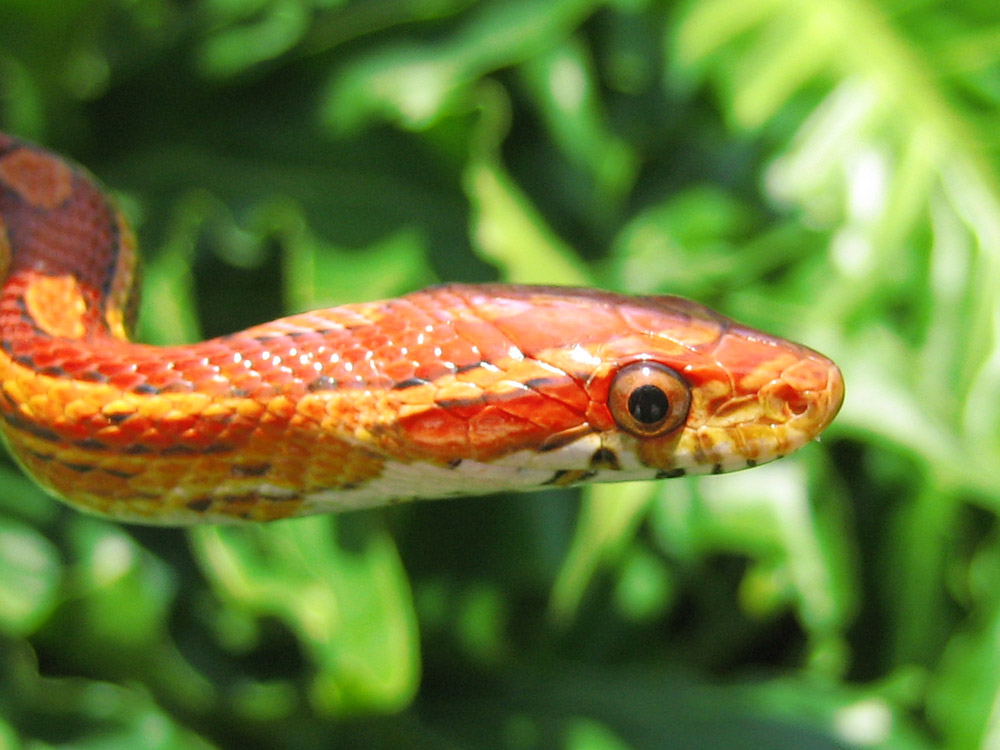
Did you make snakes able to be thankful?
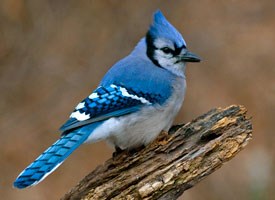
Have blue jays gratitude? Lobsters?
Maybe they are always grateful – and what they aren’t able to be is not thankful.
This is a wonder to me, who am sometimes ungrateful and who other times,
Like today, am
sky-blue thank you and leaf-green thank you and blood-red thank you
And lavender and fuchsia and goldenrod thank you.

Grateful feels good,
Dear Earth,
And you offer so much for which.
Sometimes I forget.
Then I remember again.

2011-05-21

Saturdao 2

Dao De Jing, verse 1b

James Legge (1891):
Always without desire we must be found,
If its deep mystery we would sound;
But if desire always within us be,
Its outer fringe is all that we shall see.
Under these two aspects, it is really the same; but as development takes place, it receives the different names. Together we call them the Mystery. Where the Mystery is the deepest is the gate of all that is subtle and wonderful.
Archie Bahm (1958):
If Nature is inexpressible, he who desires to know Nature as it is in itself will not try to express it in words.
To try to express the inexpressible leads one to make distinctions which are unreal.
Although the existence of Nature and a description of that existence are two different things, yet they are also the same.
For both are ways of existing. That is, a description of existence must have its own existence, which is different from the existence of that which it describes; and so again we have to recognize an existence which cannot be described.
Frank MacHoven (1962):
To see Tao the observer must be motiveless. Those with selfish motives see only the surface, not the innermost depths. These two kinds of observers look alike but differ in the insight of their observations. They look alike because they are both human; within humanity is the key to the door of creation.
D.C. Lau (1963)
Hence always rid yourself of desires in order to observe its secrets;
But always allow yourself to have desires in order to observe its manifestations.
These two are the same
But diverge in name as they issue forth.
Being the same they are called mysteries,
Mystery upon mystery –
The gateway of the manifold secrets.
Feng, English (1972):
Ever desireless, on can see the mystery.
Ever desiring, one can see the manifestations.
These two spring from the same source but differ in name; this appears as darkness.
Darkness within darkness.
The gate to all mystery.
Stan Rosenthal (1984):
To conduct one’s life according to the Tao,
is to conduct one’s life without regrets;
to realize that potential within oneself
which is of benefit to all.
Though words or names are not required to live one’s life this way,
to describe it, words and names are used,
that we might better clarify the way of which we speak,
without confusing it with other ways in which an individual might choose to live.
Through knowledge, intellectual thought and words,
the manifestations of the Tao are known,
but without such intellectual intent we might experience the Tao itself.
Both knowledge and experience are real,
but reality has many forms,
which seem to cause complexity.
By using the means appropriate,
we extend ourselves beyond the barriers of such complexity,
and so experience the Tao.
Jacob Trapp (1987):
Of Nature, the Mystic Mother,
And the unknown, nameless original,
Men may speak as though they were separate;
But such distinctions vanish into the Abyss.
The mystery within deepens into
Profounder mystery beyond.
From the fathomless to the mysterious
Are the gateways into existence.
Stephen Mitchell (1988):
Free from desire, you realize the mystery.
Caught in desire, you see only the manifestations.
Yet mystery and manifestations
arise from the same source.
This source is called darkness.
Darkness within darkness.
The gateway to all understanding.
Victor Mair (1990):
Therefore,
Always be without desire in order to observe its wondrous subtleties;
Always have desire so that you may observe its manifestations.
Both of these derive from the same source;
They have different names but the same designation.
Mystery of mysteries,
The gate of all wonders!
Michael LaFargue (1992):
Yes:
Always: being desireless, one sees the hidden essentials.
Always: having desires, one sees only what is sought.
These two lines are about The Merging –
it is when things develop and emerge from this
that the different names appear.
The Merging is something mysterious –
mysterious, and more mysterious,
the abode of all the hidden essences
.
Peter Merel (1995):
To experience without intention is to sense the world;
To experience with intention is to anticipate the world.
These two experiences are indistinguishable;
Their construction differs but their effect is the same.
Beyond the gate of experience flows the Way,
Which is ever greater and more subtle than the world.
GNL 4.1
Sensation blending with anticipation

To form a continuous surface.
Beneath this surface lies mystery,

Flowing ever deeper and more subtle.
Ursula LeGuin (1997):
So the unwanting soul
sees what's hidden,
and the ever-wanting soul
sees only what it wants.
Two things, one origin,
but different in name,
whose identity is mystery.
Mystery of all mysteries!
The door to the hidden.
Ron Hogan (2002):
Stop wanting stuff;
it keeps you from seeing what's real.
When you want stuff, all you see are things.
Those two sentences
mean the same thing.
Figure them out,
and you've got it made.
Roger T. Ames and David L. Hall (2003):
Thus, to be really objectless in one's desires (wuyu) is how one observes the mysteries of all things,
While really having desires is how one observes their boundaries.
These two – the nameless and what is named – emerge from the same source yet are referred to differently.
Together they are called obscure.
The obscurest of the obscure,
They are the swinging gateway of the manifold mysteries.
Yasuhiko Genku Kimura (2004)
Nothingness, it is the inner being of the Kosmos.
Thingness, it is the outer distinctions of the Kosmos.
These two, though different in names, arise from the same source:
The source called the Invisible.
Invisible beyond the invisible.
It is the entry into the myriad wonders of the Eternal Kosmos.
Stephen Addiss and Stanley Lombardo (2007):
Empty of desire, perceive mystery.
Filled with desire, perceive manifestations.
These have the same source, but different names.
Call them both deep – Deep and again deep:
The gateway to all mystery.

Are you thinking: The translations are so different, how could these people all be reading the same text? Ah, there you have it. We encounter the fathomless mystery of Dao, source from which flow the myriad different things. Likewise, we encounter the fathomless Dao De Jing, source from which flow the myriad different translations. The text is performative of its subject.

As Bahm says, Reality can't be described. Not only that, but the "description" (which doesn't describe) can't be described either . . . because, after all, it, too, is part of reality.

We see things differently, depending on whether we want something (out of it), or don't. Still, it's the same thing. The mystery itself has a further source -- the "darkness" (Feng-English, Mitchell), which is source of both mystery and manifestation, or "the Abyss", which is "the mysterious" behind the "the fathomless" (Trapp). For MacHoven, instead of "darkness" or "abyss", it's "the key" "within humanity." LaFargue's "The Merging" suggests an inverse picture: rather than a prior oneness from which both mystery and manifestation flow, LaFargue suggests the "essentials" and the "what is sought" flow together, merge, to create that oneness.

Several of the translations seem to be urging us to drop desires -- "stop wanting stuff" (Hogan). Mair's perspective is wiser: "always be without desire" and "always have desire." By having both, always at the same time, we can observe both the "wondrous subtleties" and "its manifestations." (Interesting how simply putting colons after "always," as LaFargue does, so completely changes the meaning.)

Ames and Hall offer this commentary:
Experience is most replete when we entertain it in both its determinate and its indeterminate aspects, appreciating both the contingent boundaries that mediate it and make it meaningful for us, and the spontaneous emergence of novelty that can only be immediately felt. . . . Born into a contextualizing world and persisting within it, the event gradually and in degree allows for conceptualization, and can be understood in such terms. In the course of time, the event begins to disperse and return, at first disappointing and then ultimately compromising those same rational structures that earlier promised meaning. . . . Beyond the cognitive understanding of experience, there is the epistemology of caring. We know things most immediately and profoundly through empathic feeling. . . . We can only know specifically, yet process requires that we constantly surrender the specificity of what we know. Optimally, then, we must have desires while at the same time be resolutely "objectless" in these desires. (78-79)
Which takes us back to not being able to describe the description either, eh?
* * *
Next: Saturdao 3.
Beginning: Saturdao 1.

2011-05-18

The Old In and Out

Koan of the Week
Blue Cliff Record #33
Chenzao Visits Zifu

Zifu Rubao (Shifuku Nyoho, b. 871?), 13th Generation.
Line: Mazu (8th Gen.) to Baizhang to Guishan to Yangshan to Xita to Zifu.
No notable dharma brothers or descendants.
Other koans with Zifu: "Yanguan and the Rhinocerous Fan" (BCR 91, BOS 25)

THE CASE

National Secretary Chenzao went to see Zifu.
When Zifu saw him coming, he drew a circle.
Chenzao said, "It is already straying from the essence that your student has come to you at all. Why do you draw a circle in addition to that?"
Thereupon Zifu closed the door of his room.
(Xuedou said, "Chenzao has but one eye.")

Did you notice that in Hoop Dreams
You always miss the free throw?
The circle, the daily round,
Does not open to let you out –
You open yourself to it.
Or were you wanting in?
You open yourself.
Did you notice that you don’t know:
When Zifu closed the door, was Chenzao in or out?
Neither did Zifu.

* * *

Next: Staff Issues

Previous: What Is the Sound of an Arrow Hitting Oatmeal?

2011-05-15

The Ecospiritual Challenge

A year ago (2010 Apr 27), I posted The Ecospiritual Imperative, which quickly became and remains the most viewed of all my blog posts. In it, I wrote of the imperative to develop ecospiritual awareness:
Our awareness of being bound in a relationship of responsibility with our planet is religious awareness. Acting responsibly within that relationship is religious practice. To ignore what is happening to our home – out of hubris or out of despair – is to break our connection to the holy whole, to break faith with the ground of our being.
I argued also for the imperative to build and grow institutional homes for the development and deepening of ecospirituality -- what Bron Taylor calls "dark green religion." We need places -- buildings and memberships -- where people gather to widen and deepen their understanding and to express and affirm the sacredness of nature. Increasingly, people are getting dollops of ecospirituality in books and movies and theme parks which educate them, touch their hearts, and fortify their spiritual connection to nature. That's wonderful. It's also insufficient. We need institutions if we are going to make it through the hard times that are coming. We need people organizing, committing to each other to be members together of a place that will be there for them week after week to support them in remembering what is divine, and in practicing it, and in worshipping (worth-shaping, giving shape to what is of worth) this blue-green home on which we live and breath and have our being. We need a place that calls us, over and over, to practice what we preach, because Gaia knows we are prone to forget and to lapse. We need a place that gives us experiences, like books and movies and theme parks do, and that also goes beyond dishing up transitory privately-consumed experiences to provide community support for a shared way of life.

We need, in short, an institution -- i.e., an ongoing pattern of being together. We need this institution to (a) awaken the spirit, and (b) encourage to action in line with our values -- and to do this in such a way that the spiritual reinforces the action, and the action reinforces the spiritual.

Unitarian Universalist congregations are, increasingly, that institution. Some Christian churches and Jewish and Moslem and Buddhist and Hindu congregations are also becoming such institutions.

Just over a year has passed now since I wrote and said and posted that. How are we doing? What's the state of the ecospiritual union today?

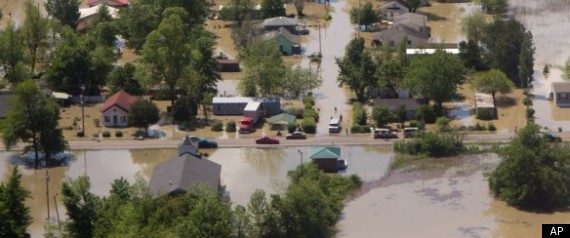
Those "hard times that are coming" are now here. This morning’s news tells us that authorities could open two more floodgates in the Mississippi River today. Attempting to spare Baton Rouge and New Orleans from severe flooding, they will flood out rural areas rather than urban areas. Opening those floodgates will wipe out the homes of about 3900 Louisianans.

The planet that we knew, that our great-grandparents and their great-grandparents knew, is gone. Old Earth was great, but it is gone. Yes, the old Earth had occasional disasters, too. It’s the pace of them now that is the fact of life on our new planet. Average weather-related disasters per year between 1975 and 2005 was 10 times the average number of annual disasters, 1900 to 1975. What used to be measured as years-per-disaster is now measured in disasters-per-year.

350 is the important number. Bill McKibben has done a wonderful job getting that number into our consciousness. See his 350.org. 350 is the number of parts per million of carbon dioxide in our atmosphere that is the upper limit of what is safe. At 350 ppm, the planet survives. If we get above 350 for very long, or if we get very far above 350, then we will trigger tipping points and irreversible impacts.
In 2009 September the lead article in the journal Nature said that above 350 "we threaten the ecological life-support systems that have developed in the late Quaternary environment, and severly challenge the viability of contemporary human societies." (McKibben 16)
Carbon dioxide levels were 275 ppm for all of human history up until 200 years ago. By 1960, CO2 was up to 315 ppm, steadily climbing.

In 1960, we were blithely, blissfully oblivious to what rising CO2 would mean. When I was growing up, we worried about carbon monoxide, and were told that carbon dioxide was perfectly harmless. Which, for breathing, it basically is. But it traps heat in our atmosphere. We know that now. And what have we done?

The satirical, fake-news newspaper, The Onion occasionally has stories that seem true and sad and not very funny. For instance, they recently ran: "Report: Global Warming Issue from 2 or 3 Years Ago May Still Be a Problem"
According to a report released this week by the Center for Global Development, climate change, the popular mid-2000s issue that raised awareness of the fact that the earth's continuous rise in temperature will have catastrophic ecological effects, has apparently not been resolved, and may still be a problem.
While several years have passed since global warming was considered the most pressing issue facing mankind, recent studies from the Center for Atmospheric Research, the National Academy of Sciences, NASA, the Pew Center on Global Climate Change, and basically any scientific report available on the issue confirmed that it is not only still happening, but might also be worth stopping.
"Global warming, if you remember correctly, was the single greatest problem of our lifetime back in 2007 and the early part of 2008," CGD president Nancy Birdsall said.
"But then the debates over Social Security reform and the World Trade Center mosque came up, and the government had to shift its focus away from the dramatic rise in sea levels, the rapid spread of deadly infectious diseases, and the imminent destruction of our entire planet." . . .
According to the 300-page document, though global warming—and the worldwide homelessness and drought associated with it—was a desperate problem immediately following the release of the Academy Award–winning documentary An Inconvenient Truth, China's undervalued currency, the midterm elections, and gay marriage have since monopolized lawmakers' time.
[The report] concludes that the likelihood of any of these matters flooding the entire Eastern Seaboard and leaving the state of Florida completely submerged is "very slim." . . .
"I was a bit surprised by our findings, because I, along with the rest of my colleagues, thought that the process of fixing climate change ended soon after [2007 rock concert] Live Earth," CGD assistant director George Oliver told reporters.
"But it turns out that the things needed to stop it, like substantive energy legislation, worldwide cooperation to reduce carbon emissions, and a massive cultural shift toward sustainable living actually didn't happen at all."
"We kind of just assumed that the threat of total annihilation spurred everyone into action back in '07 and that everything got better," Oliver added. . . .
Thus far, the study has gained unanimous favor in the scientific community, which was admittedly surprised in 2008 and 2009 at how quickly a defining issue that will undoubtedly affect everyone on the planet became so heavily politicized and took a backseat to health care reform, the housing bubble, and replacing Jay Leno on The Tonight Show.’

The new report claims we may see a return to the ominous days of 2007,
when terrible flooding and storming of unprecedented scale and intensity
were something mankind was concerned about.
© Copyright 2011, Onion, Inc.
Indeed, 2007 you’ll remember was the year that climate change was such a compelling issue that a slide show about it -- An Inconvenient Truth -- won the Best Documentary Academy Award and earned its creator, Al Gore, a Nobel Peace Prize. That’s pretty impressive for a slide show. And if you saw it, it was impressive. The film opened five years ago this month to critical acclaim and box-office success. Then what?

Those carbon dioxide parts-per-million that were 275 for several million years up until the 19th century, and reached 315 in 1960? By 2007, we had actually passed the 350 safety-line and were at 382 ppm. Then we all saw Al Gore's movie, and . . . ? Since then we have satirized ourselves and made The Onion's satirical news the truth. CO2 has kept climbing by around three ppm a year.

This, then, is the gist of my 2011 ecospiritual update:
Today CO2 is at 391 ppm. And the planet of our ancestors and of our youth is gone.

In fact, scientist Kevin Anderson projects that even if rich countries adopt draconian emissions reductions within a decade, it is improbable that we will be able to stop short of 650 ppm of CO2. As Bill McKibben notes,
Even if you erred on the side of insane optimism, the world in 2100 would have about 600 parts per million carbon dioxide. That is, we’d live if not in hell, then in some place with a very similar temperature.
The recent record tornadoes in Alabama and Mississippi – and the current and coming devastation from the flooding Mississippi River – have, for the moment, grabbed our attention again. This week – 2011 May 12 – New York Times article, "Scientists' Report Stresses Urgency of Limiting Greenhouse Gas Emissions," reported that
the nation’s scientific establishment issued a stark warning to the American public on Thursday: Not only is global warming real, but the effects are already becoming serious.
The report by the National Research Council of the National Academy of Sciences noted that already
sea level is rising in many American towns and the average United States air temperature has increased by two degrees in the last 50 years.
Even with drastic action, both flooding and droughts will continue to increase. An Oxfam report in 2009 July concluded that even if we now adopted “the smartest possible curbs” on carbon emissions
the prospects are vey bleak for hundreds of millions of people, most of them among the world’s poorest.
According to Mark Serreze of the National Sea Ice Data Center, the Arctic ice is in its death spiral. Within a decade or two, a summertime spacecraft pointing its camera at the North Pole would see nothing but open ocean.

The coral reef that was such a beautiful home to flourishing undersea life on old Earth is doomed.
The Zoological Society of London reported in 2009 July that "360 [ppm of atmospheric CO2] is now known to be the level at which coral reefs cease to be viable in long run." . . . At a conference in the spring of 2009, the American researcher Nancy Knowlton put it with refreshing bluntness: "Coral reefs will cease to exist as physical structures by 2100, perhaps 2050." (McKibben 16, 10)
Bill McKibben has noted that when we speak of this issue, it’s common to invoke grandchildren. "Preserve the planet for the sake of our grandchildren," we say. Or, "Let’s not let our grandchildren have to deal with the problem with which we should be dealing." McKibben writes,
Forget the grandkids; it turns out this was a problem for our parents. (16)
* * *
I was recently at a gathering of Unitarian Universalists from various congregations. I was chatting with an amateur physicist. He keeps up with the latest work and regularly emails his ideas to some of the top academic physicists in the country – and they write back, and engage in long email discussions, and sometimes their work incorporates ideas from this guy. He's a very talented amateur.

He spoke to me about calculations of the chances of finding technologically advanced life on other planets. There are x many stars with planets, and y percent of those planets have plentiful hydrogen, carbon, nitrogen, and oxygen – because as far as we have been able to find so far, only molecules that form from those elements can acquire the right sort of shape to reproduce themselves – and z percent of those have the temperature range in which those molecules can form, and so on. His calculations took into account how long it would take, on average, for life to emerge, how long for life to evolve to become tool-using and language-using, and from there how long to develop the level of technology that we’ve had since, say, the steam engine. But then he had a very interesting assumption in his calculations. If we were going to find a planet like that, we’d have to locate it within its 300-year window.

"Its 300-year window?" I said.

"Any species with the ability and the desire to develop that level of technology," he said matter-of-factly, "will kill itself off with that technology – either blow itself up in conflicts or destroy its necessary habitat – in about 300 years. You know, on average. Give or take."

I don’t know if he’s right. I don’t know if he’s wrong either.

Even when we do get news about how, say, our energy depends on fossil fuels, which release carbon dioxide into the air, which traps heat, which melts ice caps, which raises sea levels, and the warm air holds more moisture, so there are droughts, and then it dumps that moisture at once, so there are floods, and . . . it’s a bunch of causal chains that are longer than most of our attention spans. We have our lives to live, and environmental threats slip out of memory.

We as a species failed to adopt the Ecospiritual Imperative to connect spiritually to nature in a way that would have empowered us, in joy, to preserve the Earth we knew. As a result, now we face the Ecospiritual Challenge to fashion what life we can on the new Earth.

Faced with what we now know, some remain in denial, their fingers stuck firmly in their ears. Others, seeing the collapse coming, amass stockpiles of canned goods, bottled water, and they're down in the basement oiling their guns. The Ecospiritual Challenge is to walk the third way: the path of open-eyed and open-eared awareness, and also the path of connection to both nature and neighbor -- not afraid to face reality, not avoiding needed knowledge because it's "depressing." (No, it isn't depressing. It simply is. It's up to us whether our response will be to get depressed or to engage the reality that is.) And at the same time not bunkering protectively. The Ecospiritual Challenge is to choose neither despair nor defense, but new community. This is a spiritual challenge because the courage to face reality exactly as it is comes from spiritual discipline. Our capacity to hold our world in love, whatever may come -- and I do mean whatever may come -- is developed in spiritual practice and in spiritual community. And where love is, fear and sadness are not.

The new Earth will rely much more on local food, and on organic farming that doesn't use huge quantities of fossil fuel for its fertilizers, its pesticides, it’s machinery, or its product transportation. Food will cost more -- which is not a big problem since food has for many years now been ridiculously cheap, partly because of agriculture subsidies and fossil fuel industry subsidies (which also subsidize the type of agriculture that intensively relies on fossil fuels). The new Earth will rely more on locally-produced energy -- solar panels and solar water heating on your own house, and windmills in your yard -- because transmission across power lines loses efficiency over many miles. We'll also use the internet and connecting tools like Skype instead of flying and driving places.

To sustain us in the new Earth we need the very thing that sustained many of us on the old Earth: a spirituality of connectedness with this earth, of reclaiming a way of living lightly, carefully, gracefully on this delicate home, rituals and practices and ways of thinking that nurture attention, and calm delight in the simple beauties of life.

Wanting stuff makes us stressed, and being stressed makes it harder to step back from our desires for a larger perspective. We need some help to break out of that cycle, to prepare our hearts as well as minds for the new kind of life that will be required on our new planet. Ecotheologians can speak to our deepest needs for connection, harmony with our world, for the beauty of natural objects and natural terrain, and, by making ourselves clearer to ourselves, they fortify us to live by the values that we most yearn to live by but that keep getting buried under the daily demands of life.

Thomas Berry, and Sally McFague, and Annie Dillard are wonderful ecotheologians. Joanna Macy is another, and it is to her that I turn for one helpful schema as we discern the path forward.

First, she begins with the crucial question:
In the face of what is happening, how do we avoid feeling overwhelmed and just giving up, turning to the many diversions and demands of our consumer societies?
Yes, that’s something I need some help with. Like a lot of you, and unlike a lot of our fellow Americans, I don’t crave a bigger house or a bigger car, and will never jump up and down in giddy excitement over stuff the way that game show contestants do. But demands and diversions, I have aplenty. Tearing myself away to go down to the Farmer’s market can seem like too much. Consider, then, what the options, spiritually speaking, have been. The various religious traditions have offered us ways we relate to our Earth. Macy lays out four ways.

View number 1, The World as Battlefield. Good and evil are pitted against each other, and the forces of light battle the forces of darkness. The Zoroastrians and the Manicheans developed that story line. With this story as the context for making meaning of our lives, we will be oriented toward
courage, summoning up the blood, using the fiery energies of anger, aversion, and militancy.
It’s good for building confidence – it’s a story line that reassures you that you are on the right side, and your side will eventually win.

A variation is the model of the world as a proving ground, a kind of moral gymnasium for showing your strength and virtue at the snares and temptations of the world. You are only here so that the mettle of your immortal soul may be tested prior to admittance to some other realm.

View number 2, The World as Trap. Our spiritual objective
is not to engage in struggle and vanquish a foe, but to disentangle ourselves and escape from this messy world . . . to extricate ourselves and ascend to a higher, supra-phenomenal plane.
Not in some future life, but in this life, to live with contempt for the material plane, prizing only the rarefied life of mind and spirit, aloof from the world of strife and desire. This view engenders a love-hate relationship with matter – for aversion inflames craving, and the craving inflames aversion. Wherever we see people vigorously denouncing something and then being caught at doing that very thing – whether it’s extramarital relationships, or eating fatty foods – we are seeing the playing out of a love-hate relationship that comes from seeing the world as a trap.

I have seen people be attracted to Buddhism out of a feeling that the world is a trap, and a hope meditation will take them to a place removed from worldly entanglements. I tell them that the Buddha taught detachment from ego, not detachment from the world. And that even with ego, he taught being present to it, seeing it clearly for what it is, not suppressing it or ignoring it.

For people who see the world as a trap, social justice may still be a concern, but their approach is a strict linear sequence. "First I must get enlightened, then I can engage with helping others."
Presupposing that world and self are essentially separate, they imagine they can heal one before healing the other.
View number 3, The World as Lover, beholds the world as an intimate and gratifying partner. This view, with training, can bring to every phenomenon the beauty and sweetness of primal erotic play. Since lovers are impelled toward union and oneness, this view can then segue into:

View number 4, The World as Self. In the Western tradition there is more talk of merging self with God rather than with the world, but the import is about the same. When Hildegard of Bingen experienced unity with the divine, she gave the experience these words:
I am the breeze that nurtures all things green….I am the rain coming from the dew that causes the grasses to laugh with the joy of life.
In riding a bicycle or driving a car we can quickly come to feel the vehicle as an extension of our own bodies. In the same way, the whole world is an extension of your own body. Yes, sometimes it does things you don’t want it to and can’t control, but the same is true of your joints and organs (increasingly so as the years go by). Truly, everything in the world is your joints and organs, sinews and bones, glands, skin, and hair. And brain and mind.

Says Joanna Macy:
We are our world knowing itself. We can relinquish our separateness.
We can come home again – and participate in our world in a richer, more responsible and poignantly beautiful way than before in our infancy.
If we as a species grow out of infancy, we may outlast that 300-year window that is now closing. We may make for ourselves a materially sparer, spiritually fuller life on our tough new planet.

If we don’t grow out of infancy, we will stay in denial for as long as we can, and when we can't anymore we'll go straight into (much bigger) resource wars between nations, followed by fighting off the neighbors for our bottled water. If we don't grow out of infancy . . . well, then, this, from the Rubaiyat of Omar Khayyam:
Some little talk there was awhile of me and thee
And then no more of thee and me.

* * *

An earlier version was preached
at the UU Fellowship of Gainesville, 2011 May 15
 Sources
Bill McKibben, Eaarth: Making a Life on a Tough New Planet, 2010.
Joanna Macy, World as Lover, World as Self, 1991.

2011-05-14

Saturdao 1

Dao De Jing, verse 1a

16 translations

1. James Legge:
The Dao that can be trodden is not the enduring and unchanging Dao. The name that can be named is not the enduring and unchanging name.
(Conceived of as) having no name, it is the Originator of heaven and earth; (conceived of as) having a name, it is the Mother of all things.
2. Archie Bahm:
Nature can never be completely described, for such a description of Nature would have to duplicate Nature. No name can fully express what it represents.
It is Nature itself, and not any part (or name or description) abstracted from Nature, which is the ultimate source of all that happens, all that comes and goes, begins and ends, is and is not.
But to describe Nature as “the ultimate source of all” is still only a description, and such a description is not Nature itself. Yet since, in order to speak of it, we must use words, we shall have to describe it as “the ultimate source of all.”
3. Frank MacHovec:
The Dao described in words is not the real Dao.
Words cannot describe it.
Nameless it is the source of creation; named it is the mother of all things.
4. D.C. Lau:
The way that can be spoken of is not the constant way;
The name that can be named is not the constant name.
The nameless was the beginning of heaven and earth;
The named was the mother of the myriad creatures.
5. Gia-Fu Feng:
The Dao that can be told is not the eternal Dao.
The name that can be named is not the eternal name.
The nameless is the beginning of heaven and earth.
The named is the mother of ten thousand things.
6. Stan Rosenthal:
“The Embodiment of Dao”
Even the finest teaching is not the Dao itself.
Even the finest name is insufficient to define it.
Without words, the Dao can be experienced, and without a name, it can be known.
7. Jacob Trapp:
“The Eternal Dao”
The Dao men describe Is not the eternal Dao.
The names men give Are not the absolute name.
The named is the inexhaustible Mother
Of the myraid things and beings of this world.
These point beyond themselves
To the nameless, all-pervasive Unity.
8. Stephen Mitchell:
The Dao that can be told
is not the eternal Dao.
The name that can be named
is not the eternal Name.
The unnameable is the eternally real.
Naming is the origin
of all particular things.
9. Victor Mair:
The ways that can be walked are not the eternal Way;
The names that can be named are not the eternal name.
The nameless is the origin of the myriad creatures;
The named is the mother of the myriad creatures.
10. Michael LaFargue:
The Dao that can be told is not the invariant Dao
the names that can be named are not the invariant Names.
Nameless, it is the source of the thousands of things
(named, it is 'Mother' of the thousands of things).
11. Peter Merel:
“The Way”
The Way that can be experienced is not true;
The world that can be constructed is not true.
The Way manifests all that happens and may happen;
The world represents all that exists and may exist.
(GNL 4.1
“Flow”
Flow courses within the world
Like poetry within a text,
Reflecting the distinctions
That shape reality.
Unconsciously, distinctions are sensed;
Consciously, distinctions are anticipated.)
12. Ursula LeGuin:
“Daoing”
The way you can go
isn't the real way.
The name you can say
isn't the real name.
Heaven and earth
begin in the unnamed:
name's the mother
of the ten thousand things.
13. Ron Hogan:
If you can talk about it, it ain't Dao. If it has a name, it's just another thing.
Dao doesn't have a name.
Names are for ordinary things.
14. Ames and Hall:
Way-making (dao) that can be put into words is not really way-making,
And naming (ming) that can assign fixed reference to things is not really naming.
The nameless (wuming) is the fetal beginnings of everything that is happening (wanwu),
While that which is named is their mother.
15. Yasuhiko Genku Kimura:
The Dao Eternal is beyond definition
No name given can capture its eternality.
Nameless, it is the origin of the Kosmos.
Named, it is the beginning of all things.
16. Addiss and Lombardo:
Dao called Dao is not Dao.
Names can name no lasting name.
Nameless: the origin of heaven and earth.
Naming: the mother of ten thousand things.
* * *
Sixteen versions. Which one is your favorite? Can you look these over and construct your own?

If you can't speak it or describe it, that's one thing -- but if you can't walk it (Mair, Legge, LeGuin) or even experience it, then why should anyone say there is such a thing? I like "way-making" (Ames-Hall) over the usual "way" precise
ly because it makes dao into something one does.

If the Dao is "invariant" (LaFargue), "eternal" (Feng, Trapp, Mitchell, Mair), and "enduring and unchanging" (Legge), then is this opening line denying Buddhism's claim that all things are impermanent? Or is Dao the flow of change (GNL), in which, just as Buddha says, nothing is constant?

Archie Bahm's deadpan rationality seems comic, yet sweet and endearing, doesn't it? I wonder if we will feel this way after 10 or 20 weeks of it . . . Yet, he does offer a springboard, which some of us need sometimes, from which to plunge into the mysticism of the other translations. Rational mind, having been reassured (assuaged, we might say, with Archie's "Bahm"), can then step aside to allow us to go to the strange places Rosenthal, Trapp, and most of the others point to. Except that maybe your rational mind is saying, "No, Archie, that's not what this part of the verse is saying."

Hogan makes the self-contradiction most blatant: He flatly names it "Dao" in the very moment of saying it has no name.

One might be tempted to suppose an ontological dualism, something neoplatonic perhaps, between, on the one hand, some realm of the eternal, the unchanging, the oneness, and, on the other hand, this earthly veil of flesh, corruption, change, particular things. If there is a dualism, it is not ontological but epistemological: it is we, in our act of naming, that create conceptions of "the ten thousand things" -- so I like that Mitchell and Addiss-Lombardo reference the action of "naming" rather than the being of the "named." (Or am I now being the comically rational explicator?)

I appreciate Trapp's attention to how the myriad things "point beyond themselves" -- though, again, we must take care to avoid the Trap(p) of believing there are two ontologically separate realms, the one pointing to the other. The myriad things point beyond themselves precisely by pointing to exactly themselves.

Which translation do you prefer?
* * *
Next: Saturdao 2.

2011-05-09

The Increase of Mystery

One day Pang asked Mazu, "How is it that water has neither bone nor muscle, yet is able to hold up a big barge? What is the underlying principle?"
Mazu said, "For my part there is neither water nor boat. So, what is this bone and muscle you speak of?"
(The Sayings of Layman Pang, #5: "The Bone and Muscle of Water")


Mazu's reply maybe drops the bottom out --
A conversation stopper.
The Pang of hunger for explanation
Can be fed, can't be satiated.
Today, 8th-graders in science class learn
The "underlying principle":
Upward buoyancy force is equal to the the weight of the water the boat displaces,
My darlings.
Archimedes worked that out before Pang's time --
Far away in Greece.
Later, later, Western physics got quantum, and came around to
(something at least superficially similar to)
What Mazu said:
No water, no boat --
Only probability functions of subatomic particle-waves.
Because it is empty it can hold up the world,
My darlings.
Because it is nothing, it can do anything.
Pang asked Newton a physics question.
Neils Bohr answered.
The growth of knowledge is measured by the increase of mystery.

2011-05-08

Discipline and Ecospirituality


At the Unitarian Universalist Fellowship of Gainesville, our Theme of the Month for May is ecospirituality. Across cultures and historical epochs, many have found transcendence in the very immanence of trees and birds, "mountains and rivers and the great wide Earth, the sun and the moon and the stars," beasts, rocks, clouds, flowers, bugs, soil: the wild and its myriad multiform interrelationships. For much of human history, what we might call "ecospirituality" was less a choice than an unavoidable fact of life. In our "postie" world (postindustrial, poststructural, postmodern), however, ecospirituality is an option easily declined. Whole lives can be spent in urban or suburban settings encountering relatively few species -- and most of those, with aversion. For us, ecospirituality must be an intentional choice and a deliberate discipline. To make that choice is to begin a path of transformation. Are we up for it?

I believe people don't come to church to stay the same. We come to be transformed.

My calling is to encourage Unitarian Universalists to take up intentional practices for developing equanimity, peace, acceptance, kindness, patience, and reverence. My hope is for us to get serious about spiritual practice: about committing to exercises that will retrain our habitual neural pathways so that everything we do and are looks and feels more like love and less like addiction. The spiritual qualities and virtues don’t just happen, and they don’t happen just by wanting them to happen, or by hearing words from people who have them (though that does help -- it’s good to have coaches.) To get the muscles, you have to do the exercise and take in the right nutrients.


We Unitarian Universalists have accomplishments far beyond our numbers -- and numbers far below our possibility. To realize our possibility will require serious application of ourselves to the task of faith development. The rap on UUs is that we are a denomination of dabblers and dilettantes interested in everything and serious about nothing; glad for the intellectual stimulation of learning but unwilling to commit to put the learning into practice in our lives; engaged and sometimes even delightful connoisseurs and critics of cookbooks and exercise programs, yet people who suffer from the impression that they understand the taste of the food and have attained the lifting power of substantial musculature just by hearing and reading about it.

Some of that rap is unfair. The criticism results from misunderstanding the way that valuing diversity works. Our commitment to diversity and our appreciation of the rich rewards of a diverse community do not mean that each individual UU is required to be uncommitted to anything other than diversity itself. It does mean that a UU’s spiritual practices include cultivation of, and delight in, affectionate relationships with others with different practices, perspectives, and understandings. "Include" does not mean "are limited to." Unfortunately, too many UUs themselves seem to have accepted the misunderstanding, so the rap has some partial truth to it.

If we are to become the best people we can be, as individuals and as a movement, ecospirituality is, if you’ll forgive the pun, the natural path for many of us. Many UUs feel a strong connection with nature, and many have told me that they feel the most spiritual when walking in the woods. “That’s great,” I say. “And when was the last time you did that?” I’m happy to report that these days I’m getting more answers like “last Saturday” or “this morning” and fewer awkward silences.


Make time for more hiking, or just being, in nature. At the same time, build the foundation upon which nature experiences can be most meaningful and transformative. That five-part foundation consists of:

(a) daily journaling;

(b) daily study of spiritual texts (for those developing a nature spirituality, appropriate texts would include books by ecotheologians like Joanna Macy, Sally McFague, Vandana Shiva, Seyyid Hossein Nasr, Thomas Berry, Annie Dillard, or nature poets like Emily Dickinson, William Wordsworth, Wendell Berry, Mary Oliver);

(c) daily periods of stillness and silence noticing and identifying each thought and feeling that arises,

(d) an ongoing resolve to be mindful at all times, and

(e) weekly meeting with a group for spiritual practice.

These are the exercises and the nutrients for building the muscles of wisdom, compassion, and peace. It takes a steady diet and a lot of "reps."

2011-04-29

What Is The Sound of An Arrow Hitting Oatmeal?

Koan of the Week
Blue Cliff Record #56
Qinshan and the Arrow

Qinshan Wensui (Kinzan Bunsui, b. 841?), 12th Generation.
Line: Shitou (8th Gen.) to Yaoshan to Yunyan to Dongshan to Qinshan
Dharma brothers include Caoshan and Longya.
Qinshan also studied under Deshan, alongside friends, Yantou and Xuefeng.

THE CASE
A Zen devotee named Liang asked Qinshan, "What is it when one single arrow breaks through three barriers?"
Qinshan said, "Drive out the master from behind the barriers, so that I may see him."
Liang said, "If so, I will acknowledge my failure and correct it."
Qinshan said, "Till when do you want to wait?"
Liang said, "I made a nice shot, but no one could see the arrow," and he went out.
Qinshan said, "Wait, sir."
Liang turned his head.
Qinshan grasped him and said, "Let's put aside the story of the arrow which breaks through three barriers. Just shoot an arrow for me, so that I may see it."
Liang hesitated.
Qinshan hit him seven times with a stick and said, "I will allow this fellow to keep puzzling for thirty years."

What is it when . . . ?
Please. What is anything ever?
Listen. Once Master and I went to the Archery Range Cafe.
Our orders placed, we sat.
Trying to be funny and true, I said, "My shot was perfect; the target was misplaced."
Master asked, "Misplaced because you missed it or because you hit it?"
"The archer or the target?"
"Hit either one for me on your next shot," said Master.
"If you've shot one you've shot 'em all," I said, imagining how that would be as the last word.
"Sure," said Master. "So shoot one."
"Our food is here," I said.
"Who had the thin gruel?" said the server.
"Let's eat," said Master.

* * *

Next: The Old In and Out