2010-11-11

Armistice Day

It's November 11, it's 1918, it's Armistice Day, and I,

I would have no arms.

I would have no legs.

I would live in Europe, Asia, America, south and north, Africa, Australia, Antarctica, and all the wide deep blacken blue oceans.

I would have no Western front.

I would name myself Peace Among the Nations.

Finally undisappointable,

Hanging over the beleaguered of nations like a happy gracious fog, I would

Penetrate everywhere.

I would weigh you down with uplifting serenity.

I would double you four times, Woodrow Wilson World War.

All ate of you, consumed by love, would have a thousand arms each reaching and embracing every dying soldier every wailing mother every broken-legged horse, enfolding them in doesn't-change-a-thing compassion.

I would have no arms.

2010-10-20

A Religion for Our Time

Sunday Service, 2010 October 17

SPOKEN PREPARATION

Let us prepare to worship: to ascribe worth; to shape with our presence, to embody in this community what has value. For we gather again, as we do -- again and again, week after week --to re-do, to re-set ourselves: for our hearts forget, and our minds succumb to distraction.
And so we gather this hour, to rediscover, renew, reaffirm, rekindle, and reclaim. “To rediscover the wondrous gift of free religious community; To renew our faith in the holiness, goodness, and beauty of life; To reaffirm the way of the open mind and full heart; To rekindle the flame of memory and hope; and To reclaim the vision of an earth made fair, and all her people one.” (David C. Pohl, SLT #436). For if we do not, no one will do it for us. If we do not, the vision will fade.

PULPIT EDITORIAL

The pulpit editorial lifts up one aspect of our congregational life each week. This week, I lift up an aspect of our shared congregational and Gainesville life. No, I don’t mean all the head shaking and muttering about three losses in a row. It is pride week here in Gainesville this week: the annual time when GLBT – that’s gay, lesbian, bisexual, and transgender – folk and their allies join together to celebrate diversity – to celebrate all the forms that healthy love can take, and to celebrate the different ways that gender identity manifests in different people. The symbol is the rainbow, and that is appropriate, for the difference of color are natural, and they are beautiful, by themselves, as well as taken all together.

 This congregation is a Welcoming Congregation. In 1994, we underwent a process of training and reflection to deepen our understanding of GLBT people and issues, to learn better how to understand and therefore to welcome them. That process led to our certification by the national Unitarian Universalist Association as a Welcoming Congregation. This Gainesville Congregation was the first Unitarian Universalist Congregation in Florida to receive that designation.

Ours is a denomination that proclaims that civil marriage is a civil right, and religious marriage a religious choice. I will marry you – in a religious wedding – if you and your partner are ready for it -- even if the state of Florida will not recognize any legal status of the marriage.

Full acceptance is the requirement of the time. A religion for our time must be one that stands on the side of love, that stands for fairness and equality. This is our tradition as Unitarian Universalists – it is our calling to be in the world a voice for acceptance and justice.
Therefore, many members of this congregation will be marching in the Pride parade next Saturday, October 23.

These are times of anger and confusion for many of us, as the news in recent weeks of bullying of GLBT youth – harassment so sever that it leads some of them to take their own life.
Let us remember and hold in our hearts the names:

-Tyler Clementi, a freshman at Rutgers University in New Jersey, jumped off the George Washington Bridge after his sexual encounter with another man was broadcast online. 

-Billy Lucas, a 15-year-old from Greensburg, Ind., hanged himself after being harassed at school. 

-Asher Brown, a 13-year-old from the Houston suburbs, shot himself after coming out. 

-And 13-year-old Seth Walsh from Tehachapi, Calif., died a week after he hanged himself in his parents' back yard following a barrage of taunting and bullying.

Our support for GLBT people matters – by standing up for them, and standing on the side of love, we may save lives. The tide of hate and contempt must turn – and we must assume that it we who must turn it. Look for other UUs at the Ayers Medical Plaza, 720 West University.
The parade starts at 1:00pm and we’ll walk together 8 blocks down to the Bo Diddley plaza.
Please come and walk with us and stand together with us on the side of love, and be lights unto the nations.

STORY FOR ALL AGES

This story is called “Daddy’s Roommate,” by Michael Willhoite. (If you have kids, buy a copy – you’ll want to have it with its full-page illustrations).

My Mommy and Daddy got a divorce last year. Now there’s somebody new at Daddy’s house. Daddy and his roommate Frank live together. Work together on the house and the yard. Eat together.  Sleep together.  Shave together. Sometimes even fight together. But they always make up. Frank likes me too. We play ball. Just like Daddy, he tells me jokes and riddles; Helps me catch bugs for show-and-tell; Reads to me; Makes great peanut-butter-and-jelly sandwiches; And chases nightmares away. When weekends come, we do all sorts of things together. We go to ball games; visit the zoo; go to the beach; Work in the yard; go shopping; and in the evenings we sing at the piano. Mommy says Daddy and Frank are gay. At first I didn’t know what that meant. So she explained it. Being gay is just one more kind of love. And love is the best kind of happiness. Daddy and his roommate are very happy together. And I’m happy too!

OFFERTORY

The phrase, “A religion for our time” is the slogan of President of the Unitarian Universalist Association, Peter Morales. I introduce our offertory this morning with this reading from Rev. Morales:

“A religion for our time must be about wholeness, integrity, and engagement.  It must promote the spiritual practices that give us depth and insight: meditation, prayer, small groups, and music. 
It must touch our hearts as well as our heads. Our new religion must promote deep reflection, but it must never, never, become an escape from life or descend into navel gazing narcissism. 
A religion for our time must be prophetic. It must speak truth to power. It must raise a powerful voice against violence, injustice, racism, economic exploitation, and the destruction of life on our planet. A religion for our time is not afraid of power. It uses power. A religion for our time must strive to transform the world. Beyond this, our new religion must have a vision of a multiracial and multicultural future. It must invite people to come together in love to help create new world—a world of peace, justice, equity, compassion and stewardship of the environment. It must draw upon ancient and undying human longing for harmony, for beloved community, for bringing the kingdom of God to earth. You are called to be a place of healing and support. We are all called to be voices for compassion, voices calling our culture back to a sense of the common good. We must be moral beacons in a dark time—a time in which out of control individual acquisitiveness has wreaked havoc on our economy and on our environment.

“What are we called to be? I believe we are called to transform lives. We are called to be a force for compassion, understanding, sustainability and peace. We are called to feed the spiritually hungry and open our home to the religiously homeless. We are called to heal and empower people so that they can in turn help transform our world. We are called to teach our children compassion, understanding and respect. We live in dark times, times filled with hatred, injustice, prejudice, ignorance. Sadly, obsolete religions created for another time contribute to the darkness. We can be the religion for our time. We can lead. We can help transcend the religious tribalism that is killing people every day. You and I are called to shine the light of compassion, the light of openness, the light of acceptance, the light of justice, the light of truth. We can do this. We must do it. If we let the love in our hearts and our ideals of freedom and justice guide us, we can revitalize our faith, we can touch lives, we can change the world.”

That revitalization begins with you – your heart, your passion, your love and understanding  – and your financial support. Please: give generously.

READING

The reading that Ruth and I will share is a poem by Maria Carter. In strong words, the poet gives voice to the energy of anger, that that energy may turn toward building justice – justice for all, regardless of who they love.

“Protest Song” by Maria Carter.

Meredith:
This is a protest song.
For my brothers who mourned Matthew Shepard song
a watch your boy’s back in this our free country song 
he could be beaten and left to die in agony,
his blood on the hands of animals in Laramie
because the fear of love runs deep.
Love, stand up and protest
song for my brothers who fight like Brandon Teena, 
questioned about the contents of his boxer shorts at knifepoint, 
murdered by the sons of the fathers of the patriarchy 
in a surreptitious act of negligent police brutality
because the fear of the other runs deeper.
But not than this Love, 
stand up and hear this, 
love song,

Ruth:
Song for my sisters in Richmond, California
Last year in a parking lot, the community was informed of a
rainbow sticker on a car with a driver’s seat
With a female body dragged out onto the concrete
By a gang of young men who knew she was a lesbian
the fear of a love that turns to face that fear again
and stands up, love
I said, hear this, 
love song

Meredith:
song for my sisters who remember Gwen Araujo, 
a daughter and a lover and a woman, no matter who 
thought what about her anatomy at that tragedy 
of a trial, both of them, where four men again nearly went free
how clearly society can speak 
if you don’t fit in a box, you’ll end up in one. 

Ruth:
When I came out to my mother at 19
She said, thinking of you being with a woman
Makes me sick.
It turns my stomach
Like seeing something cut open on TV.
I said, Mom, my life is not televised
And what’s cut open here is my chest, see the way these truths nest 
together, sex, love, family, career, 
God, sex, love, politics, justice
sex, love, lungs, blood, tissue, muscle, heart

Meredith:
When have I chosen 

Ruth:
the arrangement of my bones and
the alignment of my organs?

Meredith:
When did I capitulate 

Ruth:
to an agreement in which you would dictate
The shape and propriety of my expression? 
I Protest.

Meredith:
I protest every injustice that is inflicted
Every heart that is restricted
Should make the apathy to which we are addicted
A little more conflicted, right?
I’ve been biding my time
And waiting on this rhyme to 
come out, come out

Ruth:
Like I did that day when I confessed to my mother, 

Meredith:
No, this is not going away

Ruth:
So look at me and tell me that I make you sick
When the love I’m asking for is the same you want for your clique 

Meredith:
And I don’t want to hear any practical advice
About how to talk to The Man, about how to shuck and jive
If I deserve equal protection and my rights are being shanghaied
Then why do I have to ask nicely, why do I have to apologize
For making someone else uncomfortable?

Ruth:
The discomfort we have felt looms
Every moment we consider that hospital room
Where we are not allowed to sleep by our partners’ sides
Where drug-riddled mothers give birth to unwanted children
While the adoption rights of two loving parents are denied
And I can spend the rest of my life with you

Meredith:
But no court in my state will recognize the truth

Ruth:
Of our union, without that little piece of paper.
So don’t tell me we can’t march on our capitol without a permit.
I’ve permitted this commitment to practicality to submit
My constitutionally guaranteed pursuit of happiness 
to an infantile fear of authority
For far too long. 
So I will be there on Sunday, with my partner and my sign

Meredith:
Because Love is the thing that my God had in mind
When she designed this time for the reckoning of these crimes

Ruth:
And the change we ache to find at the end of this 40-year climb
Don’t tell me you won’t see my marriage in your lifetime
See that little piece of paper 
rock the foundations of the dispossessed. 
You’ll see it

Meredith:
You’ll see it

Ruth:
Stand up with me

Meredith:
With me

Ruth:
And protest.

SERMON

Religion is getting a bad name. The historic conflict between Muslims and Jews continues unabated. Sunnis and Shiites show no signs of liking each other; Catholics and Protestants face off in Northern Ireland. Fundamentalist forms of Christianity, Judaism, and Islam foster intolerance and ultimately violence. The ongoing genocide in Darfur has a religious dimension. Religious violence is part of our daily lives. The Buddhists have the best record of peace of the four largest world religions, yet in Sri Lanka even the Buddhists have wreaked inexcusable and racist violence upon the Hindu Tamils. 

Religious violence should not be surprising if we look at where religion came from. In early human life, competition between groups was intense. A raid from the group on the other side of the hill would threaten your food supply, destroy your shelter, and make off with the women. Competition fuels cooperation: that is, competition BETWEEN groups put a premium on cooperation WITHIN groups. If your group had good cooperation together, you could defend yourselves, and mount successful raids on your neighbors. 

That level of cooperation required strong emotional bonding. And that’s what religion is originally all about. Sharing together in rituals, enhances bonding and interconnection. Having shared stories about the origin of people – understood as your tribe – enhances bonding and interconnection. Sharing stories about the origin of your moral code bolstered its legitimacy and a shared behavioral code further helped bonding and connection. Rituals, origin myths, moral code, interconnection – that’s religion. 

We have religion because we needed it – a tribe that couldn’t generate deep tribal cohesion would not survive the violent competition of other tribes. So it’s no surprise that our human world continues to be beset by religious violence. From its beginnings, religion was all about group bonding of a good sized tribe, so that tribe could defend better and attack better. Yes, the world religions all teach peace, and the historical – or, rather, prehistorical, evolutionary -- roots of that are in the need to make peace with the others within our tribe so that we could better defend against or attack another tribe. 

Evolution, however, is a continual story of something evolving for one purpose and then being put to another purpose. Example #1: Back before there were land animals, there was an early form of what we call a lung-fish. It had a sac that held air. It was to give the fish buoyancy in the water -- it had nothing to do with respiration. Since the sac was there, it could be appropriated for respiration purposes, and it gradually evolved into a lung, allowing the first land animals. Building upon its inheritance, it transcended it and became a new thing on this earth. 

Example #2: The early ancestors of the bat could not fly. They had a little webbing between the fingers in order to catch flies better. The webbing’s original purpose had nothing to do with what then happened: that webbing allowed the animal to take flight. Building upon its inheritance, it transcended it and became a new thing on this earth. 

And here we are: homo religioso – hardwired to be religious. We inherit this brain that evolution has built to respond to rituals and stories, shared moral understanding – this brain that uses those rituals, stories, and morality to form fierce loyalty to our tribe. We can try to cut that out of ourselves. We can try to suppress and excise the religious impulse, attempt to destroy a part of who we are. It’s not rational, we might say. Music isn’t either. You could suppress and deny and try to eliminate the part of you gets any pleasure from music. You might even succeed, if you worked at it long enough. But you would have diminished life, not enhanced it. 

The brain circuitry that orients us to bond with one another through religion, that orients us to live in peace within our group: that circuitry is available for being universalized beyond our group. The sense of interconnection that evolved to unite our tribe is available to unite our planet. Building upon our inheritance, we can transcend it and become a new thing on this earth. 

Our spiritual perception can plumb more deeply, can see more than just what selective pressures once needed our ancestors to see. We can train awareness to know, more thoroughly, fully, richly, than cognition alone can know, that all humans are us, all sentient beings are us; all bugs and plants, all amoebas, paramecia, bacteria, and fungi are us; all rocks and dirt, rivers and oceans; air and fire; sun, moon, and stars are us. 

Such a religion – a religion of tolerance, of acceptance, of welcome – a religion of empathy and understanding even for people with religions that remain narrowly tribal – this is the religion for our time. This is Unitarian Universalism. It is the faith that we have been practicing and living, increasingly so over the last century. 

I see that professor Harvey Cox’s new book, The Future of Faith, predicts that Fundamentalism will die off. He says religious movements in the future will abandon creeds, seek justice, support democracy, cultivate small groups, and become less regional, less parochial, less dogmatic, and less patriarchal. That would be nice. I’m not holding my breath, but where professor Cox and I do agree is that this is, indeed, the kind of religion we most need today. Whether we as a species are really headed that way within the lifespan of a baby born today . . . that’s up to us. We are the religion for our time: it’s up to us to bring it to the world. 

The religion for our time must no longer be belief-centric, putting beliefs – creeds, dogma, doctrine – at the center. The religion for our time understands that what religion is about is three things:

(1) Religion is about how you live, the ethics and values that guide your life. 
(2) It’s about coming together with others and sharing in rituals that bond us together. 
(3) It’s about the experiences of awe, and wonder, and beauty; about those moments when the ego defenses fall away and the fundamental oneness of all things is suddenly so clear. 

And a congregation, a denomination, a faith tradition is for bringing those three things together in such a way that each one reinforces the other two. 

The religion for our time is us: open to the great spiritual gifts of other traditions, yet having a clear tradition of our own from William Ellery Channing, Ralph Waldo Emerson, Theodore Parker, Hosea Ballou, and courageous and thoughtful women and men who have kept alive through the centuries this conversation that constitutes us. 

Our lives are enriched by spiritual experience in they same way that they are enriched by poetry, and by music. A religion for our time cannot conflict with science, but incorporates scientific findings into our story of wider and fuller meaning – and does not treat metaphor and poetry as if it were history and science.

Ethics and values have always been a function of religion. The sexual energy from which life comes can be misused to hurt others and ourselves. That energy that can add depth and connection to relationships of intimacy can also disrupt relationships, break up households, harm children. A religion for our time will not flinch from the ancient role of religion in distinguishing appropriate from inappropriate sexual conduct. Ecstatic and connecting physical experience is an aspect of the spiritual. Some of us are in committed relationships right now, and some of us are not. What all of us wish for those who are in such relationships is that they are a ground for growth of joy, for we understand that a sexual relationship that is sustainable and nonexploitive and mutually respectful helps support and is supported by nonsexual relationships of community that are also a ground for the growth of joy. Relationships at all those levels also deepen our connection with nature, with our world, with the awakening of wonder and oneness that I call spiritual. Inappropriate use of sexuality tears apart families and rends community, and distances us from spiritual experience and spiritual growth. So, yes, religion has a role to play in helping to guide us toward sexual expression that enhances rather than harms our spiritual health. A religion for our time recognizes that. 

Yet we see today a religious landscape that widely and profoundly gets it wrong on sexual mores. The kind of intimate relationships that provide for personal and emotional stability so that spiritual maturity can begin to flourish have everything to do with commitment, sustainability, nonexploitation, mutual respect and mutual consent and nothing to do with whether or not your partner is the same sex as you, or whether your gender identity is the same as your biological sex. A religion for our time recognizes that if, for instance, you were born biologically male, it is not necessary either that you be male nor that your partner not be. A religion for our time respects humanity’s diverse traditions – diverse spiritual expressions – and likewise respects diverse sexual expressions. 

All people matter. People of all racial backgrounds matter. Poor people matter as much as rich people. Uneducated people matter as much as scholars. Children matter. The aged matter. Lesbians matter as much as straight women. Gay men matter as much as straight men. Bisexual people matter as much as people with a unidirectional sexual orientation. Transgender people matter as much as people whose gender identity has always more or less matched their apparent biological sex at birth. A religion for our time does not merely tolerate human diversity, it celebrates it. A religion for our time stands on the side of love.

Rebecca Parker, the president of our Unitarian Universalist seminary, the Starr King School for the Ministry, is one of the most humane and wise people I have ever read and heard speak. She tells the story of her cousin Megan. A few years back, Megan was going through a period of despair after an unexpected and painful break-up. Then one day, Megan invited her cousin Rebecca to lunch, bursting with good news. 

“I have been born again!” she announced. Rebecca, President of a Unitarian seminary, felt her heart sink. Who had gotten to Cousin Megan, she wondered. 

“No, no, it’s OK,” said Megan. And she told about how she was listening to her car radio and heard a radio preacher with a message unusual for radio preachers. He said everyone is a child of God, and everyone can be like Christ. Megan was so excited she talked back to the radio: “That’s what I believe. I believe everyone can be a savior and we can save the world by loving it and each other.” 

Megan felt such a love and warmth and joy come over her in that moment. And she was still feeling it the next morning. She got up and began a meditation practice, built a home altar, and began the earnest work of strengthening and deepening this peace and love she felt. In her practice Megan did become peaceful and centered and focused – but then, she says, as soon as I’d begin my daily routine that would all fall apart. As soon as there were real people to deal with, they were annoying – and Megan couldn’t hold onto, couldn’t live what she knew: that those people are also, everyone of them, children of God, saviors. 

“I realized,” said Megan, “that I just couldn’t do this alone. I needed to find some other people who were trying to put love into practice. Then it hit me. Church! That’s what church is for!” Megan, unchurched, began to look for a faith community. 

She went to a liberal congregation: the sermon was intellectually stimulating and addressed racial justice – certainly an important topic. But the atmosphere was cold, the congregation all white, the music staid. 

Megan tried a progressive, multiracial, historically black Baptist church. The music rocked, the people were warm, the place was energetic and alive. But the sermon rehashed the appalling theology that had kept Megan out of church for so many years: that Jesus died to save us from our sins. 

So Megan went to a New Age church, multiracial congregation, and small covenant groups supporting each other and carrying out service projects. They did right, but the theology was pabulum. “We memorized affirmation about the power of mind over matter,” reported Megan. “You can’t just think poverty, and war, and the environmental crisis away. That’s nonsense.” 

Megan needed a congregation of intellectual depth, social ethics, and also of warm connection with other people; racial and cultural diversity; lively, rocking music; small groups and committed service. And what Megan needed is what more and more people are coming to consciously recognize they want and need – and it’s what many times more people need but don’t consciously know it . . . yet. That’s what the religion for our time must provide. 

There’s a challenge there for us: as we go down the list of what Megan needed, how are we doing? Had Megan visited the Unitarian Universalist Fellowship of Gainesville, we would have fallen short, most obviously in the diversity area, and maybe in some other ways too. 

We are mostly there – we have a lot to celebrate, and taking joy in each other and this wonderful community we have together is an essential grounding for us if we are to take the next step. And take the next step we must – if we are to truly be the religion that our world needs now. 

Megan, by the way, did find what she was looking for, and that was the good news she was bursting to share with her cousin Rebecca. She found it in a progressive Jewish synagogue that emphasized the value of silence, meditation, and spiritual practice -- that had beautiful chanting, and Torah study that was intellectually rich with layers of meaning – and the people were warm and welcoming. 

We don’t have a monopoly on being the religion of out time. We are on the right track, but we still have some work to do. We always have, and we always will: as the times keep changing, so also must the religion of our time. 

So may it be, and Amen.

BENEDICTION
(Words of Rev. Peter Morales, President of the Unitarian Universalist Association): 

We are called to feed the spiritually hungry and open our home to the religiously homeless. 
We are called to heal and empower people so that they can in turn help transform our world. 
We are called to teach our children compassion, understanding and respect. 
We are called to shine the light of compassion, the light of openness, the light of acceptance, the light of justice, the light of truth. 
Let it shine! Let it shine! Let it shine!  

2010-09-13

Unitarian Universalist Minute: Islamic Connection

Unitarian Universalism springs from sources – many tributaries flow into the river of the faith we share. The longest and largest source for us is Protestant Christianity, with more recent contributions from Humanism. The Muslim influence on our development has never been huge, but it has played a role.

For example, on our Universalist side, there’s George de Benneville, born 1703. While sailing to America, De Benneville was moved and impressed by the kindness and caring he encountered in some Muslim Moorish sailors on the ship. The experience helped open de Benneville to open-minded exploration of religion. His long and colorful spiritual journey led him to Universalism – the view that all souls were saved – which de Benneville was the first person in colonial America to openly teach.

On our Unitarian side, Islam, or Mohammadism as it was typically called, played a role in our early arguments about the trinity. The early Unitarians, in developing our tradition of freedom, reason, and tolerance, got their name from their critique of trinitarianism. They were Unitarians, saying God was one, rather than Trinitarians, saying God was three. In that debate, the Unitarians sometimes pointed to Islam, which is also unitarian, as evidence that, however faiths may differ, the oneness of God was a natural and reasonable conclusion. In the later 1800s and into the 1900s, Islam remained a frequent topic of Unitarian discussion. While these discussions were often critical, gradually a growing number of Unitarians found much to admire in Islam, and Muhammad’s image among Unitarians was progressively rehabilitated.

(Adapted from:
http://transientandpermanent.wordpress.com/2010/09/11/muslim-influence-on-the-roots-of-unitarian-universalism/, where more info is available. Thanks to James Ford for this link.)

2010-09-12

The Storm Averted

Here in Florida, we know hurricanes. When the high winds and heavy rains come, we do what people do when disaster strikes and lives and ways of life are put at risk. We pull together. In Florida, when the hurricanes come, it brings out the cooperative spirit. We help each other get through the power outage, the clean-up, and the repairs. And we give particular attention to the ones hit hardest.

In like manner, we saw a hurricane of religious division headed our way, due to hit this week-end. Rev. Terry Jones of Dove World Outreach Center had announced that September 11 was “Burn a Koran Day,” and that he intended to publicly burn copies of the Quran on that day, in a gesture of contempt for Islam and Muslims.

When this storm of religious strife appeared headed our way, Gainesville’s faith community and the Unitarian Universalist Fellowship responded. In the last week Jews, and Christians, and Moslems, and Hindus and Unitarian Universalists have joined and been blessed by one another.

On Wednesday September 8, at in Interfaith Prayer service at Trinity Episcopal Church, leaders from all three Abrahamic faiths shared in prayers together for peace and for harmony among peoples of diverse faith.

On Friday evening, September 10, hundreds gathered at Trinity United Methodist Church for “Gathering for Peace, Understanding, and Hope” -- an evening of coming together and engaging various peace activities and in conversations across religious lines.

On Saturday afternoon, September 11, there was a rally and march in the neighborhood of Dove World Outreach. I was among the speakers. At the same time,"A Day of Peace and Unity" on the downtown plaza organized by the Gainesville Muslim Initiative included speakers and conversations for interfaith peace, and a candlelight vigil.

Members of the Unitarian Universalist Fellowship were in attendance at all these events, engaging with our neighbors of varying faiths and doing the work of building mutual understanding.

Our Sunday service on September 12 carried out a commitment made a month before among a dozen or so congregations to include certain specified passages from the Quran at our respective Sabbath services on the weekend of September 10-12. (The passages: Surah 3:64, 2:177, 2:136, and 49:13).

In the face of the threatening hurricane of symbolic intolerance, the interfaith community came together. And we gave particular attention to the ones hit hardest. The Gainesville, and indeed, World Islamic community was targeted, and so, in solidarity with our Muslim siblings, and in solidarity, too, with all the congregations who are also stood with our Muslim neighbors and friends, our choir sang songs of peace, including a beautiful Iraqi peace song, and I spoke of our denomination’s historic connections with Islam, and of our ongoing commitment as Unitarian Universalists to the work of building true peace.

An inclement climate for tolerance called for special action. At the Unitarian Universalist Fellowship, standing on the side of love is our everyday commitment, come foul weather or fair.

2010-09-11

Sep 11

Rev. Terry Jones now says he won't be burning a Quran: "Not today, not ever."
And the sign on his property announcing "International Burn a Koran Day" has come down.

Sighs of relief.

The New York Times has a nice article about Gainesville and how we're responding to having Rev. Jones in our midst.
http://www.nytimes.com/2010/09/11/us/11gainesville.html?_r=2&hp

Last night I was at a neighboring church, Gainesville's Trinity United Methodist Church, for the "Gathering for Peace, Understanding and Hope" held there. Read about it:
http://www.gainesville.com/article/20100911/ARTICLES/9111004/1118?Title=People-of-all-faiths-join-for-a-display-of-unity
It was marvelously well-attended. Rev. Jones seems to have drawn quite a lot of people into more energetically seeking interfaith harmony.
One indicator: When the leadership of Trinity United Methodist asked its membership for volunteers to help with the set up and logistics and provisions for their planned Gathering for Peace, Understanding and Hope, they actually got more volunteers than they could use. "That's never happened," said one staff member.
I was there with our Zen group. We set up mats and cushions at one edge of  the hub-bub, and did some public meditation for peace. I set out a sign to let all the passers-by know they were invited to join us on one of the empty cushions "for a few minutes, or longer as you like." Another sign said, "Peace doesn't end with inner peace. It just begins there."
There were speakers -- for about 6 or 7 minutes each -- on the half-hour -- which served as a nice timer for our sits.

This evening I'll be at the "Day for Peace and Unity" event at our downtown  plaza.

2010-09-10

Quran Burning Update, Friday morning

As of this writing, Rev. Terry Jones has “suspended, not canceled” his plans to burn copies of the Quran on Saturday evening, September 11.

The attention given to Jones turned what would have been one small front-yard bonfire in our neighborhood into a symbol for the whole world of anti-Islam religious intolerance. Jones’s plans came to represent in many eyes the anti-Islamic bigotry, Islamophobia, and general resistance to diversity of the entire Western World.

Because the gesture of burning the Quran is such a powerful symbol, the Unitarian Universalist Fellowship of Gainesville along with many other people and groups in our area recognized that our response to that gesture was also powerful -- and vitally important. We understood, as Americans, as Floridians, and as people of faith, that our capacity to answer burning hatred with the cool waters of understanding would be judged by our response to this act of intolerance in our midst. It has been truly heartening to see the interfaith community in the Gainesville area come together to affirm mutual respect, to pray together, to answer division with unity, and to respond to belligerence with commitments to peace.

Whether Rev. Jones actually burns copies of the Quran on Saturday or not, we remain committed to standing together; standing in for all people everywhere who seek a world of mutual understanding, peace, and justice; standing against intolerance; standing on the side of love.

As Unitarian Universalists, we are called to stand in witness of the faith tradition we inherit, to embody now our heritage of freedom, reason and acceptance. And we invite friends of tolerance from all faith traditions or none to stand with us.

Friday evening, September 10. I encourage attendance and participation at the Gathering for Peace, Understanding, and Hope at Trinity United Methodist Church. From 6 PM until 9 PM there will be a number of “stations” to visit, and speakers, for about 5 minutes each, every half-hour. This is an important opportunity to meet with others across faiths and build the peace and understanding that comes with relationship.

Saturday, September 11. Meet at 5:30 PM at UUFG (4225 NW 34th St). We will organize there, and, in light of any newest developments, make decisions about carpooling to places to demonstrate for peace, be in solidarity, and stand on the side of understanding and love. Wear your "Co-exist" or Unitarian Universalist t-shirt; bring signs. There may be a Peace March in the neighborhood of Rev. Jones’ church. In any case, we will (also) be participating in the Candlelight Vigil for Peace and Unity hosted by the Gainesville Muslim Initiative. This event comprises a number of actions including feeding the homeless (5:00–6:00 PM), a blood drive, book drive, and food drive (5:00–7:00 PM). Various community and faith leaders, including me, begin speaking at 7:05, and the candlelight vigil is from 8:00 to 8:15.
Sunday morning 11:00 AM Worship Service, September 12.

Our annual Ingathering Water Communion will take on the added significance of differing faiths as well as individuals flowing together into community. We'll have readings from the Quran and explore together the path to a world of peace.

Unitarian faith calls for standing for unity in love amidst diversity of thought. Universalist faith calls for standing for inclusion of all within the circle of equal concern and respect.

2010-07-04

The Fourth and the Thirteenth

It's the Fourth of July: "Independence Day" for this land of my birth, raising, and residence -- this country that created me, and about which I am equal parts misty romantic and bitter cynic.
All...are created equal,
and all of us are
endowed...with certain unalienable rights, that among these are life, liberty and the pursuit of happiness.
And:
to secure these rights, governments are instituted..., deriving their just powers from the consent of the governed.
And:
whenever any form of government becomes destructive of these ends, it is the right of the people to alter or to abolish it, and to institute new government, laying its foundation on such principles and organizing its powers in such form, as to them shall seem most likely to effect their safety and happiness.
These principles from the Declaration of Independence, adopted by the Continental Congress, 1776 July 4, inspire me. They are the very principles on which I am myself standing when I criticize my country. Ours is a nation born of, grounded in, and shaped by dissent.

I'm also inspired by the words that this land of mine has on its Statue of Liberty:
Give me your tired, your poor,
Your huddled masses yearning to breath free,
The wretched refuse of your teeming shore.
Send these, the homeless, tempest-tossed, to me.
I lift my lamp beside the golden door.
Certainly no person is refuse. I understand Lady Liberty, as written by Emma Lazarus, to be saying: "Even if you have been treated as refuse, I welcome you. Even if your ethnos or class has been regarded as refuse by the prevailing prejudices of the powerful for centuries, I will take you in. Even if you have come to think of yourself as nothing but wretched refuse, I show my light for you, shine the way to the door of freedom for you, and thereby announce to the world, and to you, that you are nothing of the kind."

This land of mine has such truly great ideals. It has many good people and a system that has nurtured in some of my fellow citizens remarkable virtue and ingenuity. It is US culture that has cultivated that more modest measure of virtue and ingenuity to which I myself may lay claim. Yet my country is also built, from our very beginnings and running continuously throughout our history, on co-optation, corruption, and cynical manipulation of the very ideals that shape me, inspire me, and to which I continue to adhere. We are made possible, as the country we are, by profligate supply of resources -- the which we obtained through murder, theft, and chicanery on a grand scale.

The shame and pride go together. I came of age during the Vietnam War, when there was good cause for being ashamed of my country. At the same time, I was proud of my friends and mentors (most of whom I knew through my Unitarian Universalist church) who marched and demonstrated to end that war. I'm ashamed of our greed -- of the rapacity that brought us to the point where we, one-twentieth of the world's population, consume one-fourth of its resources, and of our unwillingness to retreat from this ravenous consumption (in fact, to say "ravenous" is rather unfair to our feathered friends, the ravens). Yet the call within my own conscience for a simpler way of life, to walk with a lighter footprint on the earth, is but the echo of quintessentially USan thought: Henry David Thoreau, Aldo Leopold, Rachel Carson, Duane Elgin, Bill McKibben, Joanna Macy -- writers whose turn of mind could not have come from Europe, or Asia, or South America, or even Canada (for all the wonderful contributions Canadians have provided to US culture). I'm so proud of them -- so proud to inherit their tradition, which is so deeply a US tradition. I'm ashamed at our ongoing belligerence, and our willingness to commit our troops to slay tens of thousands of people in order to secure access to cheap oil.

I'm proud of our independent judiciary, as secured by Marbury v. Madison (1803), our finest innovation of government, and grievously ashamed that this judiciary's highest court could have produced the Bush v. Gore (2000) decision.

I'm so proud of our Statue of Liberty, with its open-armed invitation of welcome, and I'm so ashamed that so many of my fellow country-men and -women, with willful and passionate ignorance, so approve of revoking that very invitation.

In fact, the proudest I can recall ever feeling about being USan was 15 years ago, in a movie theatre, watching "Apollo 13" (Tom Hanks, Bill Paxton, Kevin Bacon, Gary Sinise, Ed Harris). Although the film does pass the Bechdel test, it's definitely about male heroism of the mostly geeky sort.

As the extent of the spacecraft's damage becomes clear in Houston, NASA Flight Director Gene Kranz (Ed Harris) declares:
We've never lost an American in space, we're sure as hell not gonna lose one on my watch! Failure is not an option.
A way to fix a broken craft 200,000 miles away must be found. Kranz again:
I don't care about what anything was DESIGNED to do, I care about what it CAN do.
Cut to several technicians dumping boxes containing the same equipment and tools that the astronauts have with them onto a table.
We've got to find a way to make this...
says one of the technicians, holding up a square CSM LiOH canister,
...fit into the hole for this...
he adds, holding up a round LEM canister.
...using nothing but that.
He gestures to the motley jumble of supplies on the table.

Yes, it was hubris that put us out into space. Hubris, and greedy, grasping, imperial acquisitiveness, and the backing of the amazing wealth we had available to us by virtue of the aforementioned murder, theft, chicanery. Yes. All that. And more. We have a capacity for awe and wonder that is the equal of our hubris. Our inquisitiveness is not less than our acquisitiveness. We have a spunky can-do spirit as powerful as the wealth we have stolen.

We sent this amazingly expensive box up into outer space -- and when it broke, we fixed it well enough to get the astronauts safely home. We fixed it with duct tape, cardboard, a plastic bag, and a US-style of cleverness born out of self-confidence (which, yes, also manifests as arrogance) and loyal devotion (which, yes, also manifests as nationalism).

It made me cry. Still does.

The Fourth of July.

The Thirteenth Apollo mission.

I don't know if it will ultimately prove necessary for the survival of the earth that the culture that is distinctively US pass away. Perhaps so. Perhaps not. If so -- and in the unlikely event that I'm still around -- I will miss it, and grieve the loss of this glory -- along with, I hope, celebrating its replacement by a saner, wiser, less independent and more interdependent, sustainable culture.

2010-06-11

Stage Coach II

Let’s look at the word itself, “Stagecoach.” It’s a coach – that is, a conveyance for carrying us along – and, in particular, a conveyance for carrying us along between stages on a longer journey. The stagecoach got its name from making regular trips between stages, or stations, which were places of rest provided for stagecoach travelers as well as places for changing to fresh horses. The sense of “coach” that has grown more common these days – a person who “coaches” an athlete or a sports team -- derives from the first sense of a conveyance for carrying us along. This sense of coach first appeared around 1830 as Oxford University slang for a tutor who “carries” a student through an exam.

So now I ask: What carries you along through the stages of life? How are you coached – instructed, guided, carried – so that you will reach the next stage safely? Who or what or where is your coach from stage to stage? And whom are you coaching?

Our image of top competitive sports coaches, figures like Vince Lombardi, is that they do a lot of afflicting -- though they sometimes must comfort. What kind of coach are you? What kind do you need? And what is the next stage to be coached to?

James Fowler has laid out what the stages of faith development are.

Stage 1: typically age 3 to 7. During this time of the first awareness of death and sex and encounter with the strong cultural and family insulations of those powerful areas, the child’s intuitive-projective faith is filled with both unrestrained fantasy and imitation. It’s a very fluid time, for the child frequently encounters novelties that have to be accommodated. In the child’s imagination, bits of stories are combine. It was a child at this stage who delightfully said that Easter is when Jesus rose out of his tomb, but if he sees his shadow, then we have six more weeks of winter. She draws unpredictable extrapolations from the stories she hears. Long-lasting images and feelings emerge. Later on in life, we’ll want to get in touch with those images from childhood and draw new meaning from their symbolic power for us. Late in the stage, the emergence of concrete operational thinking, and the child’s growing concern to know how things are provides the impetus for transition to the next stage.

Stage 2 (typically pre-adolescence): mythic-literal faith interprets beliefs literally and symbols one-dimensionally. Morality is black-and-white, and fairness is based on reciprocity. The child better grasps the coherence of stories, takes those stories literally, and stories become the structure that gives unity and meaning to experience. The child is taking on the stories that symbolize belonging to her community. The deities are anthropomorphic, and their primary job is moral regulation: to punish the wicked and reward the good.

I remember being in fourth grade and thinking that “an eye for an eye and a tooth for a tooth” sounded fair. Did you have a phase like that? If Fowler is right, we all did.

Stage 3 (typically adolescence): As the child becomes aware of different stories, tensions among the stories create uncertainty. Things might not be as black-and-white as they had seemed. Cognitively, the child’s more abstract reasoning ability begins to emerge, and this leads to stepping back from the flow of stories to reflect on their meaning. Previous literalism breaks down. It’s often a time of disillusionment with previous teachers and teachings occurs. In adolescence, our sphere of concern is not so centered on the family -- if you have adolescents at home, then you know what an understatement that is.

Our adolescents are negotiating family, school, possibly work, peers, multigenerational community, and media representations. Their faith reflects their attempt to build a coherent framework for the many complex spheres they now must coordinate. At this stage, autonomous judgment has not yet emerged, so there is a strong desire for conformity to expectations of others. Peer pressure is a big deal.

The person at this stage has an ideology, but is unaware of having it – for her, it isn’t an ideology, it’s just the way things are. She’s aware that others have different viewpoints, but they are a different kind of person. It’s like the bear who said, “Bears are bears and leopards are leopards, and yellow-naped Amazon parrots are yellow-naped Amazon parrots, and aren’t we glad that we’re lucky enough to be bears and not one of those other species?” Not until a later stage can a person grasp the idea that our own views, just as much as others, are the result of accidents of background and experience.

Some people never progress beyond Stage 3. Clashes among valued authorities may spur a move to the next stage. If a respected leader changes policies or practices that previously been presented as eternal and invariant, that may precipitate a crisis of faith that leads on to the next stage.

Stage 4: The individuative-reflective stage involves taking up the burden of responsibility for one’s own commitments and facing such tensions as: individuality vs. group membership, strong-but-subjective feelings vs. objective evidence and critical reflection, self-fulfillment vs. service to others; relative vs. absolute. This is a stage of young adulthood, though a lot of folks don’t enter this stage until their 30s or 40s, and some spend their whole lives at stage 3. The person’s identity is no longer defined exclusively by roles and meanings to others. We see ourselves as more than merely the sum of the ways that others see us. The person experiences her world view as being a world view, rather than as objective truth itself. So she has a capacity for critical reflection on her outlook and on her very identity. Along with that comes overconfidence in rational thought and an overestimate in the extent to which such thought has apprehended reality.

She’s like the bear who said, “I’ve always been a bear. All the other bears and all the other animals see me as a bear. But maybe it would be better to be a vulture: scavenging what is already dead instead of having to kill. That would be more ecologically conscious.” You can see there that ability to abstract outside ourselves, to look at higher principles that might call us to be different from what we’ve always been. And you can also see that over-reliance on the cognitive, the rational: after all, a bear can’t think herself into being a vulture.

Relatively few people ever go past this stage 4. Some people though find themselves with a growing disillusionment with their compromises. They begin to recognize that life is more complex than the logic of clear distinctions and abstract concepts can comprehend. They begin to experience a deeper self underneath the veneer of the rational. They sense images and energies within them that make rational meanings seem sterile and flat. If that happens, they may be spurred on to stage 5.

Stage 5: What Fowler calls the conjunctive stage. Where the rational mind at stage 4 had suppressed ambiguity, the person now relishes ambiguity. There is recognition and delight in the multiple meanings of metaphor and symbol. Here is where a person might go back to those powerful images from childhood fantasy and, instead of dismissing them as old memories of a pre-rational age, reclaim them and rework them as a source of wisdom that is uniquely one’s own, yet at the same time also a doorway to the universal. The voices of one’s deeper self warrant attention, though they speak in ambiguous metaphor rather than clear rational distinctions.

Stage 5ers recognize that control is an illusion woven by rational mind’s hubris. They seek not control over things, but harmony with things as they are, unfolding according to their own nature. A Stage 5er is able to have her concepts, her opinions, her values without them having her . . . so much. She recognizes that concepts, opinions, and values are radically contingent accidents of background and experience. They are not the universal truth, yet at the same time, they are hers, and so they are the path for her toward the universal. People at this stage seek to “discern their calling,” which takes into account objective indications of talent and interest but goes beyond them to listen for nonrational resonances and intuitions about whom one most truly and deeply is.

People at this stage are alive to paradox and the truth in apparent contradictions. As the Buddha is quoted as saying in the Lankavatara Sutra: “Things are not as they seem. Nor are they otherwise.” At earlier stages, a line like this is either merely perplexing or merely funny. At stage 5, it is still funny. It’s also profoundly wise.

It is unusual to reach this stage before mid-life, if we ever reach it at all. Ironic imagination manifests in making commitments to group meanings while simultaneously aware of the limitations of those meanings. Here the bear says, “I’m not in control of the fact that I’m a bear. I can’t think my way into being a vulture instead -- that wouldn’t be being true to who I am. I can trust in the universe that there is a place in the order of things for my bear-ness. Bear-ness also belongs. Bear-ness doesn’t belong any more or any better than leopardness or vultureness or bunny-rabbit-ness, and I didn’t choose to be a bear – it feels more like bear-ness chose me, even though I also know that there is no me apart from being a bear – but being a bear is simply what is mine to do. Let the salmon be salmon and the crows be crows. It’s not my job to figure out which one I should be. It’s my job to realize what I am – both in the sense of “to become aware of what I am” and also in the sense of “to make real what I am.”

Stage 5ers can embrace their shadow-side, instead of suppressing it. The shadow, too, is a part of who one is, and if one is a thing with substance, then one necessarily casts a shadow. A Stage 5er is aware of his own ridiculousness, his own tragedy, as integral to his gift and his beauty. At this stage, people develop a sense of universal justice not limited to tribe, class, or nation.

Stage 6, according to Fowler, is very rare. Here, the felt sense of an ultimate environment inclusive of all being produces a person with a special grace that makes her seem more lucid, more simple, yet somehow more fully human than ever. Stage 6ers are incarnators and actualizers of the spirit of an inclusive and fulfilled human community. Often seen as subversive, they may be killed by those to whom they offer transformative possibility. They love life deeply, let hold it loosely. Far from disparaging persons at earlier stages or from other faith traditions, they are ready for fellowship with all.

Where are you? At what stage of faith development?

And how can we be stage coaches – coaching each other to the next stage, held together in this conveyance through desert territory, surrounded by dangers, carrying each other from where we are, wherever we are, to the next stage?

I recognize that our faith lives are more complicated than any simple linear progression through stages. For one thing, we may show ourselves to be at different stages depending on the subject under discussion. For example, I know some folks who, when it comes to Santa Claus, are perfectly able to be metaphorical and say, “Yes, Viriginia, there is a Santa Claus.” They affirm belief in Santa Claus as the spirit of generosity, and can quote the famous Baltimore Sun editorial of 1897, “He exists as certainly as love and generosity and devotion exist.” But when it comes to stories of Jesus’ miracles, some of these same folks suddenly become metaphor impaired. They can relate only at the earlier, literal stage. Sometimes we rise to different levels depending on the subject.

For another thing, though we may respond at Stage 4 or 5 when we’re relaxed and affirmed and secure, under stress we may regress to Stage 3 or even 2. Stress makes it hard to be magnanimous with others or with ourselves, so we retreat to arguments of reason, or to conventional standards.

Despite those caveats, James Fowler’s description of stages helps give us a general indication of what spiritual maturity looks like and a rough map for getting there.

We arrive at the moments of our lives afflicted, seeking comfort. We may be less aware of it, but we also arrive comfortable, seeking affliction, seeking a challenge to transform ourselves, to outgrow what we have been. For it is from affliction – the dim yet needling awareness of more things in heaven and earth than have been dreamt of in one’s philosophy so far – that our ultimate comfort comes.

Which stage are you in -- most days, most of the time? What do you do, on a regular daily basis to help yourself grow toward the next stage? How can others help you, how can they be a better coach for carrying you forward? How can you help others, coach them?

As John Wayne might say, “Good questions there, Pilgrim.”

* * *
This is part 2 of 2 of "Stagecoach"
Beginning: Part 1: "Stagecoach I"

2010-06-03

Stagecoach

How are you feeling today? I ask because my job is to comfort the afflicted, and to afflict the comfortable. So I need to know: which are you? Are you comfortable? Or afflicted?

Could I get all you afflicted folks out there to raise your hand? OK, great. And now all you comfortable folks, raise your hand.

Ah, it doesn’t work that way does it? Like me, you are afflicted with doubts and burdens. You seek comfort. And at the same time also, like me, you are also comfortable, knowing at some level that you need nudging to wake up, to transform, to embrace the challenge to become more than you have been yet exactly who you always have been.

Which brings me to John Ford’s classic 1939 movie, Stagecoach, which redefined the Western as we know it, and that launched the career of John Wayne. To summarize: A
“stagecoach is traveling from the frontier town of Tonto, Arizona to Lordsburg, New Mexico. Geronimo, the Apache chief, has just jumped the reservation and starts an uprising. . . . Among the passengers are a prostitute being thrown out of town by a group of women with their noses so stuck up in the air you could fly flags off of them. She is joined by a drunken doctor, a gentlemen card shark, a meek whiskey salesman, a crooked banker, a pregnant woman on her way to meet her husband, and a young cowboy who just broke out of jail and out to revenge his family's murder. The coach driver and his shotgun complete the group. . . . The basic structure of the plot is also familiar to fans of disaster films. Passengers are introduced, board a common conveyance and face a tremendous danger. The exciting adventure of who lives, who dies -- will the stage make it to its destination? -- and what happens next” (http://www.imdb.com/title/tt0031971/)
forms the basic plot.

If it all seems a bit hackneyed, this is because so many films afterward copied that basic formula. Here we have the original.

And life is like that. We are in this together: in a small conveyance in a desert landscape. The ride is bumpy, and we face great danger. The cast is ensemble – there is no star of the show, not even you. We are, all of us, supporting actors who must support each other if we are to make it through.

Previous Westerns had been shoot-em-up melodrama with good guys in white hats and bad guys in black hats.

But life is not like that. We are not divided into the black hats and the white hats. As the characters in Stagecoach, we come together flawed: we are women and men with a past – dark shames from which we are in quest of redemption. We come together afflicted by who we are, what we have done, our mistakes, our addictions, our failures of nerve and of character. We come together afflicted. I may not know what it is that’s afflicting you, but I know you are afflicted. I carry that awareness always, and my prayer is that I will be able to show you that I do in such a way that you can see it.

And we, on this stagecoach of life together, recognizing our human affliction, comfort each other. Yes, we sometimes snipe at each other – because, after all, we’re not all that comfortable (it is hot and dusty and bumpy) and we have a lot of anxiety. There’s Apaches out there, and we’ve done them wrong. Out of our own affliction and complacency, we have committed injustices; we are complicit in grave wrong, and the wronged are sore about it, and they’re coming to get us.

Yet we lend to each other the gifts and skills we have, and in that shared ride, commit ourselves to something grander than ourselves. Perhaps, thereby, redemption is found, and perhaps not. Fundamental ambiguities remain.

The religious journey, the pilgrimage, takes us away from home in the hope that we will thereby be led to a truer home. The journey is dangerous -- it places us at risk of losing what we have been. And on the journey, we will be both afflicted and comforted.

Blessings to you on your journey. And, as John Wayne himself said, "Take 'er easy there, Pilgrim."

* * *
This is part 1 of 2 of "Stagecoach"
Next: Part 2: "Stagecoach II"

2010-05-21

Goo

In spring the butterflies emerge from the cocoons into which they went, as caterpillars, about a week before. If you were to open a cocoon midway through that week, you would find it filled with whitish mush. I do not recommend this, because it kills the butterfly-to-be. Still, I recall as a child that I did once open a cocoon. The mush inside is not a caterpillar, nor is it a butterfly, nor is it some in-between half-caterpillar-half-butterfly. There is, in fact, no recognizable portion of anything alive. It’s just goo. It’s utterly unpromising.

You might have thought that some logical and orderly transition was going on inside that cocoon: that the caterpillar’s body was becoming sleek and segmented and wings were sprouting out of its back. But no. The caterpillar dissolves away entirely into goo. It wonders, perhaps, in some dim gooey way, whether it should have remained a caterpillar.

From the undifferentiated goo, a butterfly begins to form. If it is logical and orderly, its logic and order are an invisible mystery. Transformation requires this courage: to let what you have been melt into a sticky puddle. To get from the caterpillar that we now are to the butterfly that we may become sometimes requires a goo phase: some time spent being nothing at all except a mushy mess. It is a rare thing to deliberately choose to be goo for a while. More often, we simply find that through no power of our own the life we have known has dissolved, and we along with it have become undefined and shapeless: an indeterminate mystery of limitless possibility.

In the goo, something is cooking, even though it seems that nothing is happening. The molecules are rearranging themselves, following a DNA recipe far beyond the ken of caterpillar or butterfly. We cannot understand, but only trust. Out of the opaque mysterious soup, a new life is forming. Have faith.

2010-04-27

The Ecospiritual Imperative

See also: "The Ecospiritual Challenge"

Happy Earth Day! We’re celebrating Earth Day Week today. Alachua County has designated the week of April 17 – 25 as Creation Care Week. Earth Day itself was Thursday, April 22. Did you celebrate? Did you exchange gifts with friends and family? Well, at least you sent your Mother Earth some nice flowers, right? No? You figure she’s got enough flowers? Well, then, you gave her a phone call, right? Hmm. If you’re like me, maybe you called collect.

On this auspicious occasion, let me begin with a vocabulary word: “soteriology.” Soteriology is the branch of theology that deals with salvation. What saves us? Salvation, it is well to remember, comes from the same root as the word “salve.” What is it that heals us? What makes us whole? What sources are available to us for meaning and hope, inner peace? For mystery, awe, and wonder before the fullness of reality? For equanimity, awareness of the beauty of each moment, and the one-ness of all things? For loving-kindness, compassion, and a trust of our own intuitive wisdom? So I’m asking today: what is your soteriology? What is your account of what saves us, salves our woundedness, makes us whole?

Salvation lies, I believe, in our connection with this world of ours. The salve for our woundedness, our fragmentation, lies in nature, in an ecological spirituality.

And, oh, we are feeling the wound. A sense of doom permeates the zeitgeist of our age. On the right-wing this manifests in the Left Behind series of books and increasing talk about a rapture. On the left-wing it manifests as urgent warnings from environmentalists who describe impending catastrophe: climate change, melting icecaps, species extinctions from loss of habitat, impending shortages leading to resource wars.

Maybe those environmentalists are right. I don’t know. Or, more precisely, what I don’t pretend to know or to even have any good guesses to share with you about how much time we’ve got, what factors the models have overlooked might buy us a few more years – and what behavior changes we will make that will make a difference.

Forty years ago at the first Earth Day in 1970, many of the environmentalists giving speeches on that day didn’t expect our planet would last 40 years without ecological collapse. The good work of the environmental movement of the 1970s helped buy us some time. How much, we don’t know. What I do believe the evidence is clear about is that we will eventually need to change our ways. Hard times are coming – we don’t know when, or how hard. We as a species are going to have to develop and adopt sustainable ways of living if we are to survive – and our present ways, particularly in the US, are not sustainable. Nowhere close.

Let me speak personally and confessionally: I don’t live sustainably. I took a quiz online – you can try this:
http://www.footprintnetwork.org/en/index.php/GFN/page/calculators/

The first question: How often do you eat meat or diary? All right. We’re off to a great start and I’m feeling all virtuous because I’m a vegetarian. “No meat, occasional dairy.”

How much of the food you eat is processed, packaged, and not locally grown (more than 200 miles away)? Oh. Suddenly, I’m not so virtuous. I said about half, though really, it’s probably more than half.

How much clothing, footwear, sporting goods purchases do you make in a year? I answered, “A little.”

Household furnishings? Again, I said, “A little.”

How often do you buy new appliances? I said, “Infrequently.”

How often do you buy home entertainment, personal computer equipment and electronic gadgets for your household? We do get more than our share of computer stuff. I said, “Occasionally.”

How often do you buy new books, magazines and newspapers for your household? Uh-oh. I’m in trouble on this one! I had to say, “Often.”

How much paper waste do you recycle? I said, “Most.”

How much of your plastic waste to you recycle? I said, “Most.”

Which housing type best describes your home? I clicked the answer, “Free-standing house with running water, not green-designed.”

Do you have electricity in your home? Well, yes, in fact, I do.

How many people live in your household? Three.

Size of your home? I’m in the 1050 – 1600 square feet range.

How far do you travel by car each week, as a driver or passenger? Well, we’re still racking up about 1,000 miles per month on our one car. I said: about 200 miles a week.

How far by motorcycle? Zero.

Gas mileage of the car you travel in most often? Ours is a small car. We get 30-40 mpg.

How often do you drive in a car with someone else? Occasionally.

How far do you travel by bus each week? By train each week? Zero.

Last question: How many hours do you fly each year? Oh, I do go a fair number of plane trips each year. I estimated 10-25 hours.

My results? I’m doing better than the average US resident. Just barely. If everyone lived like me, we’d need 4.8 planet earths to provide enough resources. The average US resident lives in a way which, if everyone lived that way, would take 5 earths. If everyone lived like the average Canadian, we’d need 4.3 earths, eh? Canadians do a little bit better than we do. Fortunately, a lot of countries do a lot better than we do and many are living within the planet’s resource means, which pulls the world average down. As it is right now, we need 1.4 earths – that is, the earth’s population of humans are utilizing resources faster than the earth can regenerate them. Every year we’re using 40% more resources than the earth created that year. Eventually, at this rate, we will use it all up.

That’s a problem.

It’s an economic problem, and I’m not an economist.

It’s a political problem, and I’m not a politician. I do have, as you do, political opinions, but I don’t have the kind of political connections to begin bringing world governments to the kinds of agreements we need.

It's a technological problem because modern technology burns huge quantities of resources. At the same time, some technological advances help other technological advances use less. It’s a technological problem, and I’m not an engineer.

It’s a spiritual problem. Ah. Now we can talk. Can we talk? A spiritual problem? Oh, yes, indeed.

Steven Rockefeller says:

“Our environmental problems will not be fully addressed until we come to terms with the moral and spiritual dimensions of these problems, and we will not find ourselves religiously until we fully address our environmental problems.”

Connecting to the sacredness of the earth is what saves us – and it’s also what will save the Earth, if it will be saved.

As Jeanne Mackey puts it,

eco-spirituality “means that our experience of the divine comes through the natural world.”

Writes Thomas Berry:

“The universe is the primary revelation of the divine, the primary scripture, the primary locus of divine-human communion.”

As a recent campaign from the Sierra Club put it: “This is not about getting back to nature. It’s about understanding that we never left.”

I am a Unitarian Universalist. I am in a sacred covenant with every other Unitarian Universalist in this world, to, among other things, affirm and promote respect for the interdependent web of existence of which we are all a part. That is a spiritual statement and a spiritual act. Environmental action is spiritual practice, and environmental protection is a spiritual mandate. Our relationship to our planet is as much a religious issue as our relationship to our soul is; as much a religious issue as our relationship to God is. Indeed, for many of us, our relationship to our planet is both our relationship to our soul and our relationship to God.

Every religious tradition on the planet includes a deep belief-tradition of respect and honor for our planet. Indeed, “deeply embedded in our human consciousness is a primal awe and gratitude for the air, water, solid ground, sunlight, and nourishing life forms that sustain” us. Our ancestors have “stood in awe of these at our most sacred ceremonies” for maybe a million years.

Our awareness of being bound in a relationship of responsibility with our planet is religious awareness. Acting responsibly within that relationship is religious practice. To ignore what is happening to our home – out of hubris or out of despair – is to break our connection to the holy whole, to break faith with the ground of our being.

Environmental protection a religious issue? If it isn’t, then there are no religious issues.

Amidst the many trends – the resource depletion, the pollution, the greenhouse gases, there is this hopeful tend: religion is greening. There’s green religion and then there’s what University of Florida professor Bron Taylor calls dark green religion. Green religion “posits that environmentally friendly behavior is a religious obligation.” A number of Christian, Jewish, or Muslim groups have in recent years shifted away from the idea that humans have been granted dominion over the earth and toward the idea that God calls us to stewardship, and that this stewardship is measured by health ecosystems and sustainable, responsible consumption. That’s an important shift.

There are also an increasing number of people who are going beyond green religion to dark green religion. For dark green religion, it’s not merely that we have a religious obligation to protect ecosystems, reduce consumption, and in general be responsible stewards of our environment. Rather, in dark green religion nature itself is sacred, has intrinsic value, and is due reverent care – not simply because it is God’s creation and God tells us to, but because nature tells us to, and nature has that authority based on being sacred in itself.

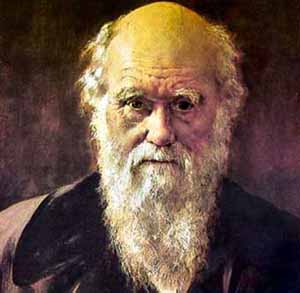
Charles Darwin
Dark green religion is popping up in a lot of places that aren’t in churches. Here is a religion that is spiritually satisfying and scientifically respectable. Scientists themselves have expressed it. When Charles Darwin’s Origin of Species first appeared 150 years ago, he concluded it, saying:
“There is grandeur in this view of life . . . Whilst this planet has gone cycling on according to the fixed law of gravity, from so simple a beginning endless forms most beautiful and most wonderful have been, and are being, evolved.”
Carl Sagn would later add:
“A religion, old or new, that stressed that magnificence of the Universe as revealed by modern science might be able to draw forth reserves of reverence and awe hardly tapped by the conventional faiths. Sooner or later, such a religion will emerge.”
Even the New Atheists – folks who have made a name for themselves being cranky about religion – have religion of the dark green sort. One of them, Richard Dawkins, acknowledges that “a quasi-mystical response to nature and the universe is common among scientists and rationalists.”

Another of the New Atheist crew is Christopher Hitchens, who, for my money is the crankiest of the cranky, a man who seems either to be, or to have carefully cultivated an image of being, joyless and permanently annoyed.

Even Christopher Hitchens, it turns out, has religion. It took a Unitarian Universalist minister to coax it out of him, but he’s got it. My colleague Rev. Marilyn Sewell interviewed Christopher Hitchens, and in the course of their conversation Hitchens declared:
“It's innate in us to be overawed by certain moments, say, at evening on a mountaintop or sunset on the boundaries of the ocean. Or, in my case, looking through the Hubble telescope at those extraordinary pictures. We have a sense of awe and wonder at something beyond ourselves, and so we should, because our own lives are very transient and insignificant. That's the numinous, and there's enough wonder in the natural world without any resort to the supernatural being required. . . . I know it's not enough for us to eat and so forth. We know how to think. We know how to laugh. We know we're going to die, which gives us a lot to think about, and we have a need for, what I would call, ‘the transcendent’ or ‘the numinous’ or even ‘the ecstatic’ that comes out in love and music, poetry, and landscape.”
Christopher Hitchens said that! Who knew he had it in him?

At least one politician, Al Gore, seems to have dark green religion. His 1992 book, Earth in the Balance, came out before he was elected Vice-President. In it, he says:
“We must make the rescue of the environment the central organizing principle of civilization. . . . As a politician, I know full well the special hazards of using ‘spiritual’ to describe a problem like this one . . . . But what other word describes the collection of values and assumptions that determine our basic understanding of how we fit into the universe?”
Disney cartoon movies from the mid-1990s express dark green religion. The Lion King sung to us of the Circle of Life that had to be respected and balanced, and in Pocahontas, Grandmother Willow teaches of belonging to nature and of the sacred interconnections within the web of life. Pocahontas sings, “You think you own whatever land you land on; the earth is just a dead thing you can claim. But I know every rock and tree and creature has a life, has a spirit, has a name.”

There may be more religion, more spirituality, in movies these days than there is in some churches. Last year’s film, Avatar stands out. James Cameron, the writer and director, said, “Avatar asks us to see that everything is connected, all human beings to each other, and us to the Earth.”

If you are a subscriber to Surfing magazine – as I’m sure most of you are -- then you will recall the July 2008 issue which proclaims in large letters on the cover, “Surfing is a religion,” and in letters twice as big above that, it says, “Nature = God.”

The article inside -- by Bron Taylor – analyzes surfing as aquatic nature religion and quotes from a number of surfers who understand their practice as spiritual. As one surfer put it: “The ocean has a powerful energy and it connects you to the earth.” Dude!

The New Atheists have got dark green religion. It’s possible to be a politician and have it. Disney and Hollywood have got dark green religion, in some of their products. Surfers have dark green religion, some of them. It’s popping up all over the place these days.

Dark green religion has no single sacred text. It has no institutions. I asked Bron Taylor about institutions: do we need there to be places – buildings and memberships – where people gather for ceremonies to express and affirm the sacredness of nature? He said, it’s infusing a variety of institutions, various church denominations are beginning to embrace it, environmental organizations are increasingly speaking a spiritual kind of language about the earth they seek to protect, and dark green religion is expressed in all manner of ways in books and movies and theme parks where people are jazzed up, or awed by the majesty and sacredness of our blue-boat home, and sent out into the world without ever taking the step of being a member of an organization. That’s rather encouraging, really – this trend all around us toward dark green religion. But we will need institutions if we are going to make it through the hard times that are coming.

We will need people organizing, committing to each other to be members together of a place that will be there for them week after week to support them in remembering what is divine, and in practicing it, and in worshipping (worth-shaping, giving shape to what is of worth) this blue-green home on which we live and breath and have our being. We will need:

- a place that will call them, over and over, because Gaia knows we are prone to forget and to lapse, to practice what we preach;

- a place that doesn’t just give you an experience like a book or a movie or a speech or a theme park;

- a place that provides community support for a way of life;

- an institution: an ongoing pattern of being together through which there is, (a) awakening of the spirit, and (b) encouragement to action in line with our spiritual values; and these two, the (a) and the (b), the spiritual and the action, are mutually reinforcing.

Unitarian Universalism has always been about living our religion, and religioning our lives. Awaken to the sacred depths of nature. Express your worship also through acts of care for our mother, for Earth, for Gaia. Re-commit today to this faith of awe and wonder and openness to whatever this universe may bring us. Re-commit today to actions of care, of compassion for our planet home.

That’s what the paper leaf inside your Order of Service is for. Write on it. Write down your commitment. Write down what you’re going to do as an act of love and an act of worship that will reduce your footprint. During our closing hymn, and then on into after-the-service, come on up and attach your leaf to the large bare-branched tree banner at here at the front of the sanctuary. That’s our altar, and this is our altar call to every one of us. Take some action, rise to whatever for you is the next challenge in living more wholesomely, not because you actually expect it to do any good. Do it because it might. Do it because it’s sure to do this good: you will be more whole, more spiritually alive, the more you replace mindless consumption with mindful consumption.

As the Bhagavad-Gita says, “Those who perform actions without attachment, resigning the actions to God, are untainted by their effects as the lotus leaf by water.”

And begin, as Joanna Macy says, with gratitude.
“We have received an inestimable gift. To be alive in this beautiful self-organizing universe – to participate in the dance of life with senses to perceive it, lungs that breathe it, organs that draw nourishment from it – is a wonder beyond words. And it is, moreover, an extraordinary privilege to be accorded a human life, to possess this self-reflexive consciousness, which brings awareness of our own actions and the ability to make choices. It lets us choose to take part in the healing of our world.” [Macy, Joanna. Coming Back to Life: Practices to Reconnect Our Lives, Our World (New Society Publishers, 1998)]
That’s a soteriology for our time.

* * *

A earlier version of this was preached at the Unitarian Universalist Fellowship of Gainesville, Florida, 2010 April 25.

2010-04-01

The Song of the Nonsinger

Keren and my Uncle Toby married in 1959
I had no idea . . .

My Mom, the first born, has a brother a couple years her junior, my Uncle Toby. A few years after my Mom and Dad married, Toby married Keren Coxe. From Toby and Keren came my cousins Charles (about a year and a half younger than me) and Mary Sue, younger still. For a while there, when I was wee, Mom and Uncle Toby were both graduate students at the University of Virginia, and our two families shared a big house in Charlottesville.

During that year or so, Aunt Keren was a daily part of life. I remembered her most for a disability that she claimed: she said she couldn’t sing. One day, in my four-year-old way, I wanted us all to sing, “Old MacDonald Had a Farm.” Keren said she couldn’t sing. This was frustrating for me, difficult to understand (which, I suppose, is why it has stuck in my memory all these years). What could she mean? How could anybody not be able to sing? There are certain kinds of sounds that come out of people’s mouths that are just talking and there are other sounds that are singing (at age 4, I had no concept of off-key, or missing the note), and surely everyone can produce both sorts. Everyone at my nursery school piped right up when it was time to sing “Old MacDonald,” or “Twinkle, Twinkle, Little Star.” C’mon Aunt Keren. Sing with us. But she wouldn’t. Said she couldn’t. Couldn’t! How bizarre!

A couple years ago I read Oliver Sacks’ Musicophilia. Sacks describes a number of things that can go wrong with the brain, one of which makes an otherwise normal-functioning person unable to reproduce a melody. We’re not talking “off-key” – we’re talking “no identifiable key or melody at all.” Maybe that’s what my Aunt Keren had. Or maybe she just didn't like to sing.
From left: Mom, me, Aunt Keren,
and Cousin Charles

Graduate school is fleeting, and our two families soon had finished their programs and headed off to jobs in other cities. A few years afterwards, word reached us that Toby and Keren were divorcing. This was the mid-sixties, and my first significant exposure to the concept of divorce. It all seemed very mysterious: sad and inexplicable.


And I never saw or heard from Keren again. Uncle Toby remarried, and I had a new aunt – with an additional couple of cousins. I’d be taken for visits with the new family – or they’d visit us, or we’d both visit at my grandparents’ – once or twice a year for most of the years of my childhood and adolescence. Since Toby had complete custody of Charles and Mary Sue, Keren was out of the picture entirely. Very rarely ever mentioned, at least in my hearing. She existed only in one or two of the older snapshots in the family album, wearing the cat’s-eye glasses and a dress in that early 60s style.

I got the news today that Keren Coxe died last week, on March 26, at age 71. Cardiac arrest. In reading the obit in the Washington Post, and in googling around, I learned what a fascinating woman my missing Aunt Keren actually was.

In 1960, she became the first female physics major to graduate from Virginia Tech. I hadn’t known that. It fits that my Uncle Toby, an engineer, would have liked a scientific-minded woman. Indeed, the big sister he’d always looked up to (my Mom) was herself working on a PhD in physical chemistry during the year we lived together in that big house in Charlottesville. My grandparents, born in 1908 and 1909, somehow got it into their heads, apparently, to teach their children to value the pursuit of truth and the power of science to progressively reveal truth – and that the progress of truth was more important than traditional gender roles. So Mom grew up unafraid to be a pioneering female scientist, and her brother grew up unafraid to marry one.

After the divorce, as I learned just today, Keren worked as a statistician for Jones & Laughlin Steel in Pittsburgh. In 1970, she completed a master's degree in health statistics from the University of Pittsburgh. The next year, she moved to Washington, DC, where she lived the rest of her life. In 1981, she got a master's degree in theoretical statistics from George Washington University in DC.

Then there was a car accident. She was run down by a drunk driver. Yes, I had heard something about that. What I hadn’t quite picked up was that the brain trauma incurred in the accident made her unable to do statistics, but awakened a passion for art. She started working in stained glass and moved on to work in watercolor, other water media, design and collage.

Here's one of her works:


She also began posing nude for art students at the Corcoran College of Art. Of modeling, one newspaper quoted her as saying: “I found I liked it almost as much as I liked being a statistician.”

She lived with Alex Belinfante, an econometrician, for the last 24 years of her life.

In 2004 September 17, The Washington City Paper ran an article about Keren and Alex. It seems that, to some extent, they lived on the hors d’oeuvres at art receptions.

www.washingtoncitypaper.com/articles/29307/the-hunger-artists

According to the article: “Since they met in 1981, Coxe, 60, and Belinfante, 65, have dined almost exclusively at gallery openings and other cultural events. ‘The number of art openings we go to in one day varies a lot; anywhere from zero to over a dozen,’ says Belinfante.”

The article continues:
You can’t ingest that much raw celery and dip without getting a name for yourself, and the Chevy Chase couple has several: “the Eaters,” “the Munchers,” “the Moochers,” “the Art Bums,” “the Cheese Critics.” Whatever they’re called, their voracity is legendary.
“Some people get some food at an art opening [that] they kind of eat because it’s there,” says B. Stanley, artistic director of the District of Columbia Arts Center. “It’s not like they really care about eating this food. It’s obviously not very good food.”
Coxe and Belinfante are different. “These guys,” Stanley says, windmilling both hands in front of his mouth, “it’s like they’re having dinner or something. It looks like somebody’s who’s watching the news while they’re eating dinner.” And they sometimes opt for takeout, he adds. “If it’s cookies or something you can put in your pocket, those guys are up for it.”
They also eat with singular focus. Painter Dana Ellyn Kaufman, who was at a 2002 opening of erotic art at Arlington’s old Khoja Gallery, remembers a votive candle on the food table setting Coxe’s sleeve afire while she loaded up with crackers and Hershey’s Kisses. “She was very cool about it,” says Kaufman. “Just put it out and went along with her business. I think I’d have been...screaming like a little girl if it happened to me.”
I’ve sometimes, myself, been known at various events to be paying a little more attention to the refreshment table than was quite seemly. Guess I’ve got a little of my Aunt Keren in me.

 Google images located this 2006 photo:

Keren and Alexander 06 by yospyn.
Keren Coxe and Alex Belinfante

Keren’s memberships included the National Capital Art Glass Guild, Senior Artists Alliance and Metropolitan Washington MENSA.

Smart woman. Creative. Weird. I wish I’d known her past my pre-school years. I myself am not such great shakes as a singer: I go off-key, miss notes. I can, however, hum "Mary Had a Little Lamb" in a way that you'll recognize the tune. In some ways, Keren couldn't pick up and sing along with the melodies of the social world. In some ways, I can't either, though I do, as it were, recognizably hum the simple tunes. We are not genetically related, Aunt Keren and I, but some kind of vague resembling vibe connected her with my family to be the mother of my cousins, and I do see some of her in me, though the differences are certainly great (I'm not and have never been a physicist, statistician, artist, nude model, or art collector). I, too, may some day find myself wearing my wristwatch almost at the elbow. I'm already a fan of bright tie-dyed t-shirts. Not to mention cheese cubes.

Keren sang with her life -- with her brain and with her body -- and she sang of numbers, of colors and shapes, forms and figures. She sang a song that teaches us, if we give it a sympathetic listen, to expand our conception of how it's possible for humans to be, and to thrive, in this world.

Rest in peace, Aunt Keren.

- - - - - - - - -

POSTSCRIPT

Since posting the above, have heard from Alex Belinfante. He says that Keren was a passionate lover of opera and excellent music. She had a perfectionist's ear, and chose not to sing because it didn't match what she felt was worth hearing.

Regarding the 2004 article in the Washington City Paper, Alex wrote to the paper:
In spite of John Metcalfe’s attempts to check facts prior to publishing “The Hunger Artists” (9/17), it nevertheless contained factual errors. For starters, he got our ages mixed up. Keren is 65 and I am 60. He failed to mention that while “pacing around the room” at the Korean Cultural Service we were admiring the art. Stanley of DCAC has selective memory. They have only once served any food worth mentioning in the few times that we have been there. (We rarely go there because it is hard to park in Adams Morgan.) That was the occasion in 1995 he mentioned, where the food, contrary to his characterization of it, was very good, and donated by a restaurant. Anyone who sees my pockets knows there is no room for food in there, and Keren usually doesn’t have any pockets. The person that used to stuff his pockets with food at openings was a now-deceased lawyer friend of ours. Keren’s daughter rarely goes to art openings. Clark of MOCA doesn’t need to use “reverse psychology” to keep us from eating much. The only times they serve decent food is when it is provided by someone else. He knows that we will buy art if it is to our liking and reasonably priced, regardless of the cuisine. Gallery owners that are more concerned about how much we eat than they are about selling their art have their priorities mixed up. If they can’t afford to provide food, they shouldn’t do so. (Most galleries just provide drinks and maybe a little junk food.) We have often seen gallery owners’ attitudes toward us change 180 degrees when we buy art from them. My taste in art is not the result of a “medical condition.” My difficulty in distinguishing reddish brown from greenish brown may explain my distaste for brownish art, but it has little to do with my taste in art otherwise. Metcalfe’s uninformed snide remarks about our art collection show that he has little appreciation for colorful abstract art. This is exemplified by his characterization of paperweights as “glass blobs” and our house as a “monster.” Maybe he should have paid more attention to the retired Georgetown professor at the Korean Cultural Service than he did watching us.

In his letter (9/24) Campello of Fraser is wrong about our never feigning interest in the artwork at his galleries. While most of his shows are not to our taste, we particularly enjoyed the Dali-inspired show a while back at his Georgetown Gallery. Most of the time when we do go there it is simply because it is part of the art walks in Canal Square and Bethesda, and we don’t stay very long. The gallery he mentioned in Leesburg has not gone out business; it has simply changed its name and later moved. The birthday party he referred to was for Keren’s son (not daughter) who lives in Leesburg, and who does not normally attend art openings. The only thing in the back room refrigerator was beer (not food), which he helped himself to after he observed other people (not associated with us) drinking it.